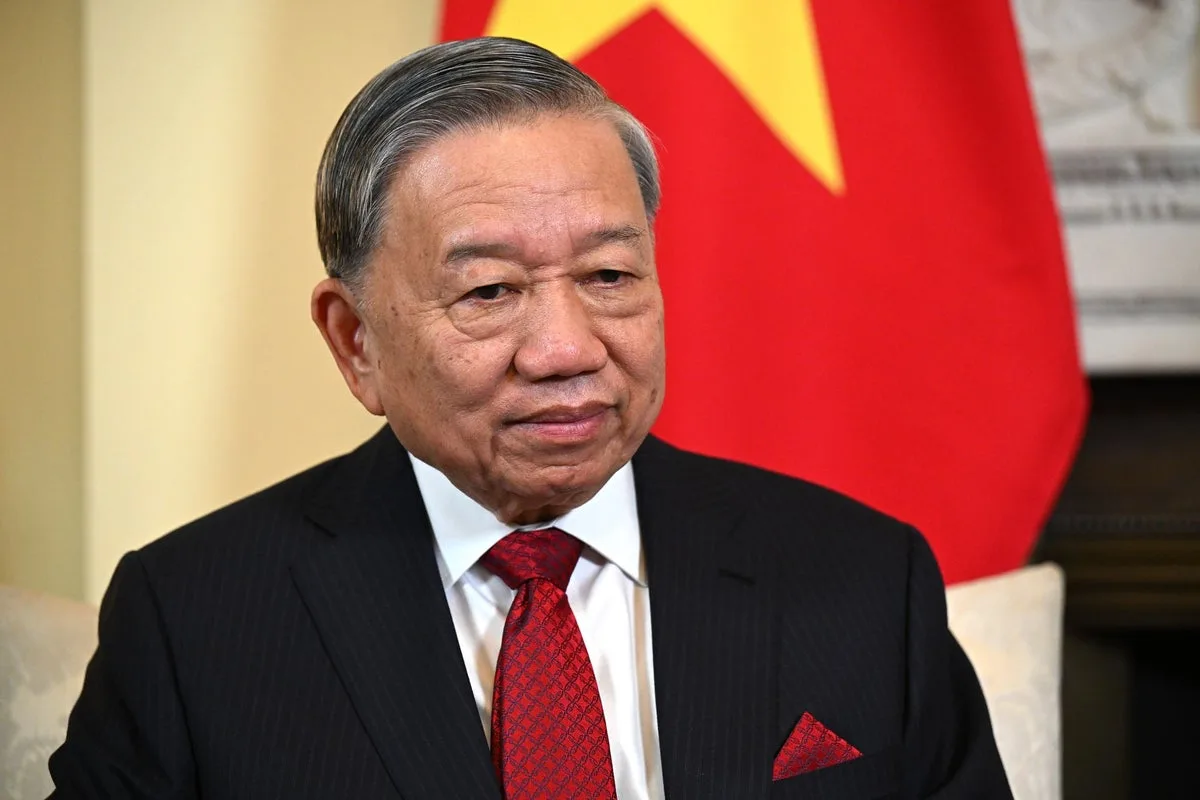
Vietnam's ruling Communist Party has convened its pivotal 14th National Congress, a week-long gathering that will determine the country's political leadership and strategic direction for the coming years. The congress, which opened in Hanoi on Monday 19 January 2026, is taking place under a veil of strict secrecy and heightened security, coinciding with a reported intensification of the government's crackdown on critics and dissent.
Leadership and Economic Ambitions in Focus
Approximately 1,600 delegates are attending the closed-door meeting, where the most powerful position in the single-party state – the role of party general secretary – will be decided. To Lam, the 68-year-old incumbent, is widely expected to retain his post and is also anticipated to seek the state presidency, mirroring the dual-role model of his Chinese ally, Xi Jinping. A formal announcement on the leadership is expected by the end of the week.
In a 40-minute opening address, General Secretary To Lam framed the congress as occurring during a period of "many overlapping difficulties and challenges," citing natural disasters, epidemics, global security risks, and major disruptions to energy and food supply chains. He pledged to continue administrative reforms and the fight against corruption, stating that "all wrongdoing must be addressed" and vowing to confront "waste and negativity in government."
Economically, Lam emphasised the need to cut red tape and expand trade to protect national interests. He pointed to Vietnam's record trade surplus with the United States, which persisted despite a 20 per cent import levy imposed by former US President Donald Trump the previous year. However, the congress document sets an ambitious new annual growth target of no less than 10 per cent until 2030, a stark increase from the 6.5-7 per cent goal for the first half of the decade, which was missed.
A Climate of Secrecy and Suppression
The congress itself is characterised by extreme secrecy. Delegates are subjected to stringent protocols, including being cut off from mobile networks and the internet, and must remain in designated accommodation. Ordinary citizens, who are not party members, are barred from publicly discussing or endorsing candidates for the top posts.
Parallel to the political proceedings, human rights organisations report a significant escalation in the suppression of dissent in the lead-up to the congress. The government stands accused of intensifying arrests of activists, journalists, lawyers, and critics.
Patricia Gossman, senior associate Asia director at Human Rights Watch, stated: "It’s that time again for escalating arrests and jailing prominent critics ahead of Vietnam’s Communist Party congress. Not only does the government block citizens from choosing their own leaders, but the authorities gag those they think might complain about the process."
Recent cases highlighted include the arrest of blogger Hoang Thi Hong Thai on 7 January for social media comments critical of the government. In late December, a Hanoi court sentenced human rights lawyer Nguyen Van Dai, 56, in absentia to 17 years in prison for criticising party leaders online. On the same day, Berlin-based journalist Le Trung Khoa, founder of the Thoibao outlet, also received a 17-year sentence in absentia. Three of his alleged associates received prison terms ranging from five-and-a-half to seven years.
These actions contribute to Vietnam's poor standing in global press freedom rankings; Reporters Without Borders, which calls the country "one of the world’s biggest prisons for journalists," ranks it 173rd out of 180 nations.
Consolidating Power and Future Challenges
Since taking power in 2024, To Lam has pursued a bold and controversial agenda. His tenure has seen the elimination of government layers, the abolition of eight ministries, and the aggressive pursuit of major infrastructure projects. These moves have displaced thousands of civil servants and drawn sharp criticism.
Concurrently, Lam has worked to tighten state security, expanding police powers to vet laws and regulate businesses, which has increased rivalry with the military, an institution with vast economic interests. His anti-corruption drive, a hallmark of his predecessor Nguyen Phu Trong, has reportedly abated as Lam prioritised speeding up project approvals to stimulate economic growth.
As the congress deliberates behind closed doors, the path ahead for Vietnam appears set: continued one-party rule under an increasingly powerful leadership, driven by lofty economic goals but marred by a severe constriction of civil liberties and political freedoms.






