
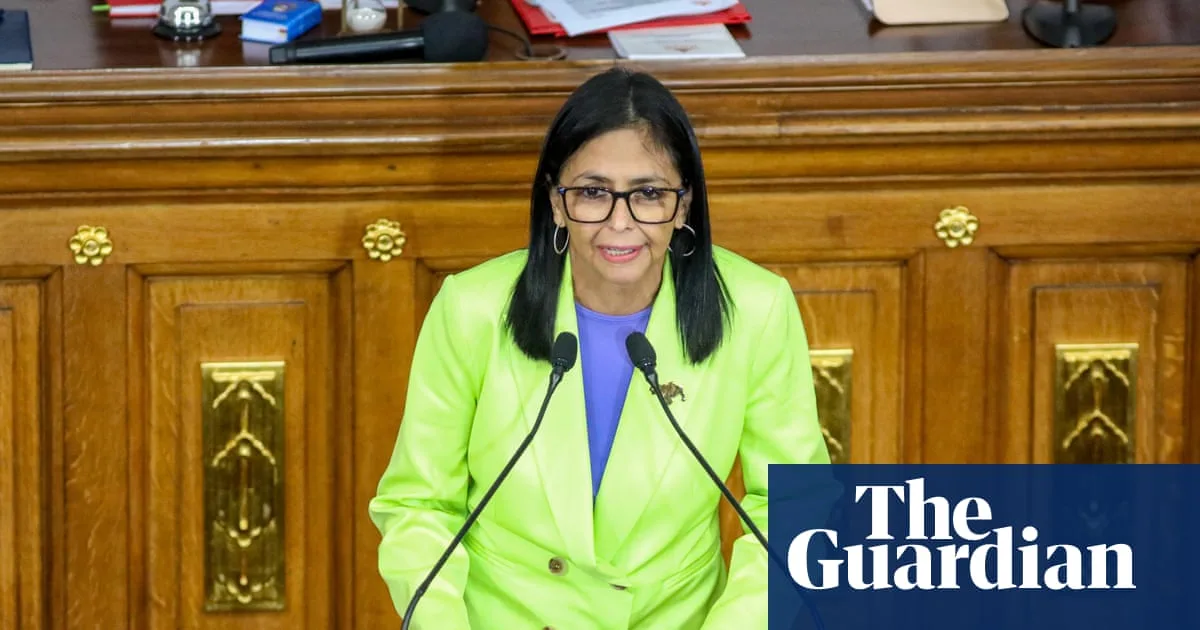
A leaked recording of a meeting between Venezuela's acting president, Delcy Rodríguez, and regime-friendly influencers has revealed the government's desperate attempts to control the narrative following the US capture of Nicolás Maduro. In the recording, Rodríguez claims US forces threatened to kill her and other cabinet members if they did not comply with Washington's demands within 15 minutes.
Rodríguez, who assumed power after the US attack and has since been praised by Donald Trump for cooperating, said she acted only because of constant threats and blackmail. She admitted her priority was to preserve political power. The nearly two-hour meeting, held seven days after the US operation, was first reported by La Hora de Venezuela.
During the call, Rodríguez said US troops initially told them Maduro and his wife had been assassinated, not kidnapped. She claimed she, her brother, and interior minister Diosdado Cabello replied they were ready to share the same fate. She listed three goals: preserve peace, rescue hostages, and preserve political power.
The recording also shows communications minister Freddy Ñáñez defending Rodríguez, calling for unity and urging influencers to shut down gossip and rumours. He argued Rodríguez was the only guarantee they could bring back Maduro and reconfigure their forces. The meeting was held on a videoconferencing platform, and it remains unclear how the recording was leaked.
Analysts suggest the death threat narrative may be a construction to hold the Chavista base together, as Maduro's removal likely involved internal complicity. Since the capture, Rodríguez has voiced defiance at home but signalled cooperation with the Trump administration, with Washington announcing she would soon visit the US capital.




