US State Department Issues Global Caution Alert Amid Escalating Iran Tensions
The US State Department has issued a stark warning to American citizens worldwide, urging them to exercise increased caution due to heightened security concerns. This alert comes amidst escalating tensions with Iran, with fears that groups supportive of the Iranian regime may target US interests overseas. Americans, particularly those in the Middle East, are advised to closely follow guidance from their nearest US embassy or consulate.
Travel Disruptions and Security Threats
The department specifically warned that travel for Americans could face significant disruptions due to 'periodic airspace closures' as the situation develops. The alert stated clearly that 'US diplomatic facilities, including those outside the Middle East, have been targeted' and that 'groups supportive of Iran may target other US interests overseas or locations associated with the United States and/or Americans throughout the world.'
This security alert follows a week of rapidly deteriorating relations, beginning when Iran issued a chilling warning on Friday that it would attack civilian targets globally. This threat comes as millions of Americans embark on spring break travels, potentially putting luxury resorts in the crosshairs. General Abolfazl Shekarchi warned that Israeli and US officials would not be safe following strikes that eliminated Iran's leadership, including Supreme Leader Ayatollah Ali Khamenei.

Domestic and International Security Measures
In response to these threats, the FBI and Department of Homeland Security have already elevated their counterterrorism operations to 'high alert' status, preparing for possible Iranian retaliation on US soil. This domestic vigilance follows a tragic incident in Austin, Texas, where a gunman identified as Ndiaga Diagne, a 53-year-old Senegalese-born US citizen, opened fire at a packed bar on March 1, killing two people and wounding fourteen others before being killed by police.
Internationally, the conflict has entered its fourth week, resulting in the deaths of thirteen US service members and at least 1,300 Iranians. Recent days have seen Iran escalate retaliatory strikes after Israel targeted a major gas field, creating panic across the Middle East region.
Strategic Waterway Threats and Military Posturing
Iran has now vowed to 'completely shut' the strategically vital Strait of Hormuz and destroy Israeli and US-linked power plants in the Middle East if former President Donald Trump follows through on threats to 'obliterate' Tehran's energy facilities. This critical passageway, through which approximately one-fifth of global oil and gas supplies flow, has been at the center of contention since US and Israeli strikes on Iran began on February 28.
The struggle over the Strait has already driven energy prices worldwide to spike significantly. President Trump issued a stark warning late Saturday night, stating he would destroy Iranian power plants - 'starting with the biggest one first' - if the waterway is not fully reopened within 48 hours. This came just one day after reports suggested he was considering 'winding down' the conflict.
Expanding Missile Capabilities and European Concerns
Iran's Revolutionary Guard Corps countered with their own threat, warning that if the US targets Iranian energy infrastructure, they will keep the Strait 'completely shut' and ensure that Israeli and US energy infrastructure in the region is 'completely destroyed.' These exchanges follow a fresh wave of missile attacks launched by Tehran toward Israel, raising mounting fears about the regime's ability to strike European capitals.
More than 100 people have been wounded in southern Israel after strikes on buildings in the cities of Dimona and Arad. Perhaps more alarmingly, missiles from Iran took aim at Diego Garcia on Saturday, a key US and UK military base in the Indian Ocean located roughly 2,500 miles from Iran. While the two missiles launched did not strike the base, they demonstrated Iran's capability to hit targets at considerable distances.

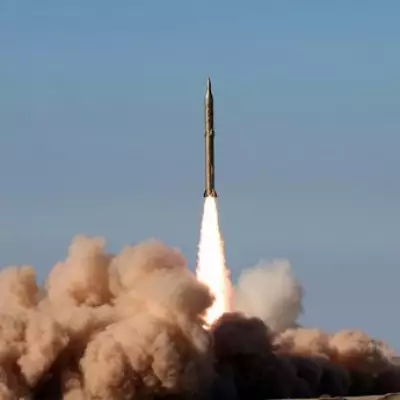
Israel Defense Forces Chief of Staff Lt. Gen. Eyal Zamir confirmed on Saturday: 'Just yesterday, Iran launched a two-stage intercontinental ballistic missile with a range of 4,000 kilometers [2,500 miles] toward an American target on the island of Diego Garcia. These missiles were not intended to hit Israel. Their range reaches the capitals of Europe — Berlin, Paris, and Rome are all within direct threat range.'
International Military Response
Amid the discovery of Iran's capacity to threaten Europe, a Royal Navy submarine from the UK arrived in the Arabian Sea on Saturday. This deployment provides British forces with the capacity to launch attacks on Iran should the conflict escalate further. This development follows confirmation from the Prime Minister’s office on Friday that Sir Keir Starmer had agreed to allow the US to use British bases to launch strikes on Iranian sites targeting the Strait of Hormuz.
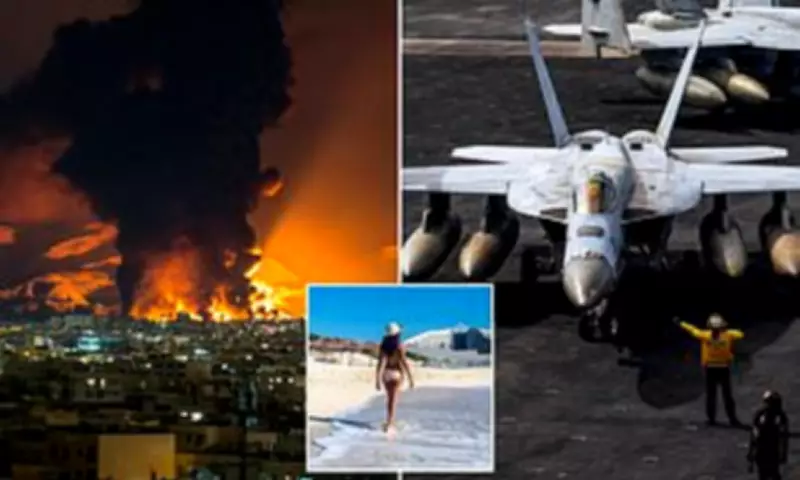
Sir Keir had previously restricted US forces to using British bases only for defensive operations aimed at preventing Iran from firing missiles that endangered British interests or lives. However, he has now approved expanding the targets to help protect ships in the vital shipping channel under the principle of 'collective self-defense.' The situation remains fluid, with military assets like F/A-18E Super Hornet aircraft from Strike Fighter Squadron 31 actively operating from the USS Gerald R Ford, the world's largest aircraft carrier, as tensions continue to mount.