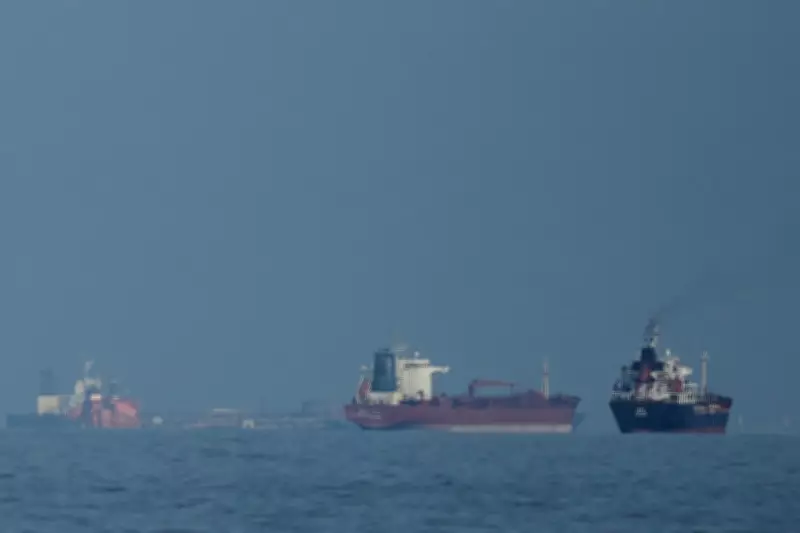
US Military Announces Blockade of Iranian Ports Amid Strait of Hormuz Tensions
The United States military has declared it will impose a naval blockade on all Iranian ports, commencing at 10 a.m. EDT on Monday, which corresponds to 5:30 p.m. local time in Iran. This decisive action follows the collapse of marathon ceasefire negotiations between the US and Iran held in Pakistan, setting the stage for a significant geopolitical confrontation.
Blockade Details and Strategic Implications
US Central Command (CENTCOM) stated the blockade will be "enforced impartially against vessels of all nations". However, in a notable departure from President Donald Trump's earlier threat to seal off the entire Strait of Hormuz, CENTCOM clarified that commercial ships traveling between non-Iranian ports will still be permitted to transit the strategic waterway. This channel is a critical artery for global oil, previously handling approximately 20% of worldwide shipments before hostilities began.
Early intelligence from Lloyd's List indicates that the announcement has already disrupted the limited maritime traffic that had resumed in the strait since the ceasefire. Marine trackers report that over 40 commercial vessels have crossed since the truce began, a sharp decline from the pre-war average of 100 to 135 passages daily.

Immediate Market Reactions and Iranian Retaliation Threats
The blockade announcement triggered immediate volatility in global energy markets. In early trading, the price of US crude oil surged by 8% to $104.24 per barrel, while Brent crude, the international benchmark, rose 7% to $102.29. This marks a substantial increase from pre-war levels of around $70 per barrel in late February.
A chorus of high-ranking Iranian officials has vowed forceful retaliation. Mohsen Rezaei, a military adviser and former Revolutionary Guard commander, warned on social media that Iran possesses "major untouched levers" to counter any blockade, dismissing US actions as "tweets and imaginary plans". Iranian Parliament Speaker Mohammad Bagher Qalibaf, who led Tehran's delegation in the talks, issued a direct challenge: "If you fight, we will fight."
Subsequently, Iran's Revolutionary Guard asserted through semi-official news agencies that the Strait of Hormuz remains under its "full control" and open to non-military vessels, but any military incursions would meet a "forceful response".
Failed Ceasefire Talks and Escalating Rhetoric
The 21-hour, high-level negotiations in Pakistan, described as the most significant direct talks between the US and Iran since the 1979 Islamic Revolution, concluded without agreement early Sunday. President Trump attributed the failure to Tehran's nuclear ambitions, threatening in a Fox News interview to devastate Iranian civilian infrastructure if the program continues.
"In one half of a day they wouldn't have one bridge standing, they wouldn't have one electric generating plant standing, and they're back in the stone ages," Trump stated. Concurrently, he extended his diplomatic feud, launching an extraordinary broadside against Pope Leo XIV on Truth Social, criticizing the pontiff's foreign policy stance after the Pope denounced the war and called for peace negotiations.
US Vice President JD Vance, leading the American negotiating team, emphasized Washington's requirement for "an affirmative commitment that they will not seek a nuclear weapon". A US official, speaking anonymously, revealed that Iranian negotiators could not agree to all US "red lines," which included demands for Iran to cease uranium enrichment, dismantle key facilities, allow retrieval of highly enriched uranium, open the Strait of Hormuz, and end funding for proxy groups like Hamas, Hezbollah, and the Houthis.
Nuclear Stalemate and Humanitarian Toll
Iran's nuclear program remains the central sticking point, a source of tension long predating the US-Israel initiated war that began on February 28. Tehran consistently denies seeking nuclear weapons while asserting its right to a civilian nuclear program. Experts note that Iran's stockpile of enriched uranium, though not yet weapons-grade, is only a short technical step away from becoming so.

The conflict has exacted a heavy humanitarian cost, with reported casualties including at least 3,000 in Iran, 2,055 in Lebanon, 23 in Israel, and over a dozen in Gulf Arab states, alongside significant infrastructure damage across multiple nations.
Uncertain Future and Diplomatic Efforts
Neither nation has indicated what will occur after the current ceasefire expires on April 22. Iranian officials blamed the negotiation breakdown on US "maximalism, shifting goalposts, and blockade," as expressed by Abbas Araghchi on social media, claiming an agreement was within "inches" before collapsing.
Pakistani Foreign Minister Ishaq Dar stated his country will attempt to facilitate renewed dialogue in the coming days, while Iran's state-run IRNA news agency reported Tehran remains open to continuing discussions. The international community now watches anxiously as this blockade escalates an already volatile situation, with far-reaching implications for global trade, energy security, and regional stability.