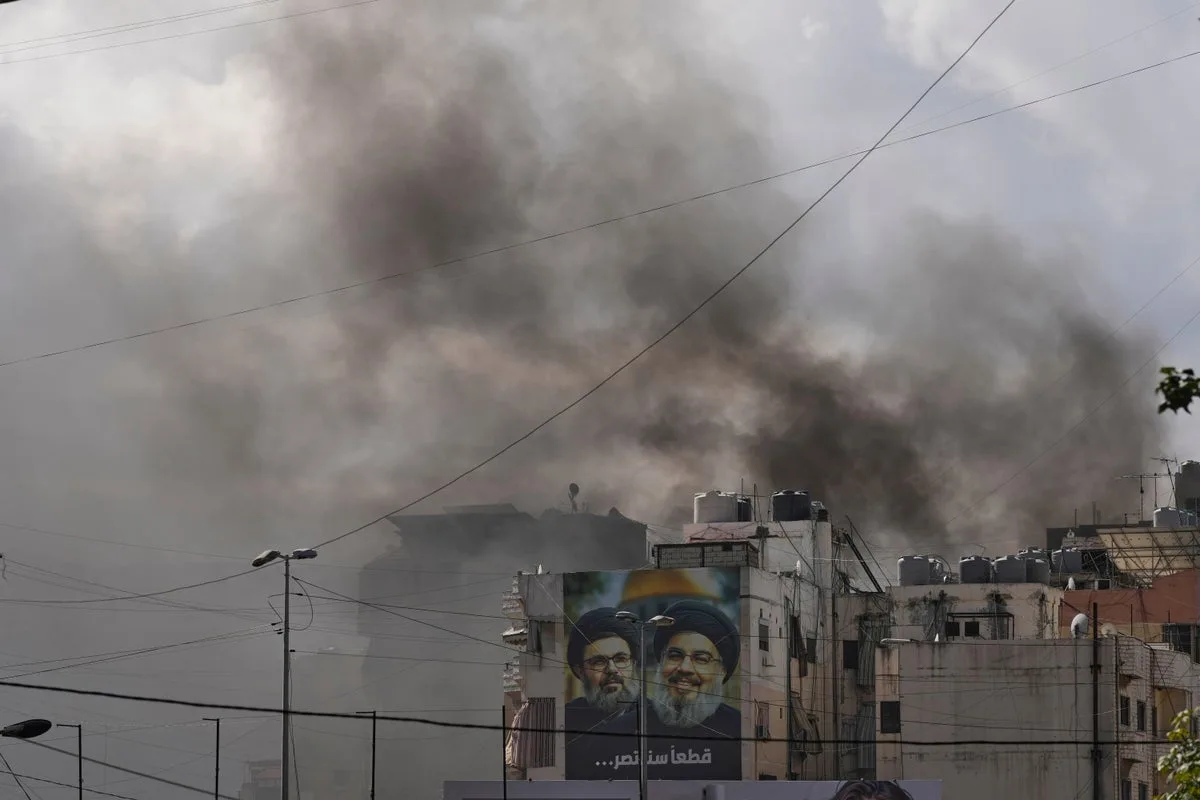
A likely US strike hit the central Iranian city of Isfahan early Tuesday, causing a massive fireball, while Tehran struck a fully loaded Kuwaiti oil tanker in the Persian Gulf off Dubai. The attacks underscore the intensity of the month-long war launched by the US and Israel against Iran, which has maintained its chokehold on the Strait of Hormuz, disrupting global oil shipments and sending prices soaring.
US President Donald Trump shared video of the Isfahan attack, which targeted an area near Mount Soffeh believed to house military positions. Isfahan is home to a nuclear facility where satellite imagery suggests Iran transferred a truckload of highly enriched uranium (up to 60% purity) before a previous US strike in June. Analysts believe this stockpile may have been stored or buried at the site.
Meanwhile, Iran’s drone strike on a Kuwaiti oil tanker in Dubai waters sparked a blaze that was later extinguished, the Dubai Media Office said. Four people in Dubai were wounded by debris from an intercepted drone. Air raid sirens sounded in Bahrain, and Saudi Arabia intercepted three ballistic missiles toward Riyadh, with falling debris damaging six homes. Sirens were also heard in Jerusalem as Israel warned of incoming missiles from Iran.
Iranian Foreign Minister Abbas Araghchi insisted Tehran is only targeting US forces, writing on X: “Our operations are aimed at enemy aggressors… High time to eject U.S. forces.” However, attacks on civilian targets continued. Israel reported four more soldiers killed in its invasion of Lebanon, along with two UN peacekeepers, prompting an emergency UN Security Council session.
Brent crude hovered around $107 a barrel, up over 45% since the war began on February 28. Trump claimed “great progress” in diplomatic talks but threatened to “completely obliterate” Iranian infrastructure, including Kharg Island, if the Strait of Hormuz is not reopened. The US has deployed 2,500 Marines to the region, with another contingent en route, and 1,000 paratroopers ordered to the theatre.