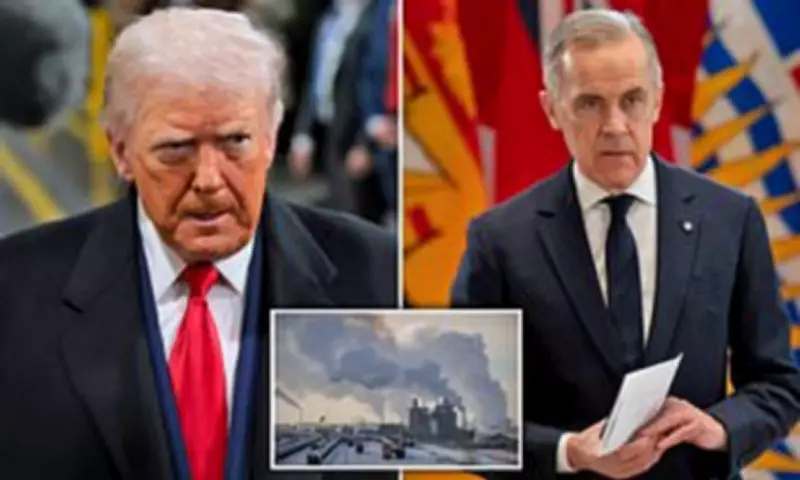
Secret US-Alberta Separatist Meetings Revealed Amid Diplomatic Strain
Senior officials from the Trump administration have engaged in a series of confidential meetings with leaders of a Canadian separatist movement aiming to establish an independent state in the oil-rich province of Alberta. These covert discussions, which have been ongoing since the spring of last year, emerge at a time of significant diplomatic tension between President Donald Trump and Canadian Prime Minister Mark Carney.
Diplomatic Friction Fuels Separatist Dialogue
The relationship between Washington and Ottawa has deteriorated notably following Canada's recent decision to strengthen its trade partnership with China. This move has triggered considerable concern within the US administration. Specifically, Ottawa and Beijing have agreed to reduce tariffs on Canadian canola oil and permit the sale of certain Chinese-manufactured electric vehicles in Canada under substantially lower tax rates.
Jeff Rath, the leader of the Alberta Prosperity Project—the group advocating for Alberta's independence—has asserted that his organisation enjoys a "much stronger relationship" with the Trump administration than Prime Minister Carney does, according to reports from the Financial Times. Sources indicate that top representatives from the separatist group have convened with State Department officials in Washington on at least three separate occasions since April 2025.

US Enthusiasm Tempered by Official Caution
"The US is extremely enthusiastic about a free and independent Alberta," Rath, who participated in the meetings, has stated. However, American officials have been quick to downplay the significance of these encounters. A spokesperson for the State Department emphasised the routine nature of such engagements, noting, "The department regularly meets with civil society types. As is typical in routine meetings such as these, no commitments were made."
Similarly, the White House has clarified its position. An official stated, "Administration officials meet with a number of civil society groups. No such support, or any other commitments, was conveyed." Despite these reassurances, the Alberta Prosperity Project is reportedly seeking a meeting with US Treasury Department officials as early as next month.
Financial Ambitions and Political Mechanics
The separatist group plans to request a staggering $500 billion in credit to support the province should a future referendum result in independence. To advance their cause, the movement needs to gather 177,000 signatures to present an independence petition to the provincial legislature by May, though the current number of signatures obtained has not been disclosed.
Alberta holds a pivotal role in Canada's energy sector, accounting for approximately 85 percent of the nation's oil production. The push for independence is partly driven by perceptions that the federal government in Ottawa has not sufficiently supported projects to expand oil production, such as new pipeline developments.
Trade Threats and Diplomatic Reassurances
The revelations of these meetings coincide with a particularly tense period in US-Canada relations. President Trump has publicly expressed his displeasure with Ottawa's deepening ties with Beijing. On Saturday, he posted on Truth Social, "If Governor Carney thinks he is going to make Canada a drop off port for China to send goods and products into the United States he is sorely mistaken." He further threatened, "If Canada makes a deal with China, it will immediately be hit with a 100 percent tariffs against all Canadian goods and products."
In response, Prime Minister Carney moved swiftly to clarify Canada's position on Sunday. He affirmed that any potential deal with China would need to adhere to the proper channels established under the United States-Mexico-Canada Agreement (USMCA). This trade pact includes provisions that restrict agreements with non-market economies. Carney stated, "We have no intention of doing that with China or any other non-market economy," emphasising that any such deal would first require notification to the US and Mexico.

The intersection of separatist ambitions, high-stakes energy politics, and fragile international trade relationships creates a complex and volatile situation, with significant implications for the future of North American diplomacy and economic stability.