
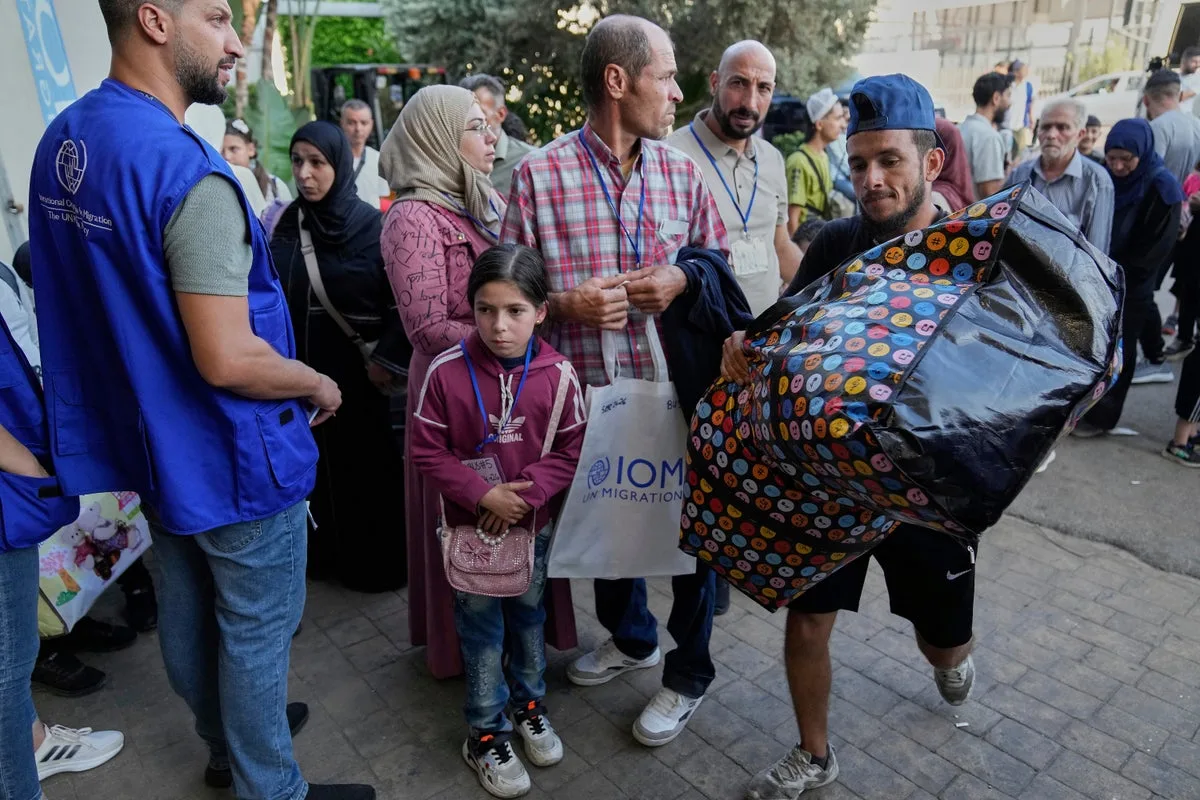
The head of the UN refugee agency in Lebanon has said that the United States' decision to permanently lift sweeping sanctions on Syria could encourage more refugees to return home. Karolina Lindholm Billing, the UNHCR representative in Lebanon, spoke after the US Senate voted to repeal the so-called Caesar Act sanctions as part of the annual defence spending bill, with President Donald Trump expected to sign the measure.
According to UNHCR, around 400,000 Syrian refugees have returned from Lebanon since the ousting of President Bashar Assad in December 2024, with roughly one million still in the country. More than one million refugees and nearly two million internally displaced Syrians have returned to their homes across Syria since Assad's fall, the agency said.
Ms Billing noted that returning families receive a one-off payment of $600, but this is often insufficient given the destruction of homes and lack of employment. International aid so far has been on a "relatively small scale" compared with the enormous needs, she said. The World Bank estimates that rebuilding Syria's damaged homes and infrastructure will cost $216 billion.
The Caesar Act sanctions were introduced in 2019 to punish Mr Assad for human rights abuses during the civil war. They were temporarily lifted by executive order, but Ms Billing said the permanent removal could "make a big difference" by encouraging private sector investment and large-scale reconstruction, which are needed to create jobs.
However, while many Syrians have returned, others have fled since the change of government, particularly members of religious minorities such as the Alawite sect, to which Mr Assad belonged, and Shiites. About 112,000 Syrians have arrived in Lebanon since Assad's fall, receiving little assistance and lacking legal status. Ms Billing said many require documentation to move freely and are afraid of being sent back after fleeing violent events.




