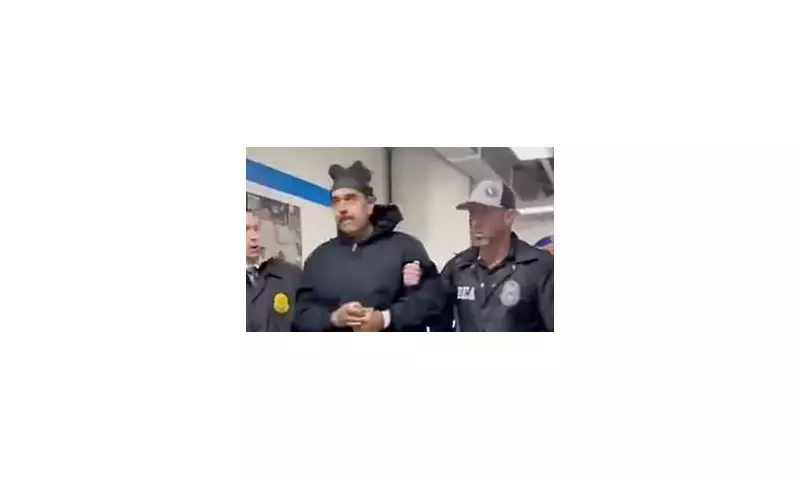
Senior US officials have laid out Washington's immediate priorities for Venezuela following the dramatic capture of the country's president, Nicolas Maduro, in a military operation that has sparked intense international debate.
America's Three-Pronged Strategy for Venezuela
Speaking on NBC's Meet the Press on Sunday, US Secretary of State Marco Rubio revealed the core objectives for the United States in the wake of the raid. The operation on Saturday led to the detention of Maduro and his wife, Cilia Flores, from their compound in Caracas. Rubio stated the first steps were to secure US national interests while also benefiting the Venezuelan people.
He explicitly listed three key aims: ending drug trafficking, removing the presence of Iran and the militant group Hezbollah, and stopping the use of Venezuela's vast oil industry to enrich American adversaries. "No more drug trafficking, no more Iran [and] Hezbollah presence there," Rubio declared, adding the US wanted to ensure there was "no more using the oil industry to enrich all our adversaries."

Legal and Political Fallout of the Caracas Raid
The operation, which involved air strikes across the capital and resulted in approximately 40 military and civilian deaths, has raised significant legal questions. Maduro and Flores are now held at the Metropolitan Correction Center in Brooklyn, New York, facing narco-terrorism and drug trafficking charges.
Former President Donald Trump, who authorised the action, has alleged Maduro leads the 'Cartel of the Suns' and flooded the US with drugs. Trump has also expressed a desire for major US oil companies to "go in, spend billions of dollars" to fix Venezuela's oil infrastructure.
However, international law experts have been quick to question the legality of both the raid and the subsequent plans. Professor Rebecca Ingber of Cardozo School of Law told The New York Times the idea of the US 'running' Venezuela sounded like "an illegal occupation under international law." Others pointed to a potential violation of the UN Charter, which prohibits the use of force against another nation's sovereignty without consent or a UN mandate.
International Repercussions and Power Dynamics
The situation is further complicated by Venezuela's deep economic ties with US rivals. The nation possesses the world's largest oil reserves, with its industry heavily linked to China, Iran, and Russia, who have invested billions to circumvent US sanctions.
Within Venezuela, Vice President Delcy Rodriguez has been named interim leader, though her allegiance remains unclear despite Trump's claims. Domestically in the US, Rubio confirmed Congress was not notified about Saturday's operation, potentially conflicting with the War Powers Act.
While experts like Professor David M. Crane suggest there is a basis to penalise Trump under international law, practical repercussions are deemed unlikely. The US, as a non-signatory to the Rome Statute, does not fall under the jurisdiction of the International Criminal Court and holds veto power at the UN Security Council.