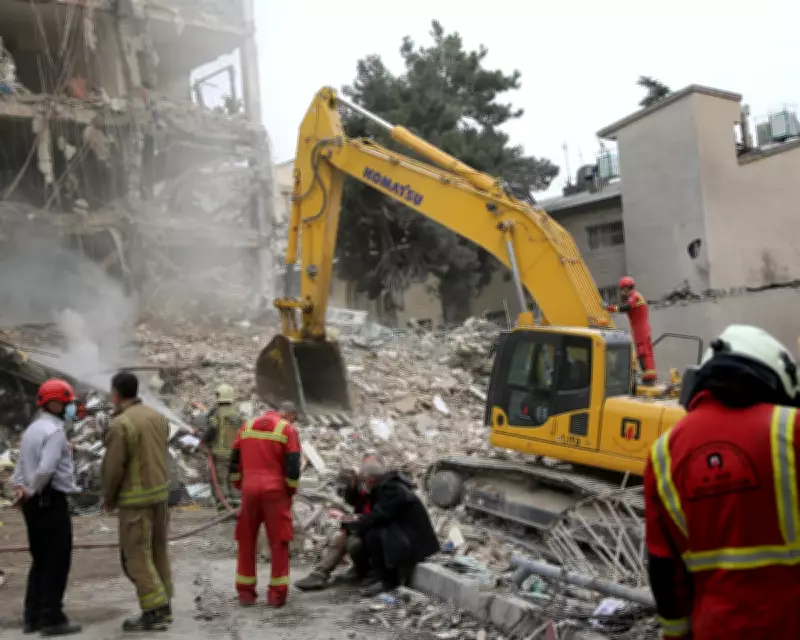
Damage in Tehran Following US and Israeli Airstrikes
Recent airstrikes conducted by the United States and Israel have caused significant damage in Tehran, escalating tensions in the Middle East. According to reports, Donald Trump's strategy may involve soothing financial markets temporarily, with plans for a massive military strike over the weekend when trading desks are closed. This approach aims to force the Iranian regime into capitulation, but experts warn it could backfire, leading to prolonged conflict.
Ongoing Conflict and Political Divisions
The so-called "pause" announced by Trump is far from a ceasefire, as Iranian forces continue to target Israel, Gulf Arab states, and northern Iraq. Meanwhile, US and Israeli warplanes persist in strikes across Iran. Trump's decision to exclude power plants and energy infrastructure from targets appears designed to calm jittery markets, but the fighting shows no signs of abating. With discussions of potential US ground troops, Washington is actively waging war while lacking a unified negotiating position, complicated by Israeli Prime Minister Benjamin Netanyahu's independent agenda.
Sir Keir Starmer, the UK prime minister, has cautioned against assuming a quick end to the war, labeling such optimism as "false comfort." He argues that Iran is unlikely to cave under pressure, a stance that may have strained his relations with Trump. Starmer emphasizes that Britain must avoid entanglement in US-Israeli adventurism, highlighting that military capability alone cannot resolve the conflict without a clear political objective.

Economic Fallout and Market Risks
The war's impact is already reverberating through global economies, with Britain experiencing slowed business activity growth, sharp rises in manufacturers' input costs since 1992, and increasing home loan costs due to energy and inflation fears. Ministers are drafting contingency plans, such as lowering speed limits, to reduce fuel consumption. However, Chancellor Rachel Reeves maintains that any economic shock will be contained within her "iron-clad" fiscal rules, ruling out universal household support for potential "Trumpflation."
This stance is seen as a gamble, especially as Bank of England Governor Andrew Bailey participates in crisis meetings, indicating systemic economic dangers. Markets are currently pricing in expectations of a quick de-escalation by Trump, but many traders may face a rude awakening if oil and gas disruptions lead to stranded cargoes and depleted inventories. Jason Bordoff of Columbia University suggests this crisis underscores the need to reduce reliance on global energy markets, pointing toward a structural shift rather than a temporary shock.
Long-Term Implications and Policy Challenges
As Europe potentially accelerates green energy transitions and Asia may turn to coal, the global energy system could become more fragmented. For Reeves, the credibility of her fiscal rules may be tested against the harsh reality of disrupted supply chains and higher costs. Starmer warns that the conflict could endure, contrasting with the Treasury's behavior, which seems to anticipate a swift resolution. In a volatile world, Britain's clean energy transition faces significant challenges, requiring robust strategies to navigate ongoing economic and geopolitical uncertainties.