US-Israeli Strategy Fails to Defeat Iran Quickly – Now They Are Moving to Plan B
Paul Rogers
It is called the Dahiya doctrine – and the Israel Defense Forces and US air force are now employing it to systematically destroy domestic support within Iran. Paul Rogers is emeritus professor of peace studies at Bradford University and author of Losing Control: International Security in the 21st Century.
The Real Power Behind the Conflict
Despite the comprehensive media coverage portraying the United States as the dominant force in the war against Iran, the reality is quite different. While the US possesses significantly greater military might than Israel, the true key player in this conflict is Israeli Prime Minister Benjamin Netanyahu.

Moreover, Netanyahu has inadvertently ensnared himself in a trap of his own creation, and he is now pulling both Donald Trump and the entire US military apparatus into that same precarious situation. For Israel, and by extension for the United States, this war must conclude with nothing short of total and absolute victory. Any outcome less than complete domination is considered entirely pointless.
The Impossibility of Partial Victory
If the conflict ends with the Iranian regime surviving, even if severely damaged and suffering catastrophic loss of life, that result would be fundamentally unacceptable to Israel. In such a scenario, Iran's most critical mission would become focusing all its technical capabilities on developing and testing a basic nuclear device to deter future attacks.
To prevent this outcome, Israel and the United States would need to establish such comprehensive control over Iran that they could access every single part of the state apparatus. This would include penetrating deeply buried bunkers and securing stocks of semi-enriched uranium that survived the initial attacks in June 2025. Even additional airstrikes, potentially involving B-2 stealth bombers operating from UK territories, would prove insufficient for this monumental task.
A War Gone Awry From the Beginning
Simultaneously, we are being inundated with assertions that the war is nearly won, even as the US navy prepares to deploy a third aircraft carrier strike group to the volatile region. From its very inception, this conflict has deviated dramatically from the original strategic plan.
The initial strategy centered on assassinating the supreme leader and as many religious and Islamic Revolutionary Guard Corps (IRGC) leaders as possible. This was intended to cripple state power and precipitate the collapse of the theocratic regime. This approach failed spectacularly, just as one US intelligence assessment had grimly predicted. The regime now has a new leader, and there are undoubtedly one or more "reserve" successors already selected should Mojtaba Khamenei be assassinated.
The Shift to Plan B: The Dahiya Doctrine
Consequently, we have now entered Plan B, a strategy comprising two distinct elements. The less significant component involves weakening the Iranian state by collaborating with minority groups such as the Kurds and potentially the Baluchis to incite revolt and catalyze national fragmentation. This might yield some impact, but the Kurds, for instance, will be extremely cautious about trusting Israeli intentions – and even more wary of a United States under Donald Trump's leadership.
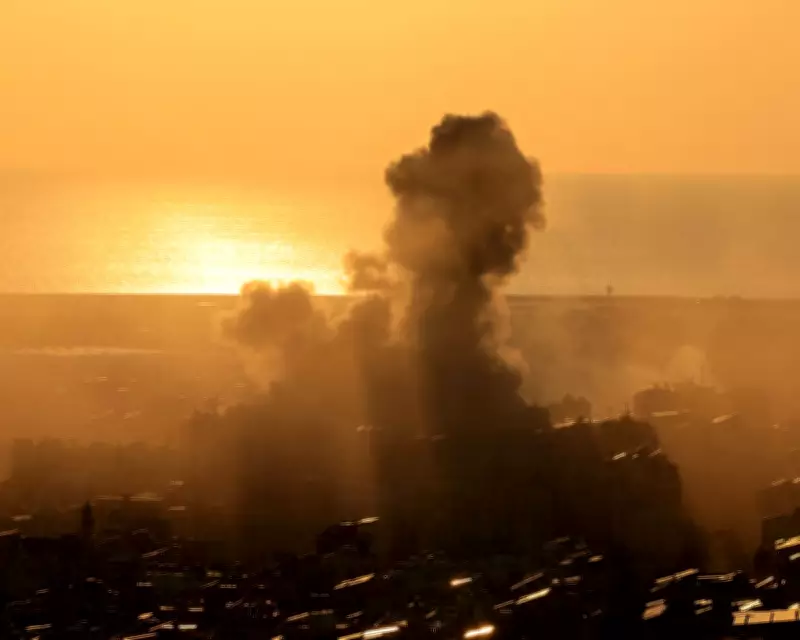
The other element – far more significant – concentrates on Israel's traditional approach in such circumstances: systematically destroying an enemy's domestic support base. This is the essence of the Dahiya doctrine: when an insurgency cannot be quelled or a state's leadership cannot be subdued, the path to victory lies in the relentless punishment of the civilian population.
Doctrine in Action: Lebanon and Gaza Precedents
This doctrine is currently being implemented in Lebanon, as Israel's destruction of Hezbollah's stronghold in the southern Beirut suburb of Dahiya progresses. This suburb gave its name to the doctrine during the 2006 war against Hezbollah.

Critics emphasize that the doctrine has been employed on a massive scale against Hamas in Gaza over the past thirty months. That campaign resulted in at least 70,000 Palestinian deaths, an even greater number of injuries, and the reduction of most territory to ruins. Yet Hamas continues to survive, and parts of Gaza remain under its control.
Applying the Doctrine to Iran
Despite this questionable track record, the Israel Defense Forces and the US air force are now applying the Dahiya doctrine to the war against Iran. Mounting evidence indicates attacks on critical infrastructure are intensifying. US Defense Secretary Pete Hegseth warned on Tuesday that it "will be our most intense day of strikes inside Iran," declaring "Iran stands alone, and they are badly losing on day 10 of Operation Epic Fury."
Drawing on Israel's recent military experiences and coupling them with the United States' status as an exceptionally belligerent superpower under Trump and Hegseth, we should anticipate witnessing widespread devastation across Iran.
The Monumental Scale and Potential Consequences
This represents a colossal undertaking that will require months to significantly impact a nation with approximately 93 million people – more than forty times the population of Gaza. Furthermore, this strategy is almost certainly unworkable. An inevitable consequence would be the IRGC expanding its attacks on the oil and gas industries of western Gulf states including the UAE, Qatar, Kuwait, and Saudi Arabia.
Such actions would guarantee a global economic impact potentially as severe as the disastrous years of 1973-74 during the OAPEC oil embargo.
A Glimmer of Hope Amid Escalation
There remains a slight possibility that a degree of rationality might prevail. Trump's assertion that the war is already nearly won may constitute wishful thinking. However, there are emerging suggestions that some Israeli officials may be experiencing second thoughts and are searching for an exit strategy. In Washington, similar heretical ideas may be gaining tentative ground.
This represents very cautious optimism, but it is decidedly preferable to the current prospect of weeks and months of this horrific, continuously escalating war.