The brutal Hamas assault on October 7, 2023, triggered a sweeping Israeli military response that delivered blow after blow to Iran, the militant group's longtime sponsor, and its network of proxy militias across the Middle East. This sustained campaign has resulted in a rapid and systematic degradation of Tehran's regional clout over the past two and a half years, a seismic shift that directly paved the way for this weekend's devastating attacks on Iran by the United States and Israel.
A Turning Point in a Long Conflict
"Certainly the Oct. 7 events were a turning point in this long conflict between Iran and Israel," said Mehrzad Boroujerdi, an expert on Iranian politics at the Missouri University of Science and Technology. "I think it provided Israel with the argument or justification to deliver a strong blow."
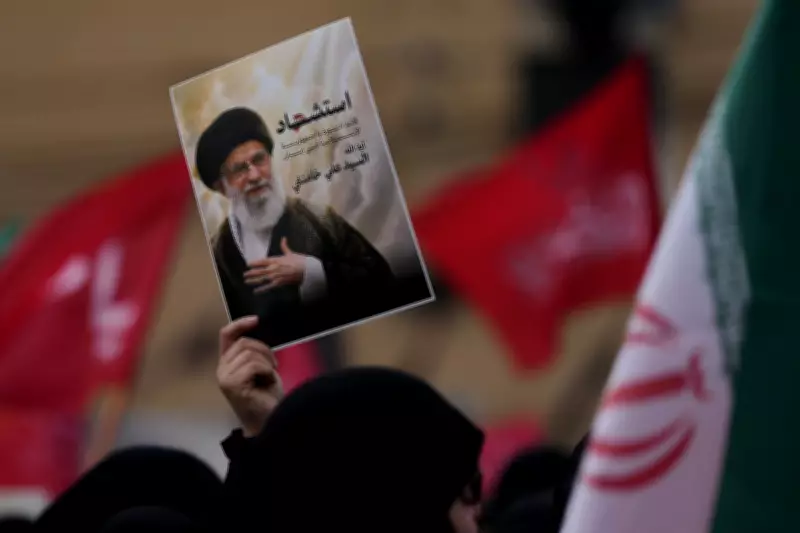
The most devastating hit so far occurred this weekend when President Donald Trump and Israeli leaders launched a wave of attacks, killing Iran's Supreme Leader Ayatollah Ali Khamenei and inflicting widespread destruction. However, this war, while in its early stages, is part of a much longer continuum of events that have severely weakened Iran, Hezbollah, and other proxy militias, upending the political balance in the region.

"It's a very bloody, a very violent but transformative moment that the Middle East is going through," said Renad Mansour, a senior research fellow focused on the Middle East at Chatham House. "We don't know where this will end up."
The Gaza War as the Wellspring
The damage to Iran's power radiated from the war in Gaza, where Israeli forces pursued Hamas after militants killed 1,200 people and took 251 hostages. Israel has since killed more than 72,000 Palestinians in Gaza, according to the Hamas-run Health Ministry, which does not distinguish between militants and civilians.
The conflict quickly expanded to include other groups in the Iran-sponsored Axis of Resistance. In Lebanon, the powerful militant group Hezbollah, long considered Iran's first line of defense, launched rockets across the border to aid Hamas after October 7. This drew Israeli airstrikes, escalating into a full-scale war by fall 2024.
Israel inflicted heavy damage, killing Hezbollah leader Hassan Nasrallah and other top figures, and destroying much of the group's arsenal before a U.S.-negotiated ceasefire nominally halted the conflict last November. Hezbollah was further weakened when rebels overthrew the regime of key ally Syrian President Bashar Assad, cutting off a major Iranian weapons supply route.
Yemen's Houthi rebels, also sponsored by Iran, joined the conflict, firing rockets at vessels in the Red Sea and targeting Israel, prompting responses from U.S. warships and the Israeli military.
Israel Abandons the Status Quo
As the conflict expanded, leaders of Iran and its proxies failed to recognize that Israel had abandoned the long-tense status quo and was engineering a fundamental shift, Mansour noted. The toll on Iran escalated last June when Israel launched a surprise offensive aimed at decimating Tehran's rapidly advancing nuclear program during U.S.-Iran negotiations. The 12-day war saw bombing attacks on Iran's energy industry and Defense Ministry headquarters.
Iran's weakened proxy groups largely stayed on the sidelines as their sponsor came under direct attack last year, and have done much the same in the new war. "It's very much about survival" for Hezbollah and other Iran-backed groups, Mansour said, noting the Axis has become less driven by top-down orders from Iran, with groups acting more autonomously. "And survival to them is based on calculations that aren't necessarily about Iran's survival."
Hezbollah's Limited Response and Future Uncertainties
Since Israel and the U.S. launched strikes on Iran Saturday, Tehran's allies have had a minimal role in the response. Hezbollah appeared to change that early Monday, firing missiles across the border despite pressure from Lebanese officials to avoid another damaging war. Israel promptly retaliated with strikes on southern Beirut. Hezbollah said the strikes were in retaliation for Khamenei's killing and "repeated Israeli aggressions."

How other proxy groups react to Khamenei's death remains to be seen. Charles Lister, a senior fellow at the Middle East Institute, said Israel's actions since 2023 may give such groups pause. "Previous bouts of conflict since Oct. 7 appear to have underlined the existential risk associated with making yourself a target," Lister said.
In Iraq, the Iran-backed Islamic Resistance has claimed drone strikes targeting U.S. bases in Irbil. Two officials with different Iran-backed militias in Iraq told the AP that a meeting took place two months ago to plan a response in case Iran was attacked, including distributing tasks among Iraqi armed groups. One official said the response would target U.S. forces and interests in Iraq's Kurdish region and neighboring Jordan.
Boroujerdi noted there's often a misconception that Iran issues orders and proxies fall in line, but independent decisions by groups to stay clear of the conflict signal the overall weakening of Iran's network. "The dominoes started to fall with the October 7 events," he said. "Just take note of everything that has changed since then in terms of the balance of power."