The Undeclared War: A Decades-Long US-Iran Conflict
While recent headlines suggest the United States and the Middle East are embarking on another forever war, the reality is far more entrenched. This represents merely the latest chapter in an undeclared military conflict between the United States and Iran that has persisted since the 1980s, marked by tragic errors, proxy battles, and escalating violence.
Divergent Origins: When Did the War Begin?
For Americans, the conflict commenced in 1979 when Iranian students seized the US embassy in Tehran, holding 52 diplomats hostage for 444 agonizing days. For Iranians, however, the war started earlier with US support for the Shah and subsequent backing of Iraq throughout the devastating Iran-Iraq War from 1980 to 1988. These contrasting perspectives have fueled mutual distrust that continues to shape relations today.
Tragic Civilian Casualties: The Human Cost
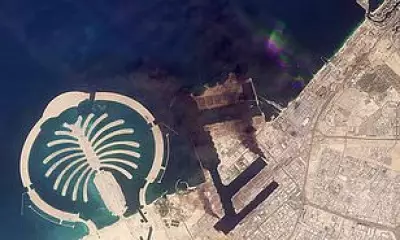
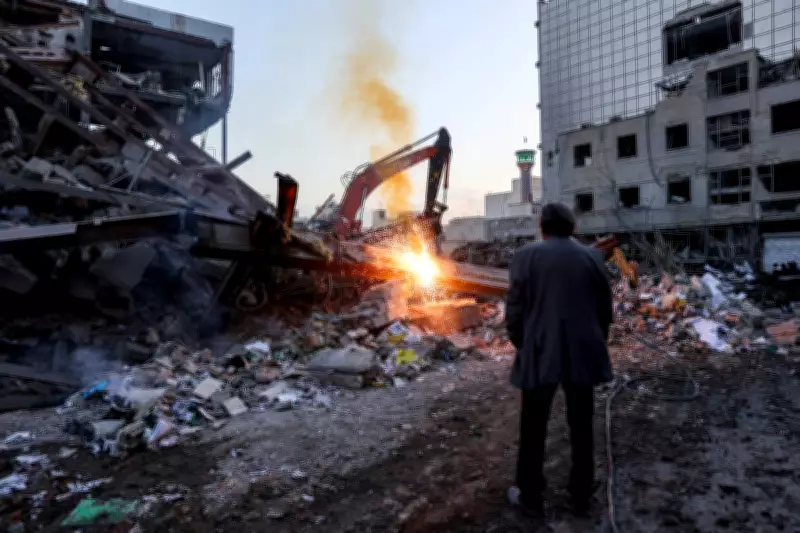
The conflict has exacted a terrible human toll, particularly among civilians. On July 3, 1988, the US warship Vincennes misidentified Iran Air Flight 655 as a military aircraft and shot down the civilian flight bound for Dubai, killing all 290 people aboard. More recently, on February 28, 2026, a US-Israeli missile struck a girls' school in southern Iran, claiming over 150 civilian lives, predominantly children.
Iran has also committed catastrophic errors. On January 8, 2020, the Islamic Revolutionary Guard Corps mistakenly identified Ukraine International Airlines Flight 752 as a US military flight, firing two surface-to-air missiles that killed all 176 passengers, mostly Iranian civilians. These incidents are not merely historical footnotes but have profoundly reinforced institutional beliefs on both sides that genuine peace remains unattainable.
The 1980s: Naval Warfare in the Persian Gulf
In 1984, Iraq initiated the "tanker war" against Iran, attacking oil tankers bound for Iranian ports. This conflict escalated dramatically when an Iraqi plane accidentally struck the American frigate Stark on May 17, 1987, killing 37 crew members. The United States redirected blame toward Iran, arguing the Islamic Republic had failed to negotiate an end to the broader war.
The US Navy began providing protection for Kuwaiti oil tankers by requiring them to hoist American flags while navigating the Persian Gulf and Strait of Hormuz. Iran responded by targeting these reflagged vessels, prompting US retaliation against Iranian offshore platforms and Revolutionary Guard speedboats. The US military sank two Iranian frigates, eliminating half of Iran's naval capacity.
It was during these heightened hostilities that Iran Air Flight 655 was tragically downed. For Iranians, this attack confirmed they were engaged in a de facto war with the United States, perceived as vengeance for the 1979 hostage crisis. Ironically, this tragedy compelled Iran to accept the ceasefire ending the Iran-Iraq War, though its conflict with America persisted.
The 2000s: Proxy Conflicts and Ground Warfare
The second phase of this undeclared war shifted from naval engagements to proxy ground conflicts. After 2001, President George W. Bush included Iran in his "axis of evil" alongside Iraq and North Korea. Following the 2003 invasion of Iraq, Iran suddenly found US troops on two borders—Iraq and Afghanistan—sparking fears of regime change or attacks on nuclear facilities.
Iran leveraged its support for Iraqi insurgent groups to target American forces. The militia Asa'ib Ahl al-Haq, formed in 2006, specifically attacked US military vehicles with improvised explosive devices, challenging American control of Iraqi motorways. This low-intensity conflict only subsided when US forces withdrew from Iraq in 2011.
The 2010s and 2020s: Aerial Warfare and Direct Confrontation
During the 2010s, the Obama administration entered a de facto alliance with Iran to combat ISIS, with the US providing air cover while Iran fought alongside Iraqi Shi'a militias on the ground. This fragile cooperation collapsed in October 2017 when President Donald Trump withdrew from the Iran nuclear deal and reimposed sanctions.
Relations deteriorated rapidly as Iran retaliated by targeting US forces in Iraq, initiating an air war. Rocket attacks by Iran-allied militias like Kataib Hizballah prompted US airstrikes in response. Violence escalated further in December 2019 when militia attacks killed an American contractor, leading to US airstrikes that killed at least 25 militia members.
The situation reached a critical threshold on January 3, 2020, when a US drone strike killed General Qassem Soleimani, commander of Iran's Revolutionary Guards' Quds Force, along with militia leader Abu Mahdi al-Muhandis. This marked the first direct US targeting of a senior Iranian state official, transitioning the conflict from proxy warfare to direct state-on-state confrontation. Iran responded with 22 Fateh ballistic missiles targeting Iraqi bases housing American forces.
A Legacy of Escalation and Missed Opportunities
The 2015 Iran nuclear deal represented the first serious attempt to end this decades-long conflict, serving as Barack Obama's major diplomatic achievement. However, subsequent administrations failed to build upon this foundation. The Biden administration had opportunities to de-escalate tensions after the 2020 elections but instead witnessed continued escalation.
Historical parallels persist: US naval deployment in the 1980s was widely viewed as disproportionate to actual threats, while Israel's justification for its 2025 12-Day War—claiming Iran was weeks from obtaining nuclear weapons—echoed similarly dubious pretexts. As of February 2026, the United States has initiated the latest round in this enduring conflict. While both nations have historically managed to escalate without triggering total war, that precarious equilibrium now appears increasingly fragile.