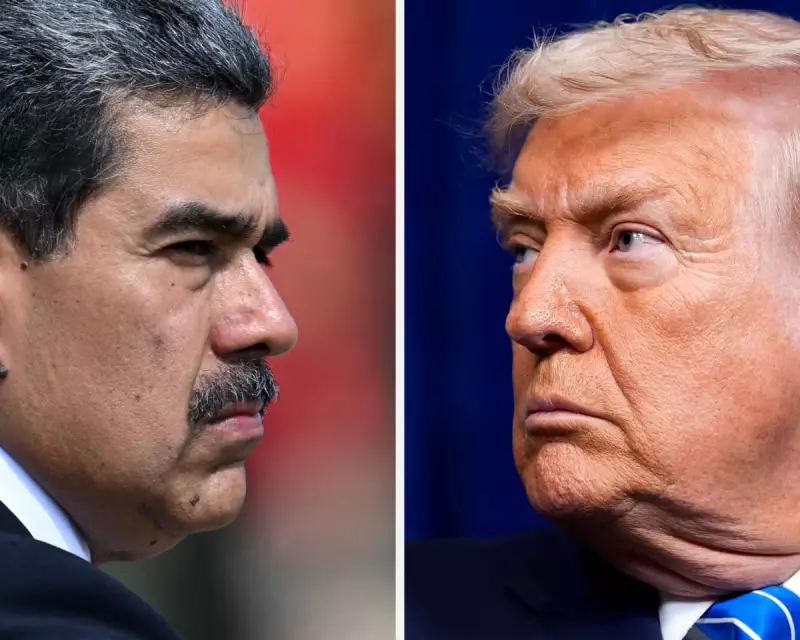
The United States government has embarked on a bold and controversial diplomatic manoeuvre, initiating a formal plan aimed at removing Venezuelan President Nicolás Maduro from power. This strategic shift marks a significant escalation in Washington's long-standing pressure campaign against the socialist government in Caracas.
The Mechanics of the US Strategy
According to detailed reports, the US State Department has circulated a confidential framework to key allies, outlining a step-by-step approach to facilitate a political transition in Venezuela. The plan, described as a "detailed roadmap," reportedly involves a combination of intensified economic sanctions, diplomatic isolation, and support for opposition factions within the country.
The core objective is to create conditions that compel Maduro to either step down voluntarily or face a scenario where his hold on power becomes untenable. The strategy hinges on reinstating sanctions on Venezuela's crucial oil and gas sector, a move designed to cripple the government's primary source of revenue. This economic pressure is intended to be coupled with a concerted effort to bolster the unity and legitimacy of the opposition coalition.

Global Reactions and Diplomatic Ripples
The American initiative has sent shockwaves through international diplomatic circles. Initial reactions have been sharply divided, highlighting the deep geopolitical fissures surrounding the Venezuelan crisis. Traditional US allies in Europe and Latin America have expressed cautious interest, with some indicating a willingness to consider the plan's proposals.
Conversely, nations aligned with Maduro's government, including Russia, China, and Iran, have condemned the move as a blatant act of foreign interference and a violation of international law. They argue it represents a dangerous precedent of external powers orchestrating regime change. The plan has also sparked debate about its potential effectiveness, with some analysts questioning whether increased pressure will lead to a negotiated solution or simply deepen the humanitarian crisis for ordinary Venezuelans.
Potential Consequences and Future Scenarios
The ramifications of this aggressive US policy are profound and multifaceted. Domestically within Venezuela, the threat of renewed oil sanctions threatens to exacerbate an already dire economic situation, potentially leading to greater instability and migration flows. For the Maduro government, the strategy presents an existential challenge, likely prompting a further crackdown on dissent and a tightening of alliances with supportive foreign powers.
Regionally, the move could destabilise parts of Latin America, affecting neighbouring countries that have absorbed millions of Venezuelan refugees. The success or failure of this plan will also be a major test for US diplomatic influence in the Western Hemisphere. If successful, it could embolden similar approaches elsewhere; if it fails, it may be seen as a significant foreign policy setback, undermining US credibility on the global stage.
Ultimately, this latest development underscores the Biden administration's hardened stance towards Caracas, moving beyond rhetoric to a structured campaign for political change. The coming months will be critical in determining whether this diplomatic offensive can alter the entrenched political dynamics of Venezuela or if it will add another complex layer to the nation's prolonged crisis.