A renewed and vigorous diplomatic drive by the United States to broker an end to Russia's protracted invasion of Ukraine has ignited a whirlwind of high-stakes negotiations across multiple continents. In recent weeks, officials from the US, Ukraine, and Russia have embarked on a series of crucial meetings, signalling the most concerted push for peace since the conflict began nearly four years ago.
A Timeline of Intensive Negotiations
The diplomatic activity began in earnest on 19 November, when Ukrainian President Volodymyr Zelenskyy travelled to Turkey. He stated the visit aimed to revive negotiations to conclude the war. Shortly after, details surfaced of a 28-point peace plan reportedly drafted by the US and Russia. This proposal has faced criticism from some quarters for appearing to concede significant ground to Moscow.
The following day, 20 November, saw US Army Secretary Dan Driscoll arrive in Kyiv. He met with President Zelenskyy to formally present and explain the American-backed peace proposal.
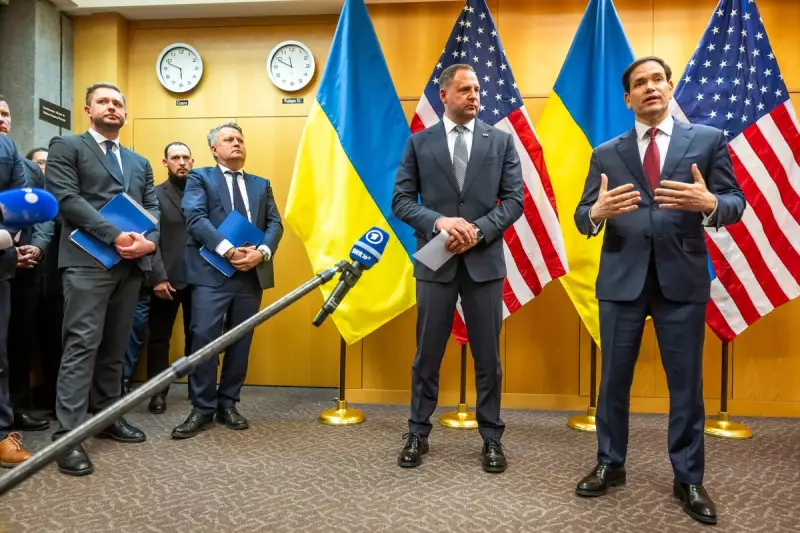
By 23 November, talks moved to Geneva. US Secretary of State Marco Rubio convened with a Ukrainian delegation led by Andrii Yermak, then the presidential chief of staff. Both sides indicated that discussions were productive, though they withheld specific details. Yermak also engaged with European security officials during this period.
Engagements in the Gulf and a Shift in Kyiv
On 24-25 November, the focus shifted to Abu Dhabi in the United Arab Emirates. Here, Dan Driscoll held discussions with Russian officials. Yuri Ushakov, a foreign policy adviser to Russian President Vladimir Putin, later commented that the new peace plan was not examined in depth during these meetings.
A significant change occurred in the Ukrainian delegation by 30 November. A new team, headed by Rustem Umerov, met US officials in Florida. Umerov's appointment followed the resignation of Andrii Yermak, who stepped down amidst a corruption scandal linked to Ukraine's energy sector.
Parallel Tracks: Paris, Moscow, and the Kremlin
As December began, diplomatic efforts accelerated on parallel tracks. On 1 December, President Zelenskyy flew to Paris for talks with French President Emmanuel Macron, briefing him on the outcomes from Florida. Simultaneously, a separate US delegation travelled to Moscow for direct discussions with Russian representatives.
The most notable meeting occurred on 2 December at the Kremlin, where President Vladimir Putin hosted a five-hour discussion with US envoy Witkoff and Jared Kushner, son-in-law to former President Donald Trump. Also present were Russian envoy Kirill Dmitriev and adviser Yuri Ushakov. Ushakov described the talks as constructive but emphasised that substantial work remains.
Later that same day, President Zelenskyy met in Ireland with the Ukrainian team returning from Florida. At a subsequent press conference, he stated that Ukraine was now awaiting signals from the American delegation following their meetings in Russia.
The flurry of activity continued into the week, with a Ukrainian delegation flying back to Florida on 4 December for further consultations with members of the US team that had visited Moscow.
This burst of shuttle diplomacy underscores the heightened urgency surrounding the conflict. While all parties acknowledge progress is being made, the path to a lasting and acceptable peace agreement remains fraught with complexity, with the details of any potential deal still closely guarded.