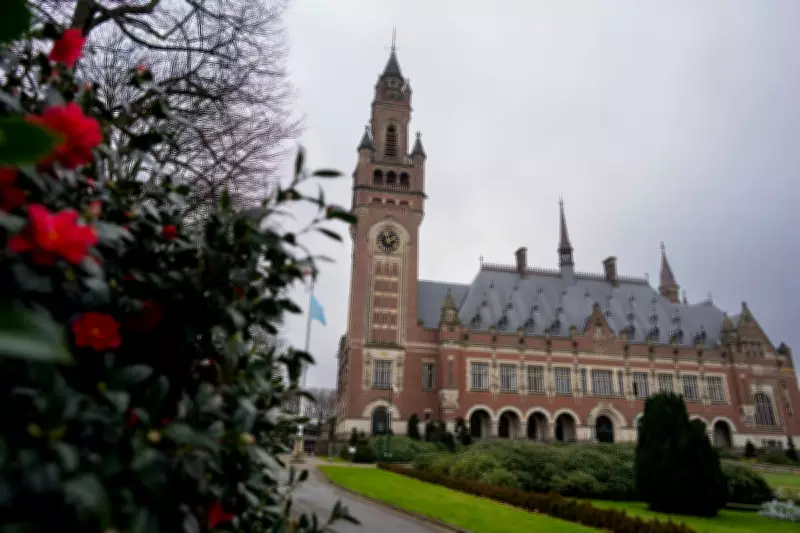
The United States has officially intervened in the genocide case brought against Israel at the United Nations' highest court, according to a filing obtained by The Associated Press. The U.S. argues that South Africa's allegations are false and cautions that a ruling against Israel could have damaging consequences for international legal standards.
U.S. Challenges Genocide Allegations at The Hague
In a detailed legal submission to the International Court of Justice in The Hague, the United States contends that the accusations form part of what it describes as a "broader campaign" against Israel and Jewish people. The filing stresses that these allegations are being used to "justify or encourage terrorism" against them, presenting a robust defense of Israel's position.
Legal Standards and Specific Intent Requirements
The U.S. legal argument emphasizes that establishing genocide requires demonstrating "specific intent" to commit the crime. The filing warns the court against "lowering the standard" for such determinations, particularly in complex armed conflict situations.

"Civilian casualties, even widespread civilian casualties, are not necessarily probative of genocidal intent, particularly when they occur in the context of an armed conflict involving urban combat," the U.S. asserts in its submission. This position directly challenges the core arguments presented by South Africa in its case against Israel.
International Context and Precedent Concerns
Reed Rubenstein, the State Department legal adviser representing the United States, expressed concern that a finding against Israel would represent a "radical repudiation" of the court's established precedent. Rubenstein told The Associated Press that such a decision would "feed the perception that the court is simply just one more tool in the ongoing pro-Hamas lawfare campaign" against Israel.
The case emerges under the 1948 Convention on the Prevention and Punishment of the Crime of Genocide, which allows any party to intervene and contribute legal assessments. This follows a pattern seen in 2023 when over thirty countries backed Ukraine in its separate case against Russia at the same court.
Diverging International Positions
While the United States has taken a firm position supporting Israel, more than a dozen other nations have filed interventions in the case with differing perspectives. Countries including Spain, the Netherlands, and Ireland have submitted their own assessments, creating a complex international legal landscape around the allegations.
Background and Related Legal Proceedings
The International Court of Justice has been examining whether Israel's military operations in Gaza against Hamas constitute genocide under international law. Israel, founded in the aftermath of the Holocaust, has vehemently denied all allegations of genocide throughout the proceedings.
Since South Africa initiated the case in 2023, the ICJ has issued several orders concerning Israel's conduct in Gaza. These include directives for Israel to take all possible measures to prevent death, destruction, and any acts of genocide. In separate proceedings, the court has ruled that Israel must allow the UN aid agency UNRWA to provide humanitarian assistance to Palestinian territories.
Ceasefire Implementation and Ongoing Tensions
Following a U.S.-brokered ceasefire that took effect last year, the most intense fighting in Gaza has diminished, though regular Israeli military operations continue. The fragile agreement has facilitated increased humanitarian aid and supplies entering the enclave, though restrictions have been periodically reinstated during U.S. and Israeli actions against Iran.
Parallel International Criminal Court Proceedings
In related developments, the International Criminal Court issued arrest warrants in 2024 for Israeli Prime Minister Benjamin Netanyahu and his former defense minister concerning the Gaza conflict. The ICC stated there were reasonable grounds to believe the officials used "starvation as a method of warfare" by restricting humanitarian aid and intentionally targeting civilians.

The Trump administration responded to these ICC actions by imposing sanctions on court officials, including nine judges and top prosecutors, highlighting the complex interplay between international legal institutions and political responses.
Associated Press reporter Matt Lee in Washington, D.C. contributed to this report, providing additional context and verification of the legal filing details that form the basis of this developing international legal confrontation.