The Role of US Attorney General and Implications of Presidential Dismissals
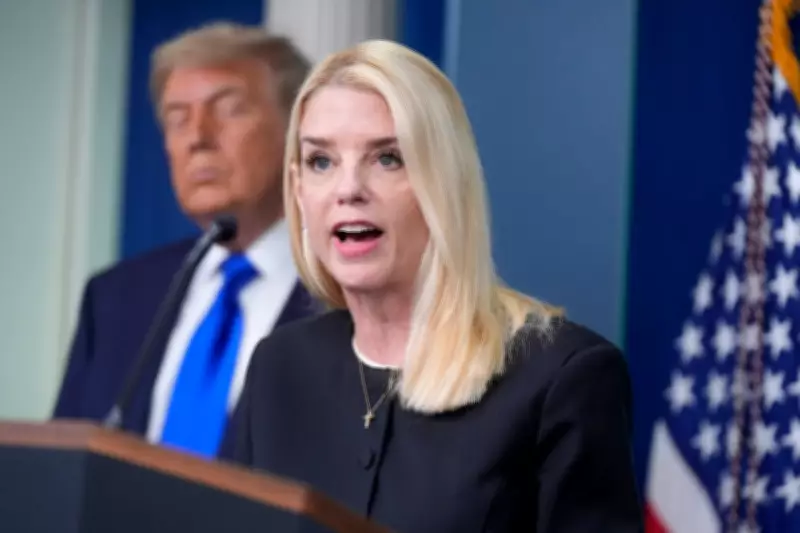
President Donald Trump's abrupt dismissal of Attorney General Pam Bondi on April 2, 2026, after just fourteen months in office, has thrust the position into the political spotlight. This termination marks the shortest tenure for an attorney general in six decades, yet the fundamental responsibilities of this crucial office remain widely misunderstood. The attorney general serves as the principal legal advisor to the president and oversees the vast Department of Justice, making this role one of the most significant within the federal executive branch.
Historical Foundations and Expanding Responsibilities
Congress established the position of attorney general in 1789 to provide the national government with a designated legal representative. Initially, this was a part-time role focused on conducting federal lawsuits for crimes such as counterfeiting, piracy, and treason, while also offering legal counsel to the president and cabinet members like the Treasury Secretary. For the first several decades, most attorneys general maintained private law practices and often resided outside the capital.
As the federal government expanded its activities, the attorney general's duties grew substantially, evolving into a full-time position. Today, the attorney general represents the United States in all legal matters and supervises federal prosecutions conducted by ninety-three U.S. attorneys across the nation. This supervision extends to nearly all legal actions involving federal agencies, including the Department of Homeland Security, the Environmental Protection Agency, and the Social Security Administration.

Recent examples of Department of Justice activities under attorney general supervision include charging individuals with conspiring to smuggle artificial intelligence technology to China, negotiating agreements requiring Ford Motor Company to clean contaminated groundwater in New Jersey, and collaborating with Wisconsin to prosecute deceptive timeshare exit services targeting elderly customers.
The Department of Justice's Vast Infrastructure
Since 1870, attorneys general have commanded an entire executive department—the Department of Justice—to execute their duties effectively. Today's department encompasses over seventy distinct offices, initiatives, and task forces, all supervised by the attorney general, with more than 115,000 employees.
The DOJ contains specialized litigation units divided by subject matter, including antitrust, civil rights, tax, and national security. Each unit conducts investigations and participates in federal lawsuits related to its expertise. Additionally, the Justice Department oversees several prominent law enforcement agencies that ensure public safety, such as the FBI, the Drug Enforcement Administration, and the U.S. branch of Interpol.
Corrections agencies like the Federal Bureau of Prisons and the U.S. Parole Commission operate under DOJ supervision to ensure consistent coordination of federal prisons and offenders. The department also manages grant administration agencies, including Community Oriented Policing Services, the Office of Justice Programs, and the Office of Sex Offender Sentencing, Monitoring, Apprehending, Registering, and Tracking (SMART), which provide financial assistance and training to state, local, tribal, and territorial governments.
The Delicate Balance Between Politics and Law
Given the attorney general's extensive responsibilities, the role inherently blends political and legal dimensions. Historically, attorneys general have faced significant challenges in separating their functions as policy advisers from their duties as the nation's chief legal officer.
Notable examples include President George W. Bush's attorney general, Roberto Gonzales, who resigned amid accusations of politicized firings of U.S. attorneys and misuse of terrorist surveillance programs. Similarly, Loretta Lynch, President Barack Obama's attorney general, faced criticism for meeting privately with former President Bill Clinton while former Secretary of State Hillary Clinton was under DOJ investigation.

The attorney general's position is further complicated by the president's constitutional authority to dismiss them for political reasons. During his first term, Trump replaced Attorney General Jeff Sessions after Sessions recused himself from overseeing the Mueller investigation into Russian interference in the 2016 election. When Bondi initially assumed the role, critics viewed her appointment as part of Trump's strategy to control the DOJ's agenda, including potential use of the FBI against perceived adversaries. Trump reportedly fired Bondi for failing to execute his vision effectively.
Immediate Aftermath and Future Considerations
Under current law, the president can designate a Senate-confirmed official or another high-ranking individual who has worked within the DOJ for ninety days to serve as acting attorney general. Presidents from both parties have historically relied on such temporary appointments while deciding on permanent nominees.
President Trump has named Todd Blanche as acting attorney general. Blanche, who served as deputy attorney general under Bondi, previously represented Trump in three of the four major criminal lawsuits he faced before the 2024 presidential election. Rumors suggest Trump is considering Lee Zeldin, current head of the Environmental Protection Agency, as Bondi's permanent replacement. Zeldin served on Trump's legal defense team during his first impeachment trial.
Blanche's temporary appointment and Zeldin's potential nomination have raised further questions about the politicization of the Department of Justice. A recent Associated Press study revealed that only two in ten Americans have substantial confidence in the department, partly due to longstanding political connections between presidents and their attorneys general. Ultimately, the fate of the nation's top law enforcement official rests in the hands of politicians, highlighting the ongoing tension between legal integrity and political influence.
About the author: Jennifer Selin is an Associate Professor of Law at Arizona State University. This article is republished from The Conversation under a Creative Commons license.