Evidence Points to US Airstrike in Deadly Iranian School Explosion
Satellite imagery, expert analysis, and military information strongly suggest that a devastating explosion at an Iranian girls' school, which killed scores of students, was likely caused by a United States airstrike. The February 28 strike, part of a broader U.S.-Israeli campaign targeting Iran, represents the highest reported civilian death toll since the conflict began, drawing condemnation from the United Nations and human rights organizations.
School Reduced to Rubble in Precision Strike
Satellite images taken on Wednesday and reviewed by The Associated Press reveal the Shajareh Tayyebeh Elementary School in Minab, approximately 1,100 kilometers southeast of Tehran, almost completely destroyed. The images show a distinctive crescent-shaped impact on the roof, with the building reduced to rubble. According to Iranian state media, more than 165 people were killed during school hours, most of them children.
Experts analyzing the satellite photographs note that the tight, precise pattern of damage is consistent with a targeted airstrike rather than accidental or indiscriminate bombardment. "All the strikes are clustered within the walled-off compound," said Corey Scher, a researcher specializing in conflict zone analysis using satellite data. "That's one level of precision at the block level. And then most of the strikes are basically leading to direct hits on buildings. That's another level of precision."

Proximity to Revolutionary Guard Facilities
The school's location appears to be a key factor in the tragedy. It stands adjacent to a walled compound identified on maps as the Seyyed Al-Shohada Cultural Complex of Iran's Revolutionary Guard, which includes facilities such as a pharmacy, gym, and sports field. Historical satellite imagery indicates the school building was not separated from this Guard compound until about a decade ago when a dividing wall was constructed.
Further analysis shows living quarters for the Assef Brigades, part of the Guard's navy, located approximately 150 meters from the school within the compound. The 1st Naval District, to which these brigades belong, is responsible for the strategic Strait of Hormuz, a critical chokepoint for global oil and gas trade that has been a focal point of conflict.
Farzin Nadimi, a senior fellow at the Washington Institute for Near East Policy who studies Iran's military, suggested the school likely educated daughters of Revolutionary Guard personnel. "My assumption is that probably there were some activities recently there and they detected and tracked them, but ... they weren't aware or didn't have an up-to-date database that a girls' school was there and they bombed it," Nadimi said.
US Military Investigation Underway
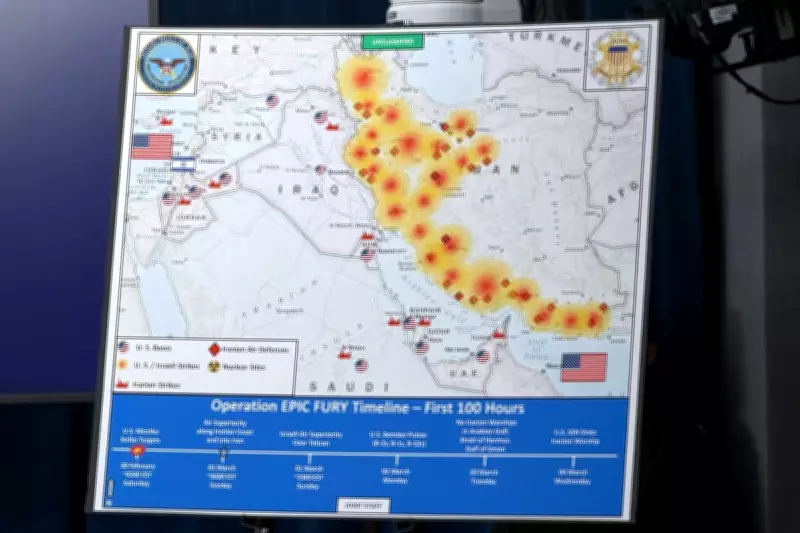
Several indicators point toward U.S. involvement in the strike. The U.S. military has launched an assessment of the incident, a process typically initiated when initial determinations suggest possible U.S. culpability, according to Pentagon protocols for mitigating civilian harm. Additionally, the United States has acknowledged conducting strikes in Hormozgan Province, where the school is located, with a focus on naval targets.
When questioned about the school strike during a Pentagon press briefing, Defense Secretary Pete Hegseth stated, "All I can say is that we're investigating that. We, of course, never target civilian targets. But we're taking a look and investigating that." The U.S. military's Central Command declined to comment further, citing the ongoing investigation.
Israel, which has denied responsibility for the strike, has primarily focused its operations on areas of Iran closer to its territory and has not reported any strikes south of Isfahan, approximately 800 kilometers from the school site.
Multiple Munitions and Targeting Failures
Three independent experts consulted by the AP concluded that satellite imagery and video evidence strongly suggest multiple munitions struck the compound. The damage patterns are consistent with air-to-surface weapons that exploded upon impact with buildings or the ground.

Sean Moorhouse, a former British Army officer and explosive ordnance disposal expert, noted that while available imagery cannot definitively identify the specific munitions used, the visible damage aligns with what would be expected from multiple 2,000-pound high-explosive warheads. "The multiple precise impacts would undercut any suggestion that a malfunctioning Iranian missile hit the school," Moorhouse said.
N.R. Jenzen-Jones, director of Armament Research Services, described the attack as involving "multiple simultaneous or near-simultaneous strikes" targeting both the school and Guard compound. He pointed to potential failures in the targeting cycle, stating, "We might be seeing an intelligence failure, likely rather early in the process, which misidentified the target or failed to update a targeting list following the building's change in use."
International Condemnation and Legal Implications
The strike has provoked widespread condemnation from UN Secretary-General António Guterres and numerous international human rights groups. This criticism emerges alongside reports of other school strikes in Iran, with organizations like Airwars and the Human Rights Activists News Agency documenting additional incidents causing civilian casualties.
Elise Baker, a senior staff lawyer at the Atlantic Council, emphasized that targeting schools constitutes a clear violation of international laws governing armed conflict. "Strikes can only legally target military objectives and combatants, but the school was a civilian object and the students and teachers were civilians," Baker stated. "The school's proximity to Guard facilities and the attendance of children of Guard members at the school does not change that conclusion: It was a civilian object."
In the aftermath of the tragedy, video verified by the AP using satellite imagery shows dozens of fresh graves at a nearby cemetery, underscoring the human cost of the conflict. The incident highlights the ongoing challenges of precision targeting in urban environments and the devastating consequences when intelligence failures occur.