UN Security Council Condemns Haiti's Stalled Political Transition
The United Nations Security Council has issued a stern rebuke to Haitian authorities, expressing deep concern over the lack of meaningful progress in establishing a stable political transition. In a resolution adopted unanimously on Thursday, the council emphasised the urgent need for comprehensive security sector reforms to address the rapidly deteriorating security situation, characterised by escalating violence from powerful criminal gangs.
Escalating Violence and Human Rights Abuses
The council's resolution condemned in the strongest terms the recent surge of violence across Haiti, Latin America's poorest nation. It highlighted numerous human rights violations and abuses, including:
- Sexual violence against women, men, and children
- Human trafficking and migrant smuggling operations
- Killings and targeted abductions of children by armed groups
- Expansion of gang control beyond urban centres into rural areas
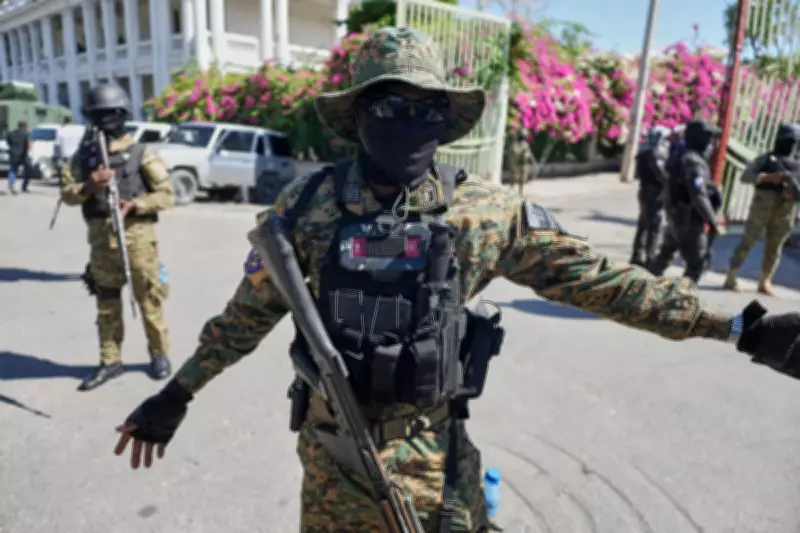
Since the assassination of President Jovenel Moïse in 2021, criminal gangs have dramatically increased their power and territorial control. These groups now dominate approximately 90% of the capital, Port-au-Prince, and have extended their operations throughout the countryside, creating a nationwide security crisis.

Transitional Council's Uncertain Future
Haiti has been governed by a transitional council since April 2024, established with assistance from Caribbean leaders following unprecedented gang attacks that forced the closure of the main international airport and targeted critical state infrastructure. These events ultimately led to the resignation of former Prime Minister Ariel Henry.
The transitional council was tasked with selecting Haiti's prime minister to restore some measure of stability. However, the country has seen three different prime ministers since the council's formation, highlighting the ongoing political instability. The council is theoretically scheduled to dissolve by February 7th, though uncertainty surrounds whether this deadline will be met.
Last week, the United States issued a warning to the transitional council against making further governmental changes, as pressure mounts for the unelected body to initiate electoral processes for the first time in a decade.
Revised UN Mandate and International Response
The Security Council resolution, co-sponsored by the United States and Panama, extends the UN's political mission in Haiti (BINUH) until January 31, 2027. The revised mandate focuses on facilitating a "national dialogue" to support preparations for municipal, parliamentary, and presidential elections.
Furthermore, the resolution calls for BINUH to collaborate closely with the newly authorised gang suppression force, which was approved on September 30th to replace an understaffed and underfunded UN-backed mission previously led by Kenyan police. This new force, comprising 5,500 members, has been described by U.S. Ambassador Mike Waltz as offering "Haiti hope," though no specific deployment timeline has been established.
The UN mission is also directed to assist Haitian authorities in developing comprehensive programs for disarming and reintegrating former gang members, with particular attention to children associated with armed groups. This multifaceted approach reflects the international community's growing concern about Haiti's deepening political and security crises.