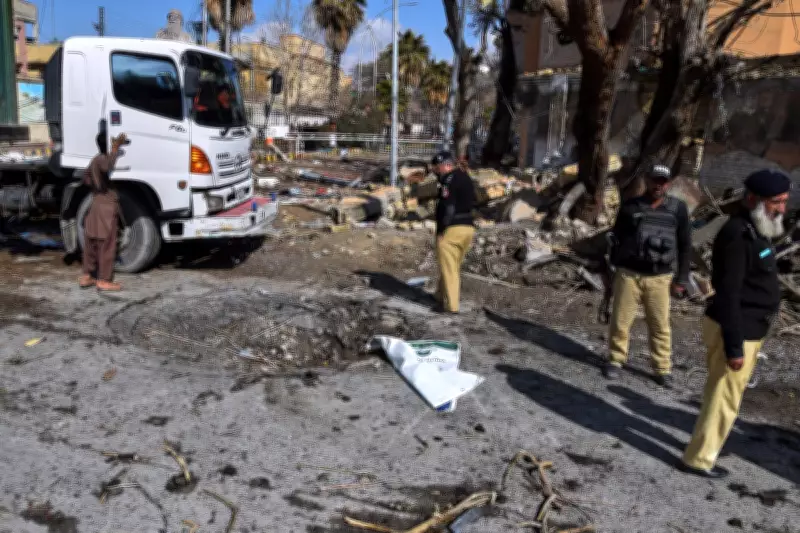
The United Nations Security Council has issued a forceful condemnation of a devastating surge in militant violence across southwestern Pakistan, where coordinated attacks have resulted in the deaths of more than fifty individuals, the majority of whom were civilians. This violent escalation has centred on the restive Balochistan province, prompting a significant military crackdown by Pakistani security forces.
Coordinated Assaults and Military Response
According to official statements, the wave of violence began on Saturday with approximately a dozen coordinated assaults. These attacks deliberately targeted civilian areas as well as buildings housing police and other security personnel. In response, Pakistani forces have launched extensive counter-insurgency operations across the province.
Federal and provincial authorities have confirmed a grim toll, stating that at least thirty-six civilians and seventeen members of the security forces have lost their lives. In a significant retaliatory action, security forces report having killed one hundred and ninety-seven militants affiliated with the outlawed Baloch Liberation Army (BLA), which has claimed responsibility for the recent suicide bombings and gun attacks.

International Condemnation from the UN
In an overnight statement, UN Security Council President James Kariuki conveyed the council's unified stance. The members condemned in the "strongest terms the heinous and cowardly terrorist attacks across multiple locations" within Balochistan. The council extended its deepest condolences to the families of the victims, as well as to the government and people of Pakistan, underscoring the international community's concern over the deteriorating security situation.
Historical Context of the Balochistan Insurgency
Balochistan, Pakistan's largest yet poorest province, has been embroiled in a decades-long separatist insurgency. Ethnic Baloch groups have long sought greater autonomy or outright independence from the central government in Islamabad, citing political marginalisation and economic neglect. Despite repeated government claims of quelling the unrest, sporadic violence has persisted, highlighting the deep-rooted nature of the conflict.
Local reports from the resource-rich but impoverished region speak of rampant corruption and significant nationalistic sentiments. "Everyone here is corrupt," one former chief minister of the province told media, pointing to systemic governance issues. Many ethnic Baloch separatists continue to demand a larger share of the province's natural resources, which they believe are exploited without adequate local benefit.
Regional Tensions and Accusations
The recent violence has also reignited longstanding regional tensions. Pakistan's military alleged on Saturday that the BLA attacks were "Indian-sponsored," a recurring accusation within the country's national security narrative. India swiftly denied the claim, with its foreign ministry spokesperson, Randhir Jaiswal, stating, "We categorically reject the baseless allegations made by Pakistan."
Jaiswal further suggested that Islamabad should instead focus on addressing the "long-standing demands" of the Balochistan people, rather than deflecting attention onto external actors. This exchange underscores the complex geopolitical dimensions surrounding the province's instability.
Provincial Government's Stern Warning
In the aftermath of the attacks, the provincial government has adopted a hardline stance. The chief minister, Sarfraz Bugti, issued a stark warning via social media, placing responsibility on the families of militants. "Those who have joined the ranks of terrorists are the responsibility of their families to inform the government," he stated.
Bugti added that "The law will be set in motion against all those whose families did not inform the government about the terrorists who were killed," signalling a potentially controversial policy of holding families accountable for the actions of their relatives. This approach reflects the government's escalating efforts to curb militant recruitment and activity within the troubled province.