Ukraine Sends Drone Experts to Protect US Bases in Jordan
President Volodymyr Zelenskyy has announced that Ukraine deployed interceptor drones and skilled operators to safeguard US military installations in Jordan last week. This move came in response to urgent requests for assistance from eleven countries, including the United States and several European nations, as the conflict between the US, Israel, and Iran entered its tenth day.
Strategic Deployment Amid Regional Tensions
Zelenskyy detailed in an interview that the US specifically sought help defending Jordan, where American forces maintain a significant presence at the Muwaffaq Salti airbase. A Ukrainian team was dispatched promptly, departing the day after the request was made on Thursday. Satellite imagery suggests that Iranian attacks may have damaged or disabled the radar system of a US Thaad air defence unit at this base, part of a broader pattern of strikes across the region.
According to Orysia Lutsevych of the Chatham House thinktank, Ukraine is strategically positioning itself as a valuable ally by sharing its extensive war experience. "Ukraine is trying to show it is an asset, including to the US and other allies," Lutsevych explained, noting that this cooperation is exchanged for support and goodwill. She added that with Russia reportedly sharing targeting intelligence with Iran, Ukraine's response is to send specialists and interceptors to protect critical infrastructure like bases, energy, and water systems.

Diplomatic Outreach and Security Coordination
In recent days, Zelenskyy has engaged in diplomatic talks with leaders from Saudi Arabia, the UAE, Kuwait, Bahrain, Qatar, and Jordan. "It is very important to coordinate for security both in Europe and in the Middle East," he stated following a conversation with Saudi Crown Prince Mohammed bin Salman. This outreach underscores Ukraine's efforts to strengthen ties with Gulf and Middle Eastern nations facing threats from Iran.
Zelenskyy highlighted on social media that there have been eleven formal requests from countries neighbouring Iran, European states, and the US, with some already receiving concrete decisions and specific support. This initiative reflects Ukraine's proactive role in global security dynamics.
Innovative Drone Defence Capabilities
Ukraine's expertise in countering drone threats stems from its own defence needs. Since September 2024, the country has endured near-nightly assaults from swarms of Shahed-136 drones, originally designed in Iran and later produced by Russia. To combat these low-cost, delta-winged attack drones, Ukraine developed cost-effective air defence solutions, achieving interception rates exceeding 85-90%. For instance, on a recent Saturday morning, Ukrainian forces successfully neutralised 453 out of 480 incoming drones.
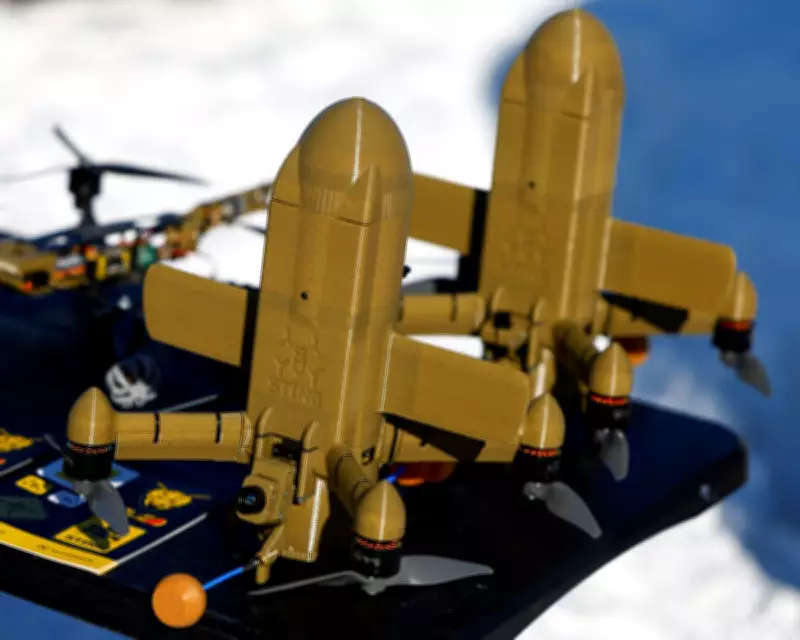
Initially relying on ground-based machine guns and limited fighter aircraft, Ukraine has shifted to using affordable, high-speed interceptor drones over the past six months. These include the Sting missile produced by Wild Hornets, priced at approximately $2,000 per unit. In February alone, such interceptors destroyed over 70% of Shahed-type drones over Kyiv and its outskirts, as reported by armed forces head Oleksandr Syrskyi.
Contrast with Traditional Air Defence Systems
This approach differs markedly from that of Gulf and Middle Eastern countries, which predominantly utilise expensive US-made Patriot and Thaad systems to intercept missiles and drones. A Shahed-136 drone costs around $50,000, whereas a single Patriot interceptor is priced at about $4 million. Zelenskyy noted that more than 800 Patriots were deployed in just three days last week, equivalent to roughly a year's global supply, though many were used against high-speed ballistic missiles.
The total number of Patriots fired surpasses the 600 that Ukraine has received throughout its four-year war with Russia, raising concerns about potential shortages in both the Middle East and Ukraine. Patriot interceptors come in two variants: Pac-2 models, which use explosive blast fragmentation and are produced at a rate of 300 annually by Raytheon, and Pac-3 "hit to kill" missiles, manufactured by Lockheed Martin at 600 per year and considered more advanced.

Evolving Threat and Production Realities
Iran's rate of fire has significantly decreased since the US and Israel initiated attacks on February 28. Initially launching 137 missiles and 209 drones towards the UAE, Iran's output dropped to just 15 missiles and 18 drones recently, suggesting that interceptor stocks may not deplete as rapidly as feared. Israel's military reports an 80% reduction in Iranian missile fire, from over 100 to fewer than 20 on Saturday, aligning with claims that 75% of Iran's missile launchers have been neutralised.
Thaad missiles, costing $12.8 million each according to latest US figures, are designed exclusively for ballistic missile threats. Lockheed Martin produces 96 annually but plans to increase this to 400 in the coming years. As regional tensions persist, Ukraine's deployment of interceptor drones highlights a pragmatic and innovative response to modern warfare challenges, fostering international collaboration while addressing immediate security needs.