UK Calls for Sustained Pressure on Russia Following US Sanctions Adjustment
Downing Street has issued a firm warning to allies, urging them to maintain pressure on the Kremlin's financial resources after the United States temporarily eased some sanctions on Russian oil. This move comes amid global economic pressures triggered by escalating conflict in the Middle East involving Iran.
Britain's Unwavering Stance on Maximum Economic Pressure
Number 10 emphasized that Britain remains fully committed to imposing "maximum" financial strain on Moscow, stating that collective international efforts represent the "best way" to prevent Russia from supporting hostile actors worldwide. The Prime Minister's official spokesman clarified that while the decision ultimately rested with Washington, all partners should continue targeting Russia's war chest.
"Our support for Ukraine is degrading Russia's ability to wage war around the globe, both militarily and financially," the spokesman stated. "The best way to continue to stop Russia supporting hostile actors is to continue collective pressure and end the war in Ukraine."

When questioned about potential UK sanctions relaxation, the official was unequivocal: "Our sanctions remain, there's no question about that. We remain committed to exerting that maximum economic pressure."
Global Economic Context: Iran Conflict and Oil Price Surge
The US decision to temporarily allow "permit countries" to purchase Russian oil already in transit comes as Iran's continued blockade of the crucial Strait of Hormuz shipping route has driven global oil prices to approximately 100 dollars per barrel. This price surge threatens to exacerbate inflation worldwide.
US Treasury Secretary Scott Bessent described the measure as a short-term response that would "not provide significant financial benefit to the Russian government." The economic fallout from the Middle East conflict has created complex challenges for Western nations balancing energy security with sanctions enforcement.
Strategic Connections Between Russia and Iran
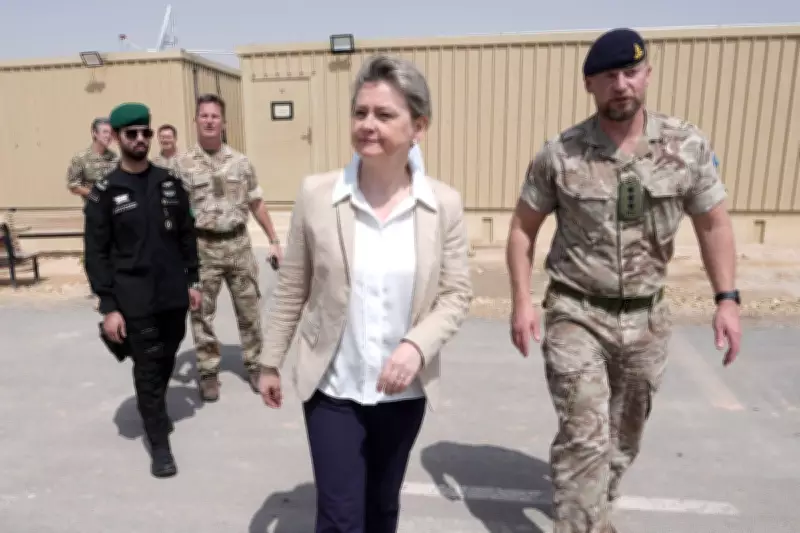
Cabinet ministers have drawn explicit connections between the threats posed by Iran and its ally Russia, warning that the Middle East conflict ultimately benefits President Vladimir Putin. Foreign Secretary Yvette Cooper, during her visit to Saudi Arabia, stated that Moscow and Tehran were attempting to "hijack the global economy" through coordinated tactics.
"We have seen these links between Russia and Iran over an extended period of time," Cooper told the Press Association. "We're seeing it in terms of technology, we see it in terms of the approach, we see it in terms of these kinds of tactics, and we see it in terms of the way these two states try to support each other and try to benefit together."
Despite the clear connections, Cooper declined to criticize the US sanctions adjustment specifically, describing it as a "specific, targeted issue" in response to immediate economic pressures.
Military Developments and Diplomatic Coordination
The geopolitical situation has prompted significant military movements, with RAF jets extending their operations to Bahrain following Tehran's multiple attacks on Gulf states. Iran's new supreme leader has issued warnings about countries hosting American bases, further escalating regional tensions.
Foreign Secretary Cooper visited a British military base on the edge of Riyadh, where she spoke with troops from 9 (Plassey) Battery, Royal Artillery who are protecting Saudi Arabia's critical national infrastructure. This deployment began in 2022 following a one-way drone attack on the country.
Defence Secretary John Healey, briefed at Northwood military headquarters, highlighted Putin's "hidden hand" behind some Iranian tactics, noting that the Russian president benefits directly from oil price increases. "It helps him with a fresh supply of funds for his brutal war in Ukraine," Healey emphasized.

International Diplomacy and De-escalation Efforts
Prime Minister Sir Keir Starmer acknowledged public concerns about the Iran conflict's impact, stating that people are "really worried" and "want to see us doing all we can to de-escalate" amid growing cost-of-living pressures. Starmer has vowed to coordinate with world leaders on oil supply stability.
Cooper's diplomatic mission included meetings with Saudi energy and foreign ministers, plus addressing a special session of the Gulf Cooperation Council's foreign ministers regarding regional stability and Iranian threats to the Strait of Hormuz. GCC Secretary-General Jasem Al-Budaiwi expressed gratitude for the UK's military and "moral support."
Meanwhile, US President Donald Trump issued a new warning to Iran via Truth Social, declaring that his military possesses "unparalleled power" and threatening consequences for what he called "deranged scumbags."
The complex interplay between Middle East conflict, global energy markets, and Russia sanctions enforcement continues to present significant challenges for Western allies as they navigate competing priorities of economic stability and geopolitical pressure.