Britain has agreed to create a unified naval force with nine European countries to deter future Russian threats from the "open sea border" to the north, the head of the Royal Navy has announced.
New Maritime Force as a Complement to NATO
Gen Sir Gwyn Jenkins, the First Sea Lord, stated that despite the ongoing crisis in the Middle East, where the Strait of Hormuz remains closed after the US-Israeli war in Iran, "Russia remains the gravest threat to our security." In a speech, he confirmed that the ten members of the Joint Expeditionary Force (JEF) had signed a statement of intent last week to create a "multinational maritime force" that would act as a "complement to NATO."
The new force will not include the United States. President Donald Trump has repeatedly criticised the UK for not actively supporting the bombing of Iran, at one point describing the Royal Navy's aircraft carriers as "toys." Military cooperation between the US and the UK is at a low point, with the two countries at odds over the Strait of Hormuz. The US has said it wants help forcing the strait and has criticised British and French discussions about creating defensive patrols after the war ends, calling them "silly."

Composition and Objectives
The JEF includes the Netherlands, all five Nordic countries, and the three Baltic states, with the UK as its largest military member. Canada is also considering joining as some NATO members refine their response to rising Russian aggression. Earlier this month, the UK reported that Russian spy submarines had been tracked conducting covert surveillance of undersea infrastructure around Britain. "Russian incursions into our waters have jumped by almost a third in the last two years," Jenkins said, adding that he considers the UK to have an "open sea border with Russia to the north."
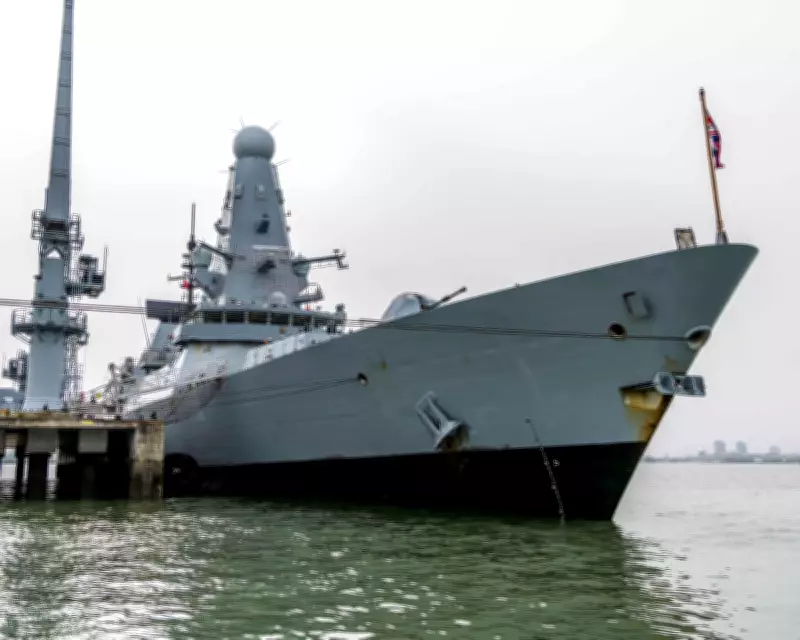
The aim of the new maritime force, which would be "commanded if necessary" from the UK's military headquarters in Northwood, northwest London, is to train and prepare together. It would also be "designed to fight immediately if required, with real capabilities, real war plans, and real integration," Jenkins said. However, the navy struggled to make a warship available at the start of the war in Iran. It took more than three weeks after a drone strike on the British Akrotiri base in Cyprus to deploy HMS Dragon into the eastern Mediterranean, and the destroyer later had to dock to fix toilet and water supply problems.
Challenges and Future Plans
Jenkins acknowledged that the Middle East crisis had put the navy in the spotlight. "Were we prepared enough? Can we fight today, and if so, with what?" he asked, adding that the service has an overall plan of action. Naval sources have stated that the availability crisis at the start of the war stemmed from a lack of prior investment and highlighted the impact of cuts made to shipbuilding by previous governments.
Jenkins, a former Royal Marine and special forces commander, said that "uncrewed escort ships"—large sea drones—would sail alongside UK warships within the next two years, as part of an effort to increase military capability at a lower cost. However, while the UK has threatened to seize Russia-linked "shadow fleet" tankers exporting sanctions-hit oil, it has not done so, whereas other European countries have successfully taken action. Russia has committed frigates to escort vessels under sanctions through the Strait of Dover, defying a public warning issued by Keir Starmer on 25 March. Since then, 98 tankers subject to sanctions have passed through British waters.