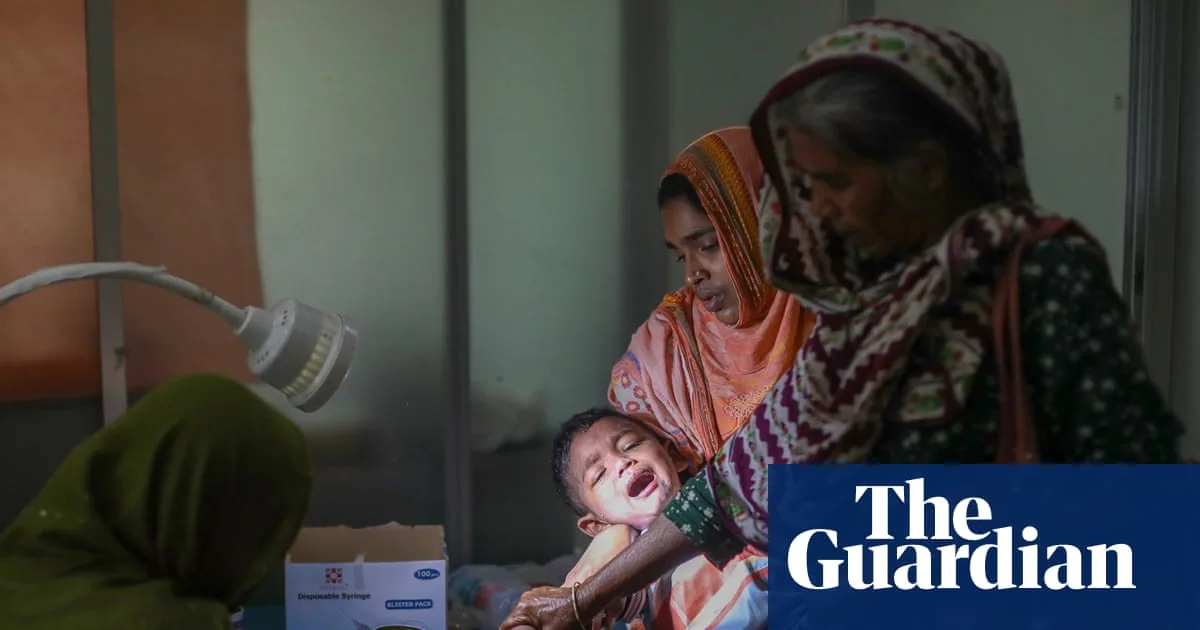
Foreign aid cuts by the UK, France and Germany could lead to more than 11.5 million preventable deaths by 2030, according to a new report from the Barcelona Institute for Global Health (ISGlobal). The study warns that Europe is abandoning its role as a pillar of global health and development, with the three largest donor states slashing budgets significantly.
UK official development assistance (ODA) spending is projected to fall by 45% between 2020 and 2026, Germany’s by 37% between 2023 and 2026, and France’s by 30% over the same period. Researchers estimate that Britain’s cuts alone could result in 5.1 million additional deaths, while France’s reductions could lead to 3.5 million and Germany’s to almost 2.9 million.
Gonzalo Fanjul, an author of the study, said: “Much of the debate focuses on Trump and his administration, but our estimates suggest that Europe’s shifting spending priorities will prove equally devastating for some of the most vulnerable communities in the world.” He added that the Ebola outbreak declared a global health emergency is a stark reminder that a weakened global health system leaves everyone exposed.
Last month, UK spending on foreign aid hit its lowest level in nearly two decades. The report notes that UK cuts to sexual and reproductive health programmes could contribute to 1.1 million unintended pregnancies, 375,000 unsafe abortions and more than 1,000 maternal deaths. In France, a 60% cut to its Global Fund contribution could mean failing to prevent 710,000 deaths from Aids, tuberculosis, and malaria by 2028. In Germany, a near 50% cut to humanitarian aid is projected to leave about 4 million people without food assistance.
The findings come as European governments sharply increase defence spending in response to geopolitical tensions. Last year, Britain announced aid cuts alongside plans to raise defence spending to 2.5% of GDP, now scheduled to rise to 3.5% by 2035. Germany and France are also increasing military spending while reducing development budgets. The report concludes: “Development cooperation has long functioned as a stabilising tool – strengthening health systems, reducing fragility and mitigating the drivers of conflict and displacement. Weakening it may ultimately prove more costly than sustaining it.”