Polish Government Scrambles to Maintain Access to EU Defence Funds After Presidential Veto
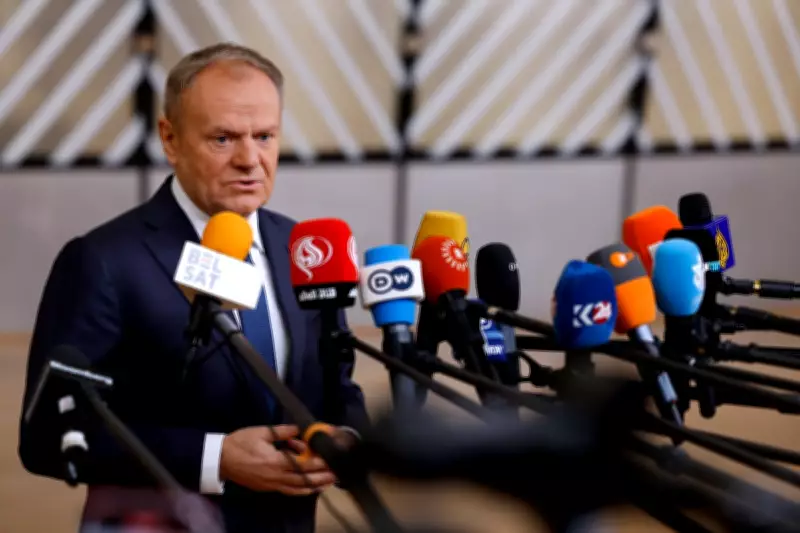
Polish Prime Minister Donald Tusk has vowed to explore all available avenues to secure 44 billion euros in defence loans from the European Union, following a decisive veto by President Karol Nawrocki on the legislation required to access the funds. The move has plunged Poland's defence financing strategy into uncertainty and exposed a deep political rift between the liberal government and the nationalist presidency.
A Critical Blow to Defence Modernisation Plans
Poland was poised to become the largest beneficiary of the European Union's ambitious 150 billion-euro loan programme, known as Security Action for Europe (SAFE). This initiative is designed to significantly enhance Europe's collective defence readiness at a time when the United States is gradually reducing its security footprint on the continent. The veto represents a substantial setback for these plans.
"Poland is in shock," Prime Minister Tusk declared on Friday. "People are wondering if this is betrayal, the work of lobbyists, or a sheer lack of common sense." He emphasised that while the presidential veto would complicate and potentially delay the process, it would not ultimately prevent the government from tapping into the crucial defence funds. "It will be more difficult, sometimes slower, and it will take much more effort to convince everyone involved in this project," Tusk conceded.

Ideological Divide Over Defence Strategy
The veto underscores a fundamental ideological clash within Polish politics regarding national security and European integration. Successive Polish governments have dramatically increased defence spending since Russia's full-scale invasion of Ukraine in 2022. However, the current administration under Tusk favours close coordination and financing through European Union mechanisms, whereas President Nawrocki has adopted a more eurosceptic stance and maintained warmer relations with the Trump administration in the United States.
President Nawrocki expressed scepticism about the SAFE programme from its inception, arguing that it would burden Polish citizens with excessive debt and increase the nation's dependency on Germany. Earlier this week, he proposed an alternative draft law suggesting that national resources should be utilised instead of European loans to finance further defence investments. Prime Minister Tusk has dismissed this alternative proposal as entirely unrealistic given the scale of funding required.
International Dimensions and American Criticism
The controversy also carries significant international implications. The United States has openly criticised the SAFE programme and similar EU defence initiatives. In a February opinion piece published by POLITICO Europe, U.S. Ambassador to the EU Andrew Puzder and U.S. Ambassador to NATO Matthew Whitaker argued that such European programmes "undermine collective defence" by restricting market access for American companies, limiting competition, stifling innovation, and depriving U.S. defence firms of vital orders.
This external criticism appears to align with President Nawrocki's reservations, further complicating the domestic political landscape. The Polish government now faces the dual challenge of navigating a fraught internal political environment while also addressing concerns from a key international ally, all in its pursuit of essential funding to modernise the nation's defences in a volatile geopolitical climate.