Turkey's Foreign Minister Hakan Fidan Addresses Stalled US-Iran Diplomacy as Regional Conflict Intensifies
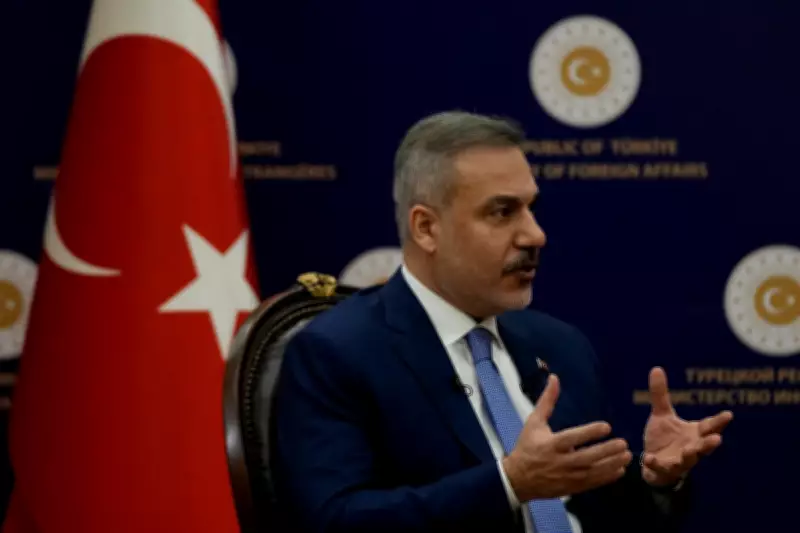
In an exclusive interview with The Associated Press, Turkey's influential Foreign Minister Hakan Fidan stated on Saturday that there is currently no serious initiative to resume formal negotiations between the United States and Iran. However, he expressed his belief that Iran remains open to discreet back-channel diplomatic discussions.
The comments from Fidan come at a critical juncture as Ankara strives to maintain its neutrality amidst the escalating war in the Middle East. Turkey, which maintains positive relations with both Washington and Tehran, had previously attempted to mediate between the two nations before the conflict erupted following U.S. and Israeli attacks on Iran two weeks ago.
Diplomatic Stalemate and Back-Channel Possibilities
"The conditions are not very much conducive to diplomacy now," Fidan acknowledged during the interview. He explained that Iranian officials "feel betrayed" after being attacked for a second time while engaged in active nuclear program negotiations with the United States. Despite this setback, Fidan added, "I think they are open to any sensible back-channel diplomacy."

The 57-year-old foreign minister, who served as Turkey's intelligence chief for over a decade before his 2023 appointment, has played a pivotal role in shaping Ankara's Middle East policy. He is widely regarded as one of President Recep Tayyip Erdogan's most trusted advisors and a potential successor.
Turkey's Neutral Stance and Regional Tensions
Turkey has consistently maintained a neutral position throughout the conflict, criticizing both the U.S.-Israeli strikes against Iran and Tehran's retaliatory actions against Gulf states hosting American military bases. Fidan revealed he has been actively attempting to persuade Iranian authorities to halt these attacks.
Ankara's primary objective remains staying out of the war, even after NATO defenses intercepted three missiles over Turkish territory that were believed to have originated from Iran. As a NATO member hosting alliance forces, including U.S. troops at a southern air base, Turkey faces complex security challenges.
"I know that we are being provoked and we will be provoked, but this is our objective," Fidan emphasized. "We want to stay out of this war." He ruled out any immediate military response, citing the effectiveness of NATO's defensive systems.
Iranian Leadership Dynamics and Failed Peace Initiatives
Fidan, who maintains regular contact with Iranian officials, addressed the leadership situation in Tehran following the war's opening salvo that killed Supreme Leader Ayatollah Ali Khamenei on February 28. While uncertain about the severity of wounds suffered by new Supreme Leader Ayatollah Mojtaba Khamenei, Fidan confirmed "what we know is that he is alive and functioning."
The foreign minister suggested that "the process of electing a new leader and the medical conditions of the new leader created a gap" in Iran's power structure, which he believes has been filled by the Revolutionary Guards' high command.
Before the conflict erupted, Turkey had attempted to prevent war by offering to host comprehensive talks in Istanbul involving the U.S., Iran, and other regional nations. Iran instead opted for nuclear-focused negotiations mediated by Oman, which ultimately collapsed. Fidan noted that Iran had refused to discuss its missile program and support for proxy groups like Lebanese Hezbollah and Iraqi militias, both now engaged in the regional conflict.
Tensions with Israel and Gaza Involvement
Turkey-Israel relations remain strained, with Erdogan emerging as one of Israel's most vocal critics regarding Gaza. Ankara has severed trade ties with Israel and frequently accuses the country of genocide, while Israel counters that Turkey supports Hamas.

Fidan dismissed suggestions that Turkey could become Israel's next target, though he acknowledged the conflict has increased Ankara's incentive to boost domestic weapons and air defense production. "As long as Netanyahu is there, Israel will always identify somebody as an enemy," he stated. "Because they need it to advance their own agenda. If not Turkey, they would name some other country in the region."
Regarding postwar Gaza, Turkey has joined U.S. President Donald Trump's Board of Peace and offered troops for an international stabilization force. Fidan described participation as an "opportunity" to help stop the war, though he acknowledged limitations. While Turkey hasn't received a troop contribution request due to Israeli opposition, Fidan suggested "the Americans are quietly trying to settle the issue with the Israelis to allow Turkey to participate."
The foreign minister emphasized Turkey's priority remains establishing a 15-member politically independent Palestinian administration committee for Gaza, stating "we need to start from somewhere" as this process has yet to begin.