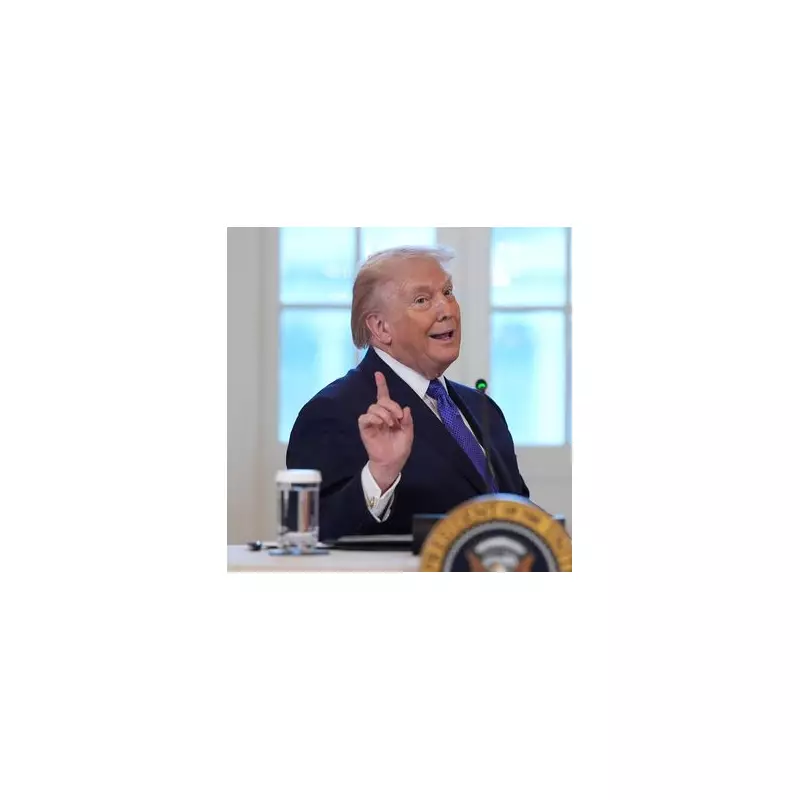
The last 24 hours have provided a stark window into the current state of the Trump administration, marked by disputed facts about a fatal shooting, renewed expansionist rhetoric, and the continued dissemination of extremist material by a key government department.
From the Oval Office to social media, a series of events unfolded that critics describe as a concerted effort to reshape reality, with President Donald Trump and Vice President JD Vance at the centre of the storm.
Contradictions and Claims Over Minnesota ICE Shooting
The most incendiary development centred on the shooting of Reese Good by an Immigration and Customs Enforcement (ICE) agent in Minnesota. New video footage, leaked to the right-wing outlet Alpha News, directly contradicted official narratives from Trump and Vance.

The footage clearly shows Good steering her car away from the agent before she was shot, undermining claims she attempted to run him over. Analysis also indicates the agent switched his phone between hands seconds before firing, freeing his dominant hand to draw his weapon.
Despite the video's release, JD Vance doubled down, insisting it proved his false version of events. He falsely claimed multiple bullet holes were in the car's front, while evidence shows only one shot struck the windscreen, with others fired through an open side window as the vehicle passed. Department of Homeland Security guidelines explicitly prohibit firing at moving vehicles in "self-defence."
President Trump, meanwhile, focused on voices heard in the background of the video, labelling a woman heard crying "shame" as a "professional agitator" and "not normal." He used this to broadly defend ICE and border control agents.
Strange Behaviour and Geopolitical Bluster
At a White House meeting with oil and gas executives, reportedly eager to access Venezuelan assets, Trump exhibited peculiar behaviour. He abruptly stood up during a discussion about a planned ballroom, walked to a patio door, and gazed approvingly at the construction site outside, explaining it would be the future entrance.
Later, he read aloud a private note passed to him by Senator Marco Rubio, breaking the confidentiality of the exchange. Reporters also noted he wore a novelty "happy Trump" pin on his lapel.
His rhetoric then turned to geopolitics, with a renewed threat against Greenland. Trump declared the US would act on Greenland "whether they like it or not," warning that failure to do so would allow a Russian or Chinese takeover. He spoke of pursuing the goal the "easy way" or the "hard way," dismissing questions about a financial offer to Denmark.
In a further factual divergence, he again claimed to have won the state of Minnesota in all three of his presidential bids, despite losing it each time.
Systemic Spread of Extremist Content
Parallel to these events, the Department of Homeland Security's (DHS) official social media account continued a pattern of posting content with white nationalist connotations.
The latest post featured the phrase "We'll have our home again," an anthem title popular within the white separatist "Mannerbund" movement and used by groups like the Proud Boys. This follows previous incidents where DHS shared memes with the KKK-associated slogan "America for Americans" and imagery referencing neo-Nazi literature.
This pattern suggests the normalisation of such rhetoric within the government agency tasked with domestic security.
Cross-Party Concern on AI Deepfakes
Amid the domestic furore, a rare point of transatlantic agreement emerged. UK Foreign Secretary David Lammy revealed he discussed with Vice President Vance the dangers of AI deepfake technology, specifically concerning Elon Musk's Grok system, which can generate sexualised images of real women and children.
Lammy stated Vance was sympathetic and agreed the manipulation of such images was "absolutely abhorrent" and "unacceptable."
The events of the day paint a picture of an administration comfortable with propagating disputed narratives, engaging in provocative international threats, and allowing extremist discourse to seep into official communications, all while its leader's personal conduct continues to raise eyebrows.