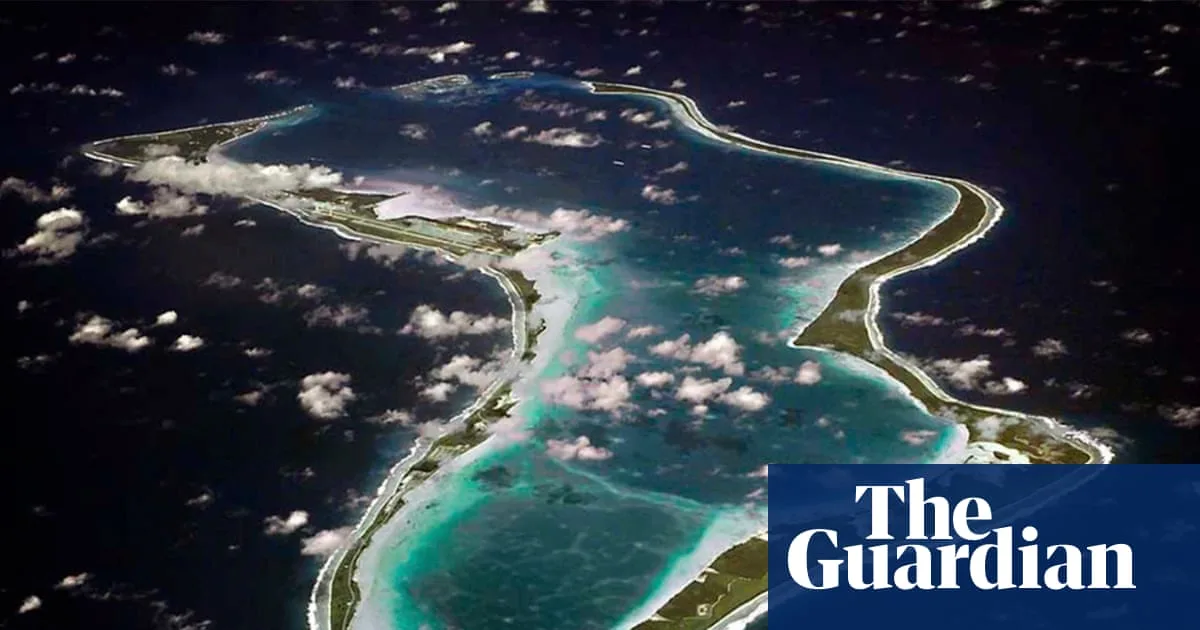
In a dramatic third reversal of position, former US President Donald Trump has publicly criticised UK Prime Minister Sir Keir Starmer over the planned Chagos Islands lease agreement with Mauritius. This sharp condemnation came merely one day after the Trump administration had officially endorsed the deal, highlighting a pattern of inconsistent messaging from the American side.
A Swift and Public Reversal
Taking to his Truth Social platform, Trump issued a stark warning to the British leader, stating that entering into a 100-year lease for the islands would constitute a "big mistake." He emphasised that the UK should not relinquish control of Diego Garcia, which hosts a critical joint US-UK military base, under any circumstances.
"Prime minister Starmer should not lose control, for any reason, of Diego Garcia, by entering a tenuous, at best, 100 Year lease," Trump wrote. "This land should not be taken away from the UK and, if it is allowed to be, it will be a blight on our Great Ally."
Strategic Concerns and Political Rhetoric
The former president framed his opposition within broader geopolitical and ideological terms, asserting that the UK must "remain strong in the face of wokeism." He further argued that "leases are no good when it comes to countries," directly challenging the core mechanism of Starmer's proposed agreement.
This latest outburst marks Trump's third significant U-turn on the matter within a short timeframe:
- Last month, he accused Starmer of "great stupidity" for the deal, linking it to his own controversial desire to annex Greenland.
- Earlier this month, he reversed course, describing the agreement as "the best" the Labour leader could achieve.
- On Tuesday, his administration gave its formal backing to the UK's plan, only for Trump to publicly lambast it on Wednesday.
The Diego Garcia Factor and Iranian Threats
Central to Trump's critique is the strategic importance of the Diego Garcia airbase. He explicitly connected the lease deal to potential security threats, warning that if Iran refuses to limit its nuclear programme, it could attack the UK. In such a scenario, he stated the US would require unimpeded access to Diego Garcia to "eradicate" any assault.
"Should Iran decide not to make a deal, it may be necessary for the United States to use Diego Garcia... in order to eradicate a potential attack by a highly unstable and dangerous regime," he posted, framing the base as a linchpin of Western defence.
Questioning Chagossian Claims
In a controversial aside, Trump also cast doubt on the historical claims of the Chagossian people to their ancestral islands. He described entities asserting these rights as "fictitious in nature" and "never known of before," a statement likely to inflame longstanding disputes over the displacement of the islanders.
Official Policy or Personal Posting?
When pressed on whether Trump's social media post represented an official shift in US policy, White House Press Secretary Karoline Leavitt provided a definitive clarification. She stated that content on Truth Social "should be taken as the policy of the Trump administration" when it comes directly from the president.
"It's coming straight from the horse’s mouth," Leavitt remarked. "When you see it on Truth Social, you know it's directly from President Trump." This confirmation underscores the unique and direct channel through which Trump communicates policy stances, often bypassing traditional diplomatic protocols.
The UK Government's Position
The Starmer government maintains that the agreement with Mauritius is essential to secure the long-term future of the Diego Garcia base. By transferring sovereignty to Mauritius while retaining operational control through a 99-year lease, the UK aims to preempt legal challenges from recent international court decisions that have threatened the base's status.
Ministers had previously secured US backing for this approach, with Trump himself reportedly telling Starmer he had "a feeling it's going to work out very well." The latest reversal, however, introduces fresh uncertainty into the diplomatic calculus surrounding one of the most strategically significant UK-US assets in the Indian Ocean.






