Trump's Secret Weapon: How Tiny Kharg Island Could Cripple Iran's Economy
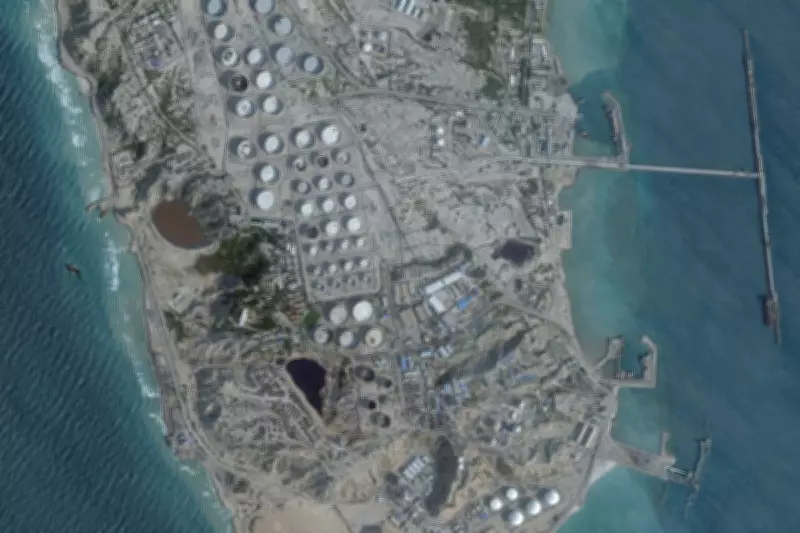
As the United States' military confrontation with Iran intensifies, strategic attention is focusing on a minuscule but critically important island in the Persian Gulf. Kharg Island, measuring a mere 7.7 square miles—smaller than London's City of Westminster—could become President Trump's decisive instrument against the Iranian regime.
The Oil Lifeline at Stake
Despite its modest dimensions, Kharg Island serves as Iran's primary crude oil export terminal, handling approximately 94 percent of the nation's oil shipments destined primarily for China. This makes the island not just a logistical hub but the economic artery of the Islamic Republic. According to reports from Axios, discussions within the US administration about potentially seizing Kharg Island have already taken place.
"Seizing the island would cut off Iran's oil lifeline, which is crucial for the regime," explained Petras Katinas, a research fellow in climate, energy, and defence at the Royal United Services Institute's Europe office. "Looking ahead, seizure would give the US leverage during negotiations, no matter which regime is in power after the military operation ends."

Strategic Implications and Global Repercussions
The strategic significance of Kharg Island is magnified by its proximity to the Strait of Hormuz, a vital global shipping chokepoint now under "complete control" of Iran's Islamic Revolutionary Guard Corps (IRGC). This blockade has already halted most maritime traffic through the strait, severely disrupting global supply chains and sending oil prices soaring above $100 per barrel. Experts warn that prolonged closure could push prices to $200, with devastating economic consequences worldwide.
Former Pentagon official Michael Rubin articulated the potential benefits of controlling Kharg Island in a January article for the American Enterprise Institute: "Should he take Kharg, rather than destroy it, he can not only ensure the regime can never again pay the salaries of its bureaucrats and soldiers, but also, in the future after regime change, he can ensure that the new Iranian regime can finance its own rebuilding."
Historical Context and Vulnerabilities
Kharg Island is no stranger to conflict, having been attacked by Saddam Hussein's forces in 1984 during the Iran-Iraq War, which triggered the infamous "oil tanker war." Interestingly, Trump himself referenced the island nearly four decades ago in a 1988 interview with The Guardian while promoting his book The Art of the Deal, stating: "One bullet shot at one of our men or ships, and I'd do a number on Kharg Island. I'd go in and take it."
However, any US or allied operation to seize the island would carry significant risks. Troops would be exposed to potential attacks from Iranian forces, and the IRGC could target Kharg with ballistic missiles—though such action would likely provoke a severe US response and further cripple Iran's oil exports for months.
Economic Leverage and Bargaining Power
Oil exports constitute nearly 40 percent of Iran's government budget, making Kharg Island an invaluable bargaining chip. Oil analyst Tamas Varga noted: "If President Trump were to decide to seize this pivotal hub, it would deal a significant blow to the Iranian regime, as it would deprive them of a critical source of revenue. Such a move would be reminiscent of the US intervention in Venezuela at the beginning of the year, when it effectively took control of the country's oil sector."
The potential seizure of Kharg Island represents a multifaceted strategy: economically strangling Tehran, gaining negotiation leverage, and ensuring future stability in a post-conflict Iran. As global tensions escalate, this tiny island in the Persian Gulf stands as a monumental factor in the geopolitical chess game between Washington and Tehran.