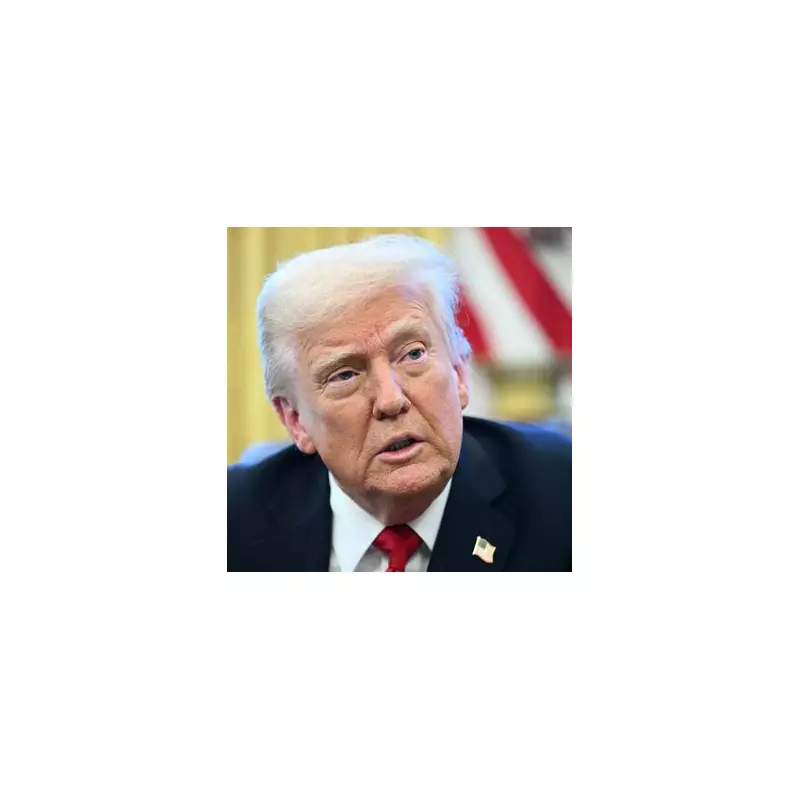
In a significant diplomatic development, US President Donald Trump has announced that his newly established Board of Peace is withdrawing its invitation for Canada to become a member of the organisation. This decision marks the latest episode in a series of public disagreements between President Trump and Canadian Prime Minister Mark Carney, underscoring growing tensions in international relations.
Trump's Letter to Carney Signals Escalating Tensions
President Trump communicated the withdrawal in a social media post directed at Prime Minister Carney, stating, "Please let this Letter serve to represent that the Board of Peace is withdrawing its invitation to you regarding Canada's joining, what will be, the most prestigious Board of Leaders ever assembled, at any time." This move follows a provocative speech delivered by Mr Carney at the World Economic Forum in Davos, Switzerland, where he warned of a potential "rupture" in the international order based on rules, a comment that appears to have triggered the US response.
Board of Peace Launched Amid Ceasefire Efforts
President Trump inaugurated the Board of Peace on Thursday, with the primary aim of leading efforts to maintain a ceasefire in Israel's ongoing conflict with Hamas. At the launch event, he insisted that "everyone wants to be a part" of this body, which he envisions as a powerful group of world leaders. However, the reality has been quite different, as many traditional US allies have expressed reluctance or outright refusal to participate.

Global Skepticism and Declined Invitations
The Board of Peace was initially conceived as a small, focused group overseeing the ceasefire, with President Trump serving as chairman. However, it has rapidly evolved into a more ambitious initiative, leading to skepticism from several nations. Key US allies have raised concerns about the board's membership and its potential mandate, which some fear could rival or even replace the United Nations.
Notable countries that have indicated they will not participate include:
- Norway and Sweden, who have declined involvement.
- France, citing specific worries that the board might seek to supplant the UN.
- The United Kingdom, which has refused to sign up due to potential Russian involvement in the plan.
Mixed Reactions and Membership Challenges
At the board's launch, President Trump was joined by officials from 19 countries, ranging from Azerbaijan to Paraguay and Hungary. He addressed the group, proclaiming, "You're the most powerful people in the world." Despite this show of support, the board faces significant challenges in expanding its membership.
Some leaders, such as Italian Prime Minister Giorgia Meloni and Polish President Karol Nawrocki, have expressed interest in joining but require approval from their respective parliaments first. Additionally, invitations extended to Russian President Vladimir Putin and other authoritarian figures have sparked questions and criticism from countries like the UK, further complicating the board's credibility and global acceptance.
Broader Context of Trump's Peace Push
President Trump's push for peace through this board comes in the wake of recent geopolitical tensions. Earlier this month, he threatened military action against Iran as it carried out a violent crackdown on some of the largest street protests in years, resulting in thousands of deaths. This context adds a layer of complexity to the board's mission, as it seeks to navigate delicate international conflicts while facing skepticism from key allies.
The withdrawal of Canada's invitation highlights the ongoing challenges and diplomatic friction surrounding the Board of Peace, as it strives to establish itself as a significant player on the global stage amidst widespread doubts and declining participation from traditional partners.