Trump's Oil Policy Shift Derails Ukraine's Financial Warfare Against Russia
Ukraine's calculated campaign to push the Kremlin towards economic ruin through the mounting costs of its war dead has been severely compromised by former US President Donald Trump's decision to relax sanctions on Russian oil exports. This policy reversal has injected billions in additional revenue into Moscow's coffers, directly countering Kyiv's brutal financial strategy.
The Grim Arithmetic of Attrition
In the relentless conflict on Europe's eastern front, Ukrainian defence officials have established a stark monthly target: eliminate 50,000 Russian soldiers. This figure is based on intelligence suggesting President Vladimir Putin can only recruit between 35,000 and 37,000 new troops each month, despite offering substantial incentives.
These incentives include staggering sign-up bonuses, extravagant salaries, and a compensation package of $165,000 provided to families of soldiers killed in action. According to Ukrainian and Western sources, if the Russian ministry paid for all estimated monthly casualties—around 35,000—the cost would reach $5.775 billion.
Adding the expense of recruiting 35,000 replacements with $24,000 sign-up bonuses increases the total by another $840 million. This brings the monthly financial burden for Russia to a staggering $6.615 billion simply to sustain its casualty rates.
Ukraine's Economic Warfare Strategy
Kyiv recognises it cannot match Russia's manpower reserves. Instead, its strategic aim has been to render the war economically unsustainable for the Kremlin. As intelligence analysis reviewed by The Independent concluded, "Russia's crisis point is not running out of people; it is running out of money to buy people."
Ukrainian military assessments were predicated on global oil market conditions prevailing before recent Middle Eastern conflicts. However, a surge in oil prices, coupled with Trump's decision to lift certain sanctions on Russia's massive oil industry, has provided Moscow with crucial financial breathing space.
The Oil Revenue Windfall
Russia is estimated to have gained an additional $6 billion to $10 billion in oil revenues following the US-Israeli military campaign in Iran, which began less than a month ago. This windfall more than covers the monthly cost of Russia's war dead, delivering a significant blow to Ukraine's economic pressure campaign.
The relaxation of sanctions on Russian oil exports triggered a 13 percent surge in crude oil shipments, primarily to China, India, and Turkey, according to the Centre for Research on Energy and Clean Air. This development has drawn sharp criticism from European leaders and Ukrainian politicians.
Oleksandr Morezkho, chair of the Ukrainian parliament's foreign affairs committee, condemned the move, stating, "It's like giving a murderer more bullets. For Russia, oil and gas are weapons. If we see, as a result of lifting oil sanctions, more intensive Russian attacks and more casualties, it might be perceived as if Trump is aligning himself with Putin."
Broader Implications for Ukraine's Defence
The policy shift compounds other challenges facing Ukraine's war effort. President Volodymyr Zelensky had previously warned that conflict in the Middle East would divert air-defence munitions to Gulf nations combating Iranian drone and missile attacks. Ukraine relies heavily on US anti-ballistic-missile technology, purchased by European allies.
Zelensky noted in an interview, "The focus will shift to the Middle East, to the Iranian war, now, and to the United States and also to Israel. Our estimation, of course, is that air defence [for Ukraine] could decrease." His offer to send Ukrainian drone experts to assist Gulf defences was rejected by Trump, who asserted US superiority in drone technology.
Russian Military Financing and Morale
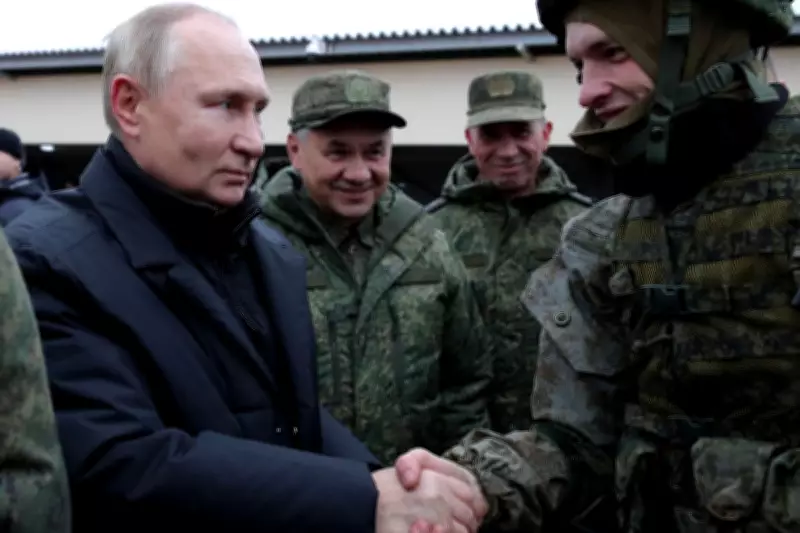
Despite these setbacks, Ukraine continues to achieve small territorial gains along the 1,200-kilometre front line. However, soldiers report improved quality and motivation among Russian troops, attributed to substantial financial incentives. One commander on the Zaporizhzhia front explained, "It's because they're motivated by lots of money."
Putin has avoided general conscription, instead recruiting between 400,000 and 430,000 "contract soldiers" with monthly salaries around $3,000, plus bonuses and death compensation. This creates an additional monthly salary bill of $1.3 billion, straining a Russian economy growing at only 0.8 percent, with 40 percent focused on defence since the 2022 invasion.
Recalibrating Expectations
Western intelligence previously calculated that Russian regional budgets financing recruitment would face insolvency before manpower pools were exhausted. Ukraine had estimated that maintaining a casualty rate of 50,000 Russians monthly would cause "systemic collapse" by autumn.
However, following the Netanyahu-Trump campaign against Iran and the subsequent oil price surge, Kyiv is now forced to recalibrate these assumptions. The anticipated timeline for Russian economic strain has been extended, demonstrating how geopolitical decisions thousands of miles away directly impact the battlefield calculus in Eastern Europe.