Trump's Massive Naval Buildup in Middle East Raises Iran Attack Fears
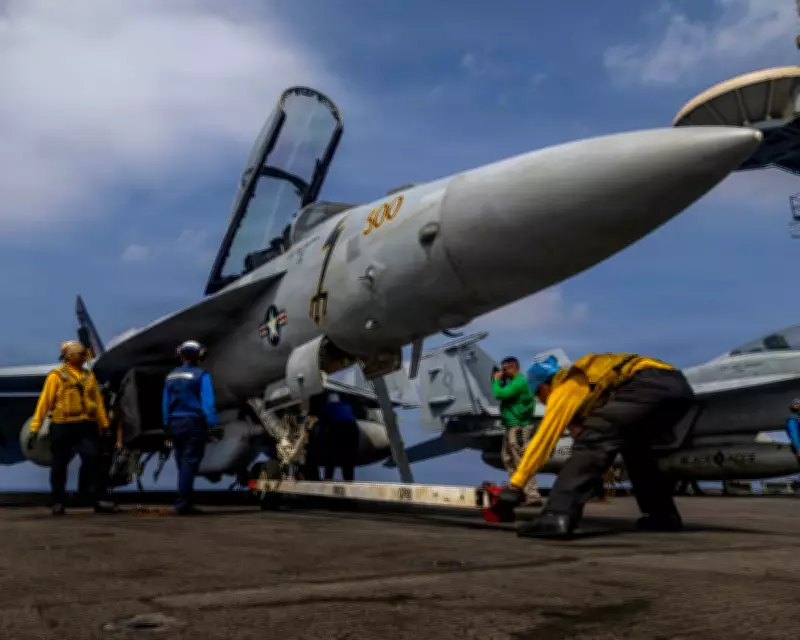
Donald Trump has assembled the largest US naval buildup in the Middle East since the start of the Iraq war in 2003, sparking widespread concerns that an attack on Iran may be more imminent than previously thought. This military escalation comes as diplomatic talks with Tehran appear to be stalling, creating a tense standoff in the region.
Diplomatic Stalemate Amid Military Posturing
Although much attention has focused on the inaugural meeting of the Board of Peace in Washington, analysts argue that the "arsenal of war" Trump has deployed to the Middle East deserves greater scrutiny. The well-connected reporter Barak Ravid recently reported that the US viewed recent talks in Geneva as a "nothing burger," suggesting a full-scale attack on Iran could be closer than most Americans realize.
This report caused oil prices to spike and led to front-page stories in US newspapers indicating Trump's military preparations would be complete by the weekend. Many observers see this combination of military buildup and leaked reports as part of a strategy of coercive diplomacy, with the Trump team appearing to "speak softly and carry a big stick."

Iran's Negotiating Position Under Pressure
Iran has consistently claimed it will not negotiate under duress, but that is precisely the situation it now faces. The Iranian diplomatic class has pushed back against claims that Tehran is playing for time by insisting on indirect talks and drafting "guiding principles" for discussion at another meeting in two weeks.
The Iranian foreign ministry countered that Tehran's team had been willing to stay in Geneva for days to continue discussions, but it was Trump's special envoy Steve Witkoff and the president's brother-in-law Jared Kushner who shortened the talks because they needed to negotiate with Ukraine and Russia elsewhere.
Iranian Foreign Minister Abbas Araghchi has been in contact with UN nuclear weapons inspector Raphael Grossi to discuss details of how the International Atomic Energy Agency would access Iran's nuclear sites. Grossi sounded cautiously optimistic, stating: "There has been some progress, but there is still a lot of work to be done, and the problem is that we don't have much time."
The Nuclear Proposal on the Table
The outlines of a potential agreement are emerging, though Iran remains reluctant to publicly detail its concessions. Tehran's core offer involves:
- Suspending domestic uranium enrichment for up to five years
- Downgrading its stockpile of uranium enriched to 60% to 3-6%
- Allowing IAEA inspectors back into the country
This represents a significant departure from the 2015 nuclear agreement, which required a 15-year suspension and limited Iran's uranium stockpile to 300kg enriched to a maximum of 3.67%. The current offer acknowledges Tehran now has working centrifuges and would insist on retaining its right to enrich for civilian purposes as a nuclear non-proliferation treaty signatory.
In return, Iran seeks:
- The return of frozen assets
- The lifting of sanctions on banking and oil exports
- A US economic partnership and wider access to Iranian markets
Trump's Political Dilemma
Trump faces three significant challenges in considering Iran's offer. First, the proposal bears striking resemblance to the 2015 nuclear deal he derided and abandoned in 2018. Second, accepting it would provide support to an Iranian regime at its weakest and most unpopular since the 1979 revolution, despite assembling the largest US naval force in the region in two decades. Third, after the Greenland fiasco, his credibility is already low.
Omid Memarian, a senior Iran analyst at the Washington thinktank Dawn, suggests Tehran may be overplaying its hand. "The calculus of the military establishment is very different to ordinary Iranians," he noted, explaining that while the regime faces a legitimacy crisis and has lost much of its ability to deter outside attacks, it believes a US attack would rally loyalists and provide an excuse to deal harshly with internal dissent.

As tensions escalate and diplomatic channels narrow, the massive naval presence in the Middle East serves as both a warning and a potential trigger for broader conflict, with regional stability hanging in the balance.