Trump's NATO Outburst Reveals Deepening Transatlantic Divide
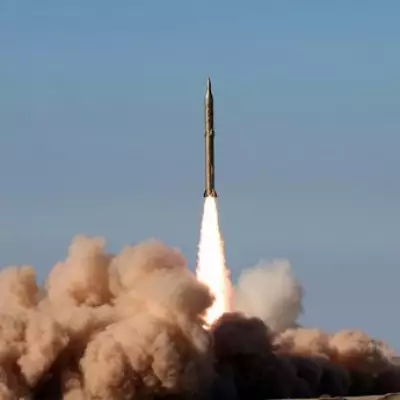
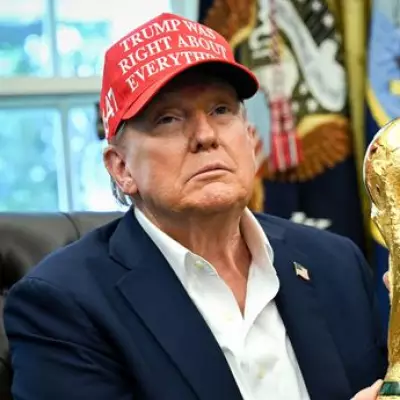
Former President Donald Trump has once again sent shockwaves through European capitals with a characteristically inflammatory social media post that questions the very foundation of the North Atlantic Treaty Organization. In a Tuesday rant on Truth Social, Trump declared: 'We no longer "need," or desire, the NATO Countries' assistance — WE NEVER DID!' This explosive statement comes as the United States struggles to persuade Western powers to help reopen the strategically vital Strait of Hormuz, where oil tankers face significant threats from Iranian rockets.
A Crisis of Confidence in the Alliance
The 32-member NATO alliance now finds itself in a state of genuine crisis. Established in 1949 to counter Soviet expansion in Europe, NATO continues to serve as a crucial anti-Russian pact. Many European governments remain committed to standing with the United States against Vladimir Putin's aggression, particularly given the proximity of the Ukraine conflict to their borders. However, when it comes to Middle Eastern conflicts, European enthusiasm wanes dramatically.
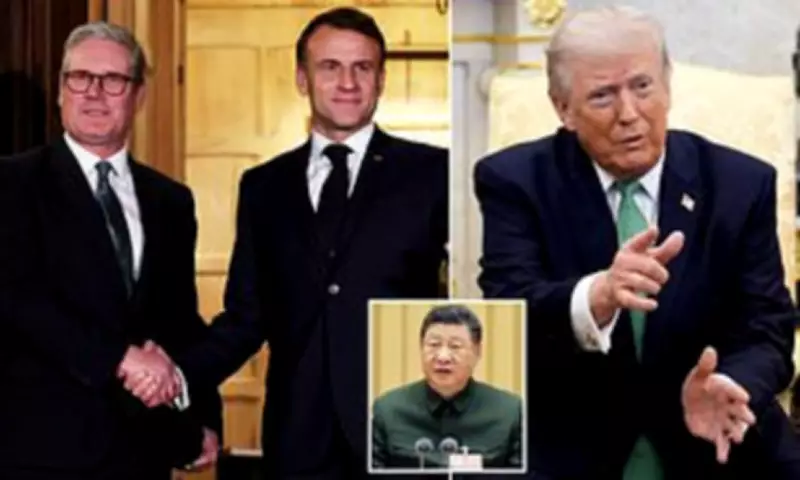
Most European nations maintain openly hostile positions toward Israel and fear being perceived as anti-Muslim. British Prime Minister Keir Starmer's political coalition depends significantly on Muslim voters who may harbor strong opposition to the Jewish state. Meanwhile, French foreign policy has pursued alignment with Muslim governments since the sixteenth century, when King Francis I shocked Christian Europe by signing a treaty with Ottoman Sultan Suleiman the Magnificent in 1536.

Transactional Tensions and Strategic Divergence
Trump's perspective remains fundamentally transactional. He views NATO as a 'one way street' where America spends 'Hundreds of Billions of Dollars per year protecting these same Countries' while receiving little in return during times of need. For a leader who thinks in purely economic terms, accusing allies of failing to pay their bills represents the ultimate insult.
If European nations remain allergic to NATO military involvement in the Middle East, they must reconsider their own dependence on oil and gas shipments through the Strait of Hormuz and other regional chokepoints, as well as their export trade flowing in the opposite direction. This strategic reality makes Trump's frustration somewhat understandable, even as his delivery remains characteristically undiplomatic.
Mixed Messages and Limited Action
European leaders have demonstrated almost as much inconsistency as Trump himself. German Chancellor Friedrich Merz told Trump during an Oval Office visit on March 3 that Germany was on the 'same page' regarding the need 'to get rid of this terrible terrorist regime' in Tehran. Prime Minister Starmer declared on Monday that 'Ultimately, we have to reopen the Strait of Hormuz,' while European Union foreign policy chief Kaja Kallas added that same day that 'It is in our interest to keep the Strait of Hormuz open.'
Despite these declarations, concrete action has been minimal. While Britain and Italy have permitted their bases to be used in the American campaign against Tehran, and some European warships and planes have deployed to the region, these contributions have been widely perceived as too little, too late. If the United States intends to lead convoys of oil tankers through the strategic strait, it requires significantly more naval support.
Fundamental Disagreements on NATO's Role
French President Emmanuel Macron and several other European Union officials have labeled the conflict illegal. Spain's defense minister insisted that rather than attempting to reopen the strait, 'the objective must be for the war to end, and for it to end now.' A spokesman for Chancellor Merz emphasized on Monday that 'This war has nothing to do with NATO… NATO is a defensive alliance, an alliance for the defense of its territory. As long as this war continues, there will be no involvement, not even in an option to keep the Strait of Hormuz open by military means.'

Some of this breakdown in relations stems from personal dynamics. Trump has repeatedly insulted European leaders, bullied them with tariffs, and even threatened NATO member Denmark over Greenland. Resentment runs deep regarding his attacks on European leaders' self-image as arbiters of an international community and his tendency to act without consultation.
The Larger Strategic Picture
Iran represents what might be considered the C-team of the Eurasian axis—a threat America could potentially handle with minimal NATO assistance. Russia constitutes the B-team. However, China represents the A-team, and any potential conflict over Taiwan would require an all-hands-on-deck response from the Western world. Beijing is undoubtedly observing how severely NATO's unity has been strained, potentially seeking openings created by these divisions.
For this critical alliance to extend its effective lifespan, it must rediscover a shared purpose. NATO remains undeniably important, but both sides need to seriously consider its limitations. Accepting NATO's constraints represents a wiser approach than abandoning an alliance that has served vital purposes for nearly eighty years. The greatest test for this historic partnership may still lie ahead as global tensions continue to escalate.