Trump's Iran Strategy Faces Mounting Congressional and Military Doubts
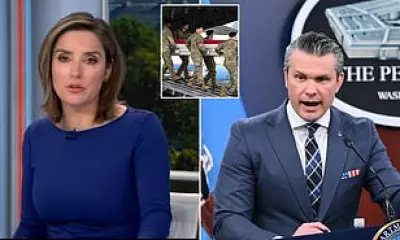
President Donald Trump appears to be navigating the escalating conflict with Iran without a coherent long-term plan, a reality increasingly recognised by the American public. The US leader and his supporters can only suppress the growing chorus of concern for a limited period, while the tragic death toll among military personnel and innocent civilians continues to rise alarmingly.
Congressional Challenge to War Powers
President Trump has swiftly overcome initial Congressional resistance to his intensive military offensive against Iran. Today, he confronts another legislative hurdle as the Senate prepares to vote on a measure compelling him to terminate the strikes. However, the practical impact of this vote remains uncertain.
While the US Constitution grants Congress the sole authority to declare war, this power has not been exercised since World War II. The War Powers Resolution, enacted during the undeclared Vietnam War, mandates that the president report to Congress after several days of military engagement and potentially cease sustained operations within two to three months.

This resolution has been brought to a vote multiple times under previous administrations, including during Trump's two terms, yet it has consistently failed to alter presidential actions. With a Republican-controlled Congress, Trump likely possesses sufficient votes to treat this latest challenge as a minor procedural obstacle within the federal power structure.
The Escalation to Full-Scale War
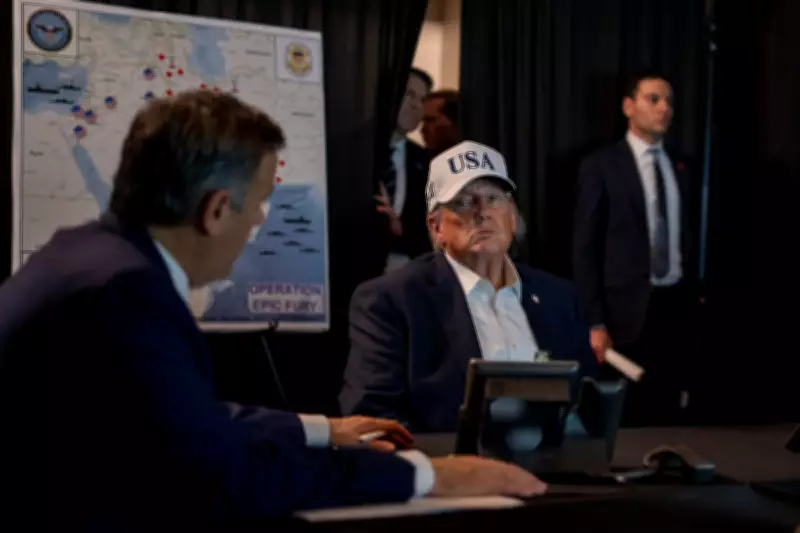
Senators and House Representatives will this week formally record their positions on the Iran conflict, which by all assessments has evolved into a full-scale war, potentially marking a third Gulf War. Through a series of public statements, President Trump has outlined his objectives as the conflict concludes its first week: overthrowing Iran's autocratic regime, preventing Tehran from acquiring nuclear weapons, and dismantling its dangerous regional missile arsenal that threatens US troops and allied nations.
The joint US-Israeli campaign has achieved tactical successes on the battlefield, inflicting significant damage on Iran's central command, naval forces, and widespread missile and rocket launchers. However, substantial damage from incoming ballistic missiles and drones targeting longstanding US military installations in the region persists, representing a stark contrast to the first Gulf War's sporadic Scud missile attacks.
This conflict has transformed into a precision-guided missile war with devastating lethal consequences. Although US military casualties have remained relatively low thus far, these numbers could surge dramatically alongside non-combatant casualties among allies and Iranian citizens.
Global Economic Repercussions Emerge
The world economy is beginning to experience the conflict's impact, with the vital Strait of Hormuz—a choke point for 20 percent of global crude oil—becoming contested territory. Consequently, oil prices are skyrocketing, creating additional economic pressures internationally.
The ultimate resolution of this conflict remains uncertain, but historical precedent clearly demonstrates that fortified enemies cannot be defeated solely through missile barrages and air campaigns. Regime change proves lengthy and arduous, invariably exacting a heavy price. Critical questions persist regarding whether Washington and Tel Aviv have adequately anticipated the endgame or potentially miscalculated their strategy.
Testing the Theory of Popular Uprising
The assumption that American and Israeli strikes would sufficiently motivate the Iranian population to reclaim their destiny from Tehran's theocratic despots is being severely tested. Both President Trump and Israel's Benjamin Netanyahu have urged Iranian citizens to take to the streets, yet these anticipated revolutionary outpourings have not materialised.
This reluctance may stem from Iranian citizens' fear of further mass executions similar to those preceding the joint strike. However, an alternative possibility exists: the assault might be generating a counterproductive wave of anti-foreign nationalism among the broader population—a risk inherent from the outset in any US or Israeli military campaign aimed at regime change.

Military Logistics and Stockpile Concerns
Contemporary warfare aims to avoid direct troop engagements through primarily stand-off munitions, with success measured by the ability of the US and Israel to rapidly deplete Iran's substantial ballistic missile stockpiles while withstanding incoming attacks with sufficient interceptor systems. This brutal calculus focuses intently on Iran's launch capacity, creating genuine daily concerns in Washington about exhausting advanced Patriot, Aegis, and THAAD anti-missile systems should the high-tempo conflict prolong.
Despite early successes, Washington expresses growing anxiety, with discussions underway regarding transferring anti-ballistic-missile systems from US bases in South Korea. President Trump posted a disjointed statement on Monday expressing confidence in America's ability to protect troops and regional allies with on-site anti-missile systems.
However, senior US military leaders have repeatedly warned that insufficient stockpile depth might hinder the sustained air campaign and ultimate regime change mission. Iran, a mountainous nation of 92 million people, has seen its autocratic mullahs and Islamic Revolutionary Guard Corps funnel billions in oil revenue into developing one of the world's most formidable advanced missile systems and medium-range drones—the latter deployed effectively by ally Russia in Ukraine.
The Ground Troop Dilemma and Exit Strategy
While Iran's launch capacity has been significantly detected and damaged by US and Israeli forces, it remains operational. President Trump remains reluctant to deploy US ground troops to eradicate the problem, fearing high casualties and electoral repercussions ahead of November's midterm elections. Yet history questions whether regime change can be effected without ground support, recalling the deployment of over 400,000 troops during the eight-year Gulf War II to oust Saddam Hussein.
The coming weeks may provide greater clarity, but many more combatant and civilian lives will be lost in the process. The Trump administration must urgently define a coherent exit strategy, addressing critical questions: How long will this conflict continue? What constitutes success? Will the president, as indications suggest, turn to Syrian and Iraqi Kurds to form an on-the-ground liberation force inside Iran? And will these Kurds heed his call after previous abandonment by Washington?
In Washington, London, Paris, Berlin, and beyond, the chorus of concerned voices demanding answers and accountability regarding the Great Missile War of 2026 grows increasingly louder and more insistent.