Trump's Renewed Military Threats Against Iran Escalate Regional Tensions
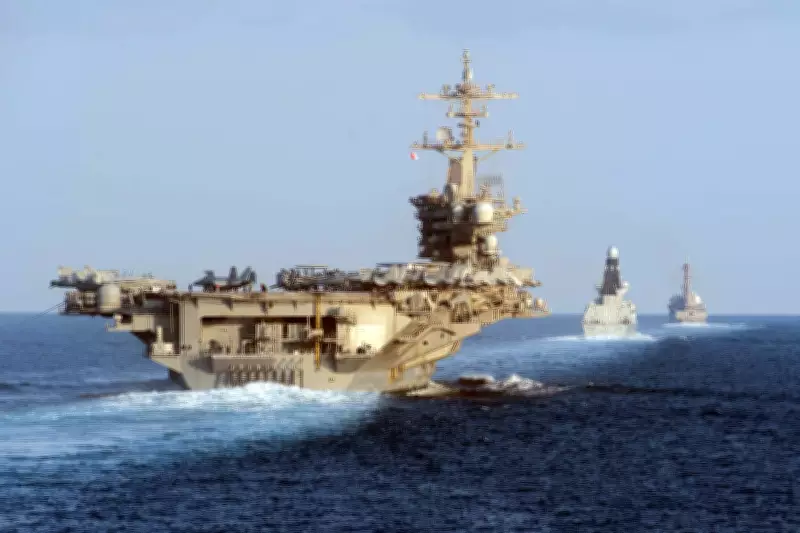
President Donald Trump has dramatically intensified his confrontational stance toward Iran, renewing threats of military action while simultaneously urging the Islamic Republic to negotiate a "deal" to avoid devastating consequences. The US leader's warnings come alongside confirmation that a "massive armada" including the Abraham Lincoln carrier strike group is currently en route to the Middle East, significantly expanding American military options in the region.
Expanding Military Options and Credible Threats
Speaking on Wednesday, Trump declared that time was rapidly running out for Tehran to avoid a repeat of last summer's strikes against Iranian nuclear facilities, warning that any future action would be "far worse" than previous engagements. This renewed aggression follows weeks of deliberation within the administration about potential attack strategies, though officials acknowledge that recent dispersal of US military assets globally has limited immediate options.
The arrival of the carrier strike group, accompanied by destroyers and housing up to 65 aircraft, lends substantial credibility to Trump's threats. This deployment provides Washington with capabilities beyond what was available earlier this month when the president vowed to support anti-government protesters facing brutal repression from Iranian authorities.

Potential Military Intervention Scenarios
Military analysts suggest several possible approaches the United States might employ:
- Limited precision strikes targeting military bases and nuclear facilities to pressure Iran into negotiations
- Coordinated cyber attacks designed to disrupt Iranian infrastructure and nuclear capabilities
- Broader bombing campaigns similar to last June's operation involving B-2 bombers from Missouri alongside 125 military aircraft
However, significant constraints exist. Saudi Arabia and the United Arab Emirates have reportedly refused permission for the US to use their airspace or territory for attacks against Iran, substantially limiting operational options. Both nations, while historically supportive of containing Iranian influence, fear regional destabilisation and potential retaliation against their own territories.
Iran's Threatened "Unprecedented" Response
Iranian officials have responded with stark warnings of their own. Ali Shamkhani, an adviser to Iran's supreme leader, declared that any US military action "from any origin and at any level" would be considered the start of war, warranting an "immediate, all-out, and unprecedented" response targeting Tel Aviv and all supporters of aggression.
While experts question Iran's capacity to sustain a major regional conflict, most agree Tehran would be compelled to retaliate against any attack. Last June's missile strikes against a US base in Qatar - though intercepted without casualties - demonstrated Iran's willingness to respond militarily. The current situation presents additional complications, with reports suggesting the US possesses only about 25 percent of necessary Patriot interceptor missiles after depleting stockpiles.
Regime Change Calculations and Protest Dynamics
Secretary of State Marco Rubio assessed this week that the Iranian regime is "probably weaker than it had ever been," referencing ongoing protests against Tehran's handling of a severe economic crisis. Multiple sources indicate Trump is considering strikes specifically designed to inspire protesters and potentially create conditions for regime change.
However, experts caution that attempting to topple the government would represent a costly and uncertain venture. Alex Vatanka of the Middle East Institute notes that without large-scale military defections, Iran's protest movement remains "heroic but outgunned." Western diplomats and Arab officials express concern that US strikes might actually weaken the protest movement rather than strengthen it, particularly following what has been described as the bloodiest repression since the 1979 Islamic Revolution.

Nuclear Negotiation Prospects
Despite the escalating rhetoric, the United States continues to seek a deal to curb Iran's nuclear programme, even after claiming to have "totally destroyed" it in last summer's bombing campaign. Officials privately fear the programme was not completely eliminated and that Tehran has been reconstituting capabilities. Iran maintains it is not pursuing nuclear weapons but expresses openness to negotiations.
The coming weeks will prove critical as military assets move into position and diplomatic channels remain open. The complex interplay between military posturing, domestic protest dynamics, regional alliances, and nuclear diplomacy creates a volatile situation with multiple potential outcomes ranging from renewed conflict to unexpected diplomatic breakthroughs.