Trump's Contradictory Iran Strike: A Foreign Policy Gamble
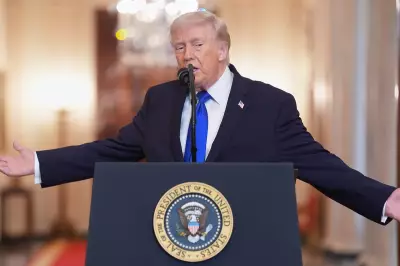
President Donald Trump has embarked on a significant foreign policy gamble with his administration's decision to launch a major military attack against Iran. This move starkly contradicts his longstanding campaign rhetoric against "forever wars" and nation-building overseas.
The Reality Show Presidency
Trump's approach to foreign policy resembles episodes in a reality television show, where each day presents new opportunities to gain advantage over rivals. Iran represents one of America's most enduring adversaries, making it a prime target for this confrontational style of governance.
The president's justification for the strike was characteristically straightforward: "This was our last best chance to strike." However, this rationale faces serious scrutiny given Iran's current military weakness and the questionable nature of the claimed imminent threat.
Pattern of Military Action
This Iran strike follows a pattern of military actions against various targets throughout Trump's presidency. Over the past year, his administration has conducted strikes against Venezuela, Islamic State operatives in Nigeria, Syria, and Iraq, despite questionable evidence of imminent threats to American security.
While Trump campaigned vigorously against nation-building and prolonged military engagements, he never opposed targeted military strikes, particularly those involving minimal risk to American lives. His 2016 campaign platform included strengthening the fight against Islamic State, which his administration pursued by eliminating the IS caliphate and killing leader Abu Bakr al-Baghdadi.
Historical Precedent and Current Calculation
The Trump administration previously demonstrated its willingness for bold military action with the assassination of Iranian commander Qassem Soleimani near Baghdad airport. This latest strike appears timed to exploit Iran's current vulnerability, with the regime facing unprecedented domestic opposition and international pressure.
Several factors made Trump more receptive to limited military action against Iran:
- Bipartisan frustration with Iran spanning decades
- Support or tolerance from regional US allies
- American capability to mitigate potential Iranian responses
- Growing confidence from perceived successes of previous military actions
A War of Choice, Not Necessity
This conflict represents a war of choice rather than necessity. The Trump administration appears to hope that decisive military action might ultimately reduce long-term US involvement in the Middle East by fundamentally altering Iran's behavior or leadership.
This paradoxical thinking mirrors Trump's approach to NATO allies: advocating for reduced American overseas commitments while simultaneously launching America's largest military operation since the Iraq invasion 23 years ago.
Decades of Antagonism
The current conflict has roots stretching back half a century. Before the 1979 Islamic Revolution, Iran maintained close working relationships with the United States, second only to Israel in the region. The post-revolutionary government fundamentally altered regional power dynamics, making hostility toward America and Israel central to Iranian foreign policy.
Successive American administrations, both Democratic and Republican, have designated Iran as the world's foremost state sponsor of terrorism. Iranian support for Hamas, Hezbollah, Houthi rebels, the Assad regime, and Shia militant groups has resulted in hundreds of American deaths and tens of thousands of casualties across the Middle East.
Notably, the vast majority of Iranians oppose their current regime and express unprecedented optimism about potential political change since the 1979 revolution.
Domestic and International Challenges
Defense Secretary Pete Hegseth has attempted to distinguish this conflict from previous "forever wars," stating, "This is not Iraq, this is not endless." However, the administration faces significant challenges in maintaining this narrative.
Compared to George W. Bush's 2003 Iraq war, Trump enjoys only lackluster support for the Iran strikes. Democratic lawmakers have denounced the attack as both unconstitutional and illegal under international law. Even among Republicans, support stands at just 55 percent, despite Trump's 80 percent approval rating within his own party.
Conflicting Messaging and Public Skepticism
The administration's inconsistent justifications for the strikes have undermined public support. Officials have cited multiple rationales including preventing imminent Iranian attacks, destroying ballistic missiles, stopping nuclear weapons development, cutting support for proxy groups, and even regime change.
Most recently, the administration claimed necessity to join Israel's offensive, arguing America would be drawn into conflict regardless. Trump has further complicated matters by refusing to rule out deploying ground troops to Iran.
These conflicting messages fail to resonate with a public primarily concerned with economic issues rather than Middle Eastern conflicts. Foreign policy has not significantly influenced American elections for over two decades.
Strategic Calculations and Limitations
Despite limited domestic support, Trump proceeds with this risky endeavor partly because presidential authority in foreign policy remains relatively unchecked compared to domestic matters. The judicial branch has constrained Trump's "Liberation Day" tariffs and domestic troop deployments, but foreign military action offers greater executive discretion.
Nevertheless, Trump recognizes that prolonged conflict is unsustainable. The United States, Israel, and regional allies face potential munitions shortages as they defend against Iran's inexpensive drone attacks over weeks or months of continued conflict.
The Islamic Republic fights for its survival, possessing strong internal security forces and potentially benefiting from limited American domestic support for extended warfare. With growing domestic opposition to his administration, Trump likely seeks to avoid protracted engagement in Iran, though history suggests he will need a viable exit strategy.