US Blockade in Strait of Hormuz Confronts Iranian Preparations and Maritime Defiance
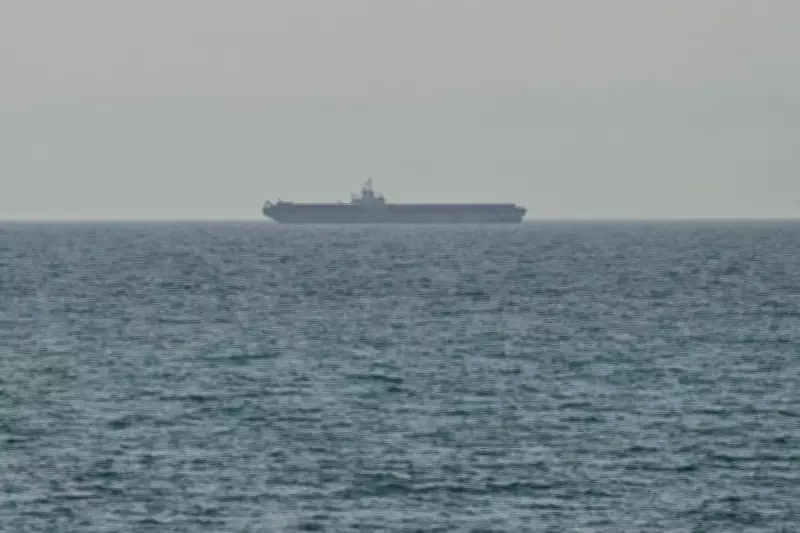
Following the collapse of high-stakes peace talks in Islamabad over the weekend, the fragile ceasefire between the United States and Iran now hinges precariously on the strategic 100-mile waterway connecting the Persian Gulf and the Arabian Sea. The United States officially imposed a comprehensive blockade on Iranian ports and coastal areas east of the Strait of Hormuz, which took effect at 3pm BST on Monday. US Central Command has issued stern warnings that vessels will face "interception, diversion and capture" irrespective of their national flag. More than fifteen US warships have been deployed to support this aggressive operation, according to a senior official speaking to the Wall Street Journal.
Trump's Aggressive Maritime Strategy and Initial Responses
President Donald Trump has provocatively threatened that ships departing from Iranian ports would be subjected to "the same system of kill that we use against the drug dealers on boats at Sea," a clear reference to the administration's controversial tactics against vessels off the Venezuelan coast. In immediate reaction to these threats, global oil prices experienced a significant surge. However, the US military has concurrently insisted that the blockade will "not impede" the movement of ships carrying essential humanitarian supplies, such as food, through the vital Strait of Hormuz.
The operational reality of President Trump's blockade means it will directly impact vessels departing from Iran's ports and coastline, regardless of their country of origin. While the US has explicitly stated it will not target vessels unconnected to Iran or its ports, those that are linked will face interception, diversion, or capture. Notably, the US leader has also instructed the navy to pursue vessels that have paid Iran a transit toll, which includes Chinese tankers and Indian bulk carriers not party to the conflict, as highlighted by Professor Barry Appleton, co-director for international law at New York Law School.

"You have a narrow, mine-threatened strait, active hostilities, and now the US Navy is being asked to police every vessel entering or leaving Iranian ports," Professor Appleton explained to The Independent. "That's not a blockade. It is more akin to a traffic enforcement operation in the middle of a war zone."
Iran's Strategic Preparations and Countermeasures
Iran appears to have developed a sophisticated array of tactics to circumvent the impacts of the US blockade, including the utilization of floating storage, shadow fleet tankers, and alternative ports. According to marine traffic data meticulously analysed by Kpler, five liquid tankers successfully transited the Strait of Hormuz during the first two days of the blockade. Across all categories—liquids, LNG, LPG, and dry bulk—a total of eight vessels crossed between 13 and 14 April. On Tuesday, an additional five vessels navigated through the Strait, though it is crucial to note that the blockade is positioned not within the Strait itself but further outside in the Gulf of Oman.
Kpler has informed The Independent that four tankers carrying Iranian crude are currently idling in the Gulf of Oman, with one ship passing through on Wednesday. "The objective is to constrain Iran's ability to export crude and condensate, which could eventually lead to production shut-ins," Johannes Rauball, Kpler's senior crude analyst, told The Independent.
Tehran, however, appears to have proactively stockpiled copious stores of oil offshore ahead of the restrictions, with the volumes of its oil in transit remaining elevated. This week, floating storage of Iranian crude—a method of storing oil and gas on open waters away from land or ports—rose to 42 million barrels, up from 38 million barrels on Sunday 12 April. Floating storage is defined as crude-carrying tankers that have remained idle and reduced their speed for at least seven days, essentially "waiting for instructions" on water. Because Iranian oil supply is currently exceeding demand, some tankers have been unable to discharge their loads and secure buyers.

"While any reduction in Iranian exports would primarily impact China, which absorbs the vast majority of these flows, overall availability of Iranian crude is expected to remain ample," Mr Rauball elaborated. "We are observing significant concentrations of floating storage near China, including roughly 15 million barrels in the Yellow Sea and around 7 million barrels in the South China Sea."
Mr Rauball suggests this could equate to up to 120 days of availability of Iranian crude for China, indicating Iran is unlikely to be severely impacted by the blockade in the near future due to "substantial volumes already on the water." "In total, Iranian crude on water—including both floating storage and cargoes in transit—stands at approximately 190 million barrels," he explained. "With China typically importing around 1.5 million barrels per day of Iranian crude, this implies roughly 120 days of cover under current conditions. As such, even if Iranian crude exports decline, near-term availability is unlikely to tighten significantly, given the substantial volumes already on water."
Shadow Fleets and Technological Evasion Tactics
Furthermore, Iran's shadow fleet of tankers presents a formidable challenge to the US Navy, as shipping experts have warned in comments to the Wall Street Journal. These vessels allow ships linked to Iranian ports to transit undetected using sophisticated evasion methods. According to Lloyd's List, a falsely-flagged, US-sanctioned tanker linked to China exited the strait early on Tuesday. "It's important to note that we should expect more AIS manipulation in the region where ships coming from Iran may pretend to be sailing from different countries to mask the country of origin," says Noam Raydan, an analyst at the Washington Institute. AIS refers to the Automatic Identification System, a maritime tracking system that broadcasts a ship's identity, position, and speed.
Chatham House analyst Neil Quilliam states it is "too early to tell" whether Mr Trump's blockade has been effective. He remarked: "It certainly complicates the movement of vessels that Iran permits to pass through Hormuz. The passage of the Chinese tanker shows that some ship owners and their crews have a high risk tolerance and are willing to test the US—making it a test of who blinks first. It is a high-stakes game."
Unmanned underwater vehicles—capable of loitering underwater for up to 96 hours—also pose a significant threat to billion-dollar US naval assets, according to political analyst Safi Ghauri. After nearly half a century of enduring sanctions, further structural pressure may not impact Iran as severely as other nations, notes Ashok Kumar, associate professor of political economy at Birkbeck, University of London.
"Trump's plan to 'blockade the blockade' is strategically incoherent," Professor Kumar asserted. "It's a gesture of desperation, not strength. Iran has already moved vast quantities of oil offshore, so much of its supply simply sits beyond the reach of any naval cordon." On Wednesday, it was reported that Tehran plans to utilize alternative ports to those in southern Iran to bypass the US blockade on the Strait of Hormuz, according to the semi-official Iranian news agency Mehr News.
Potential for Escalation and Broader Implications
Professor Kumar warns that the US strategy "escalates a confrontation in one of the world's most fragile chokepoints, where the US and global economy are far more exposed than Iran itself." Iran has retaliated by threatening to attack US partners in the Gulf if what it terms "piracy" continues.
"It seems to be a tit-for-tat move by the US," explains Dr Quilliam. "At best, if it remains benign, then it will prevent Iran from exporting its crude, but will lead to an increase in the price of oil. In this scenario, the US aims to increase Iran's economic pain and bring it back to the negotiating table. This move alone will not persuade the regime to reopen talks, as it has resisted sanctions for over 20 years. At worst, Iran will challenge the blockade, leading to renewed military confrontation and include new Iranian strikes against energy infrastructure in the Gulf states, notably Saudi Arabia and export facilities in Yanbu on the Red Sea. This will lead to an even bigger hike in oil prices."