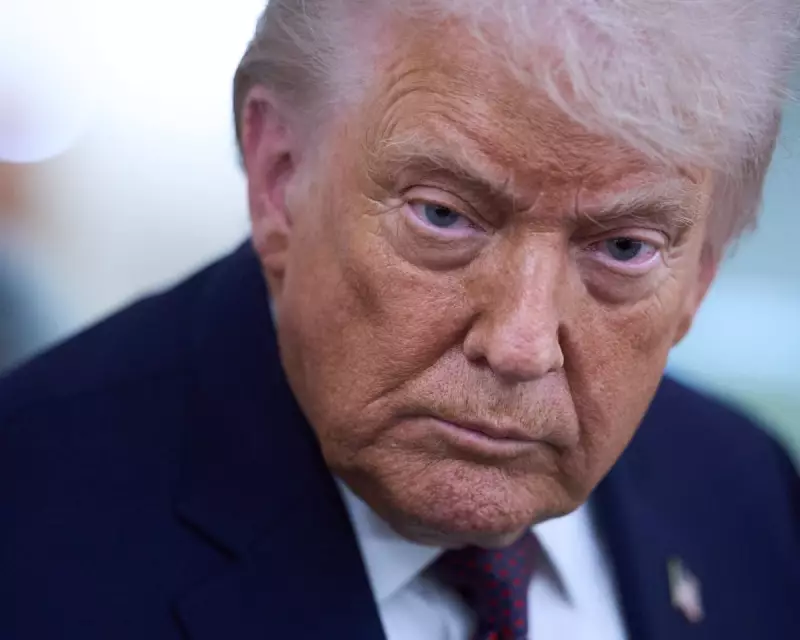
Donald Trump's controversial push to acquire Greenland has sparked an unexpected fracture between the US president and his ideological allies within Europe's far-right political movements. The divide has been exacerbated by Trump's subsequent remarks questioning the frontline commitment of NATO allies' troops during the Afghanistan conflict, creating a complex diplomatic and political dilemma for nationalist leaders across the continent.
Greenland Gambit Tests Far-Right Loyalties
Trump's attempted Greenland acquisition has placed Europe's radical right populists in an uncomfortable position, forcing them to choose between their admiration for the American president and their foundational commitment to national sovereignty. Leaders and voters who previously celebrated Trump's America First agenda now find themselves grappling with what many perceive as expansionist ambitions that directly challenge European territorial integrity.
The situation represents a significant ideological collision, where previously unstinting enthusiasm for Trump's anti-immigration, EU-critical platform meets the fundamental far-right tenet of protecting national boundaries and independence from external interference.

NATO Comments Deepen the Divide
Trump's disparaging suggestion that NATO allies' troops "stayed a little off the frontlines" during Afghanistan operations has further strained relationships with European partners. The comments have piqued patriotic sentiments across the continent and prompted an avalanche of criticism from normally sympathetic political figures.
Although Trump has since walked back both his Greenland acquisition drive and his criticism of non-US NATO troops following fierce backlash, the damage to his relationships with European allies appears substantial. The president's willingness to use economic pressure and expansionist rhetoric has created what many analysts describe as a liability for far-right movements that once viewed him as their most powerful international ally.
Polling Reveals Shifting Perceptions
Recent polling data illustrates the significant impact of Trump's actions on European public opinion, including among his traditional supporters. Research published by the Paris-based European affairs platform Le Grand Continent reveals that between 18% and 25% of far-right voters in France, Germany, Italy and Spain now consider Trump an "enemy of Europe."
Perhaps more remarkably, between 30% and 49% of voters for far-right parties in these four countries stated they would support deploying European troops to Greenland if tensions with the United States were to escalate further. This represents a dramatic shift in allegiance and highlights the depth of concern about American expansionism.
European Leaders Respond
Prominent far-right figures across Europe have voiced unprecedented criticism of Trump's approach. Jordan Bardella, president of France's National Rally and previously a Trump admirer, described the Greenland acquisition attempt as "a direct challenge to the sovereignty of a European country" and urged European unity in response.
"When a US president threatens a European territory using trade pressure, it's not dialogue – it is coercion," Bardella stated during a European parliamentary debate. "Greenland was a strategic pivot in a world returning to imperial logic. Yielding would set a dangerous precedent."
Even typically loyal allies have expressed reservations. Nigel Farage, leader of Britain's Reform UK and long-time Trump supporter, described the Greenland threats as "a very hostile act," while Germany's Alternative für Deutschland co-leader Alice Weidel noted that Trump had "violated a fundamental campaign promise – not to interfere in other countries."
Strategic Implications and Future Cooperation
The emerging divide threatens to undermine the Trump administration's national security strategy, which explicitly aimed to cultivate "patriotic allies" in Europe to resist what it termed "civilisational erasure." Just over a year ago, Europe's far-right leaders enthusiastically welcomed Trump's return to the White House, gathering under "Make Europe Great Again" banners that mirrored his domestic agenda.

Analysts suggest that while the current tensions are significant, common ground on issues like immigration and EU criticism may eventually reunite these ideological partners. Daniel Hegedüs of the German Marshall Fund notes that domestic electoral considerations will force many far-right parties to respond to continued sovereignty threats, but that cooperation on shared priorities remains possible.
Pawel Zerka of the European Council on Foreign Relations observes that far-right leaders have demonstrated "timely criticism" of Trump's excesses, potentially strengthening their positions domestically while mainstream leaders and EU institutions have struggled to present a unified, assertive response to American pressure.
The Greenland controversy and NATO remarks have created a complex new dynamic in transatlantic relations, testing alliances and forcing political recalibration across Europe's nationalist movements as they navigate between ideological affinity and practical sovereignty concerns.