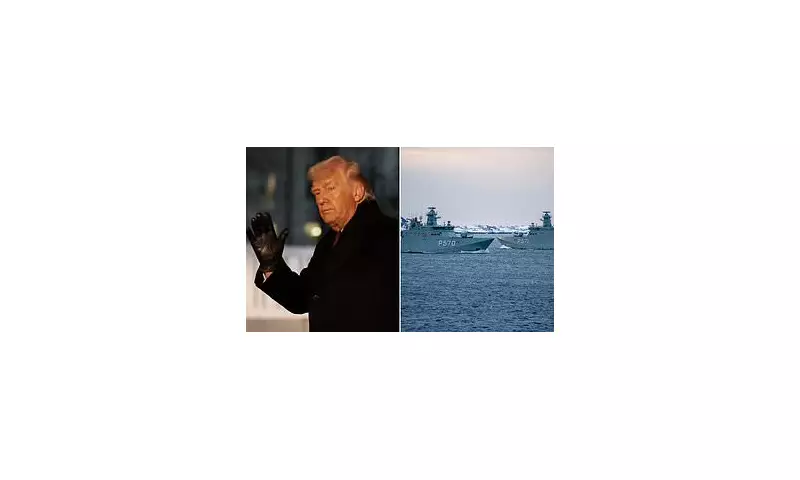
Former US President Donald Trump has declared that the United States can now do "exactly what we want to do" in Greenland, following the negotiation of a new NATO framework agreement. This deal grants America what Trump describes as "total and permanent access" to the semi-autonomous territory, raising significant questions about sovereignty and international relations.
Trump's Tariff U-Turn and Economic Concerns
The announcement of this framework coincided with Trump backing away from previous tariff threats against European allies. This shift came amid urgent warnings from economists that European countermeasures could trigger an inflationary spiral in the US economy. The European Union had been preparing retaliatory tariffs on approximately £81 billion worth of American goods, including politically sensitive exports such as soybeans from Republican-leaning states.
Speaking to reporters aboard Air Force One after returning from the World Economic Forum in Davos, Switzerland, Trump emphasised that the new arrangement would be "much more generous to the United States." He specifically highlighted that there would be "no end" and "no time limit" to American access under this agreement, though he avoided detailed comments on sovereignty matters.

European Response and Market Reactions
EU Commission President Ursula von der Leyen praised Europe for "being firm" against Trump's initial threats. The president's reversal triggered a rebound in European financial markets and helped Wall Street indexes move toward record highs. However, this development also prompted serious questions about the lasting damage to transatlantic business confidence and diplomatic relations.
EU foreign policy chief Kaja Kallas noted that US-European relations had "taken a big blow" during the preceding week, as EU leaders convened for an emergency summit in Brussels. The episode has led European diplomats to reconsider their approach to transatlantic ties, with many governments remaining wary of potential future policy shifts from the American administration.
Greenland's Sovereignty Concerns
Greenlandic Prime Minister Jens-Frederik Nielsen expressed cautious optimism about Trump's comments but emphasised that many details remain unclear. "I don't know what there is in the agreement, or the deal, about my country," Nielsen told reporters in the capital Nuuk. He firmly stated that sovereignty represents an absolute "red line" for Greenland, adding that territorial integrity and international law must be respected in any negotiations.
Danish Prime Minister Mette Frederiksen similarly stressed that no negotiations regarding Greenland's sovereignty have occurred with NATO. She described the situation as "difficult and serious" but noted progress in discussions about promoting common security in the Arctic region. Frederiksen called for a "permanent NATO presence in the Arctic region, including around Greenland."
Historical Context and Military Implications
The new framework builds upon a 1951 agreement that established American rights to construct military bases and operate freely in Greenlandic territory, provided Denmark and Greenland are informed of such actions. Washington currently maintains a base at Pituffik in northern Greenland. According to Marc Jacobsen, a professor at the Royal Danish Defence College, the United States previously operated 17 bases in Greenland during the Cold War with significantly greater activity levels than today.
NATO Secretary General Mark Rutte indicated that senior military commanders would now work through the details of additional security requirements, with hopes for implementation by early 2026. The framework reportedly includes provisions to prohibit Chinese and Russian investments in Greenland, though specific negotiations would continue between the United States, Denmark, and Greenland itself.
Geopolitical Ramifications and International Reactions
Trump's ambitions regarding Greenland have threatened to strain the NATO alliance that has underpinned Western security since World War II, while potentially reigniting transatlantic trade conflicts. Finnish President Alexander Stubb expressed hope that allies could develop a comprehensive plan to enhance Arctic security before a NATO summit scheduled for July in Ankara.

British Prime Minister Keir Starmer conveyed to Rutte that the United Kingdom stands ready to play its full role in ensuring Arctic security. Meanwhile, China's Foreign Ministry dismissed claims that China represents a threat in the Arctic as "baseless," asserting that China's scientific and commercial activities in the region comply with international treaties and laws.
Local Perspectives and Future Uncertainties
Residents of Nuuk expressed confusion and concern about the rapidly changing situation. Pensioner Jesper Muller captured the prevailing sentiment: "One hour we are, well, almost at war. Next hour everything is fine and beautiful, and I think it's very hard to imagine that you can build anything on it."
As details of the agreement remain unspecified, the European Parliament has indicated it will likely resume work on a trade deal with the United States following Trump's tariff reversal. However, the Greenland episode has fundamentally shaken confidence in transatlantic relationships, leaving European leaders determined to establish firmer boundaries against what many perceive as bullying tactics from the American administration.