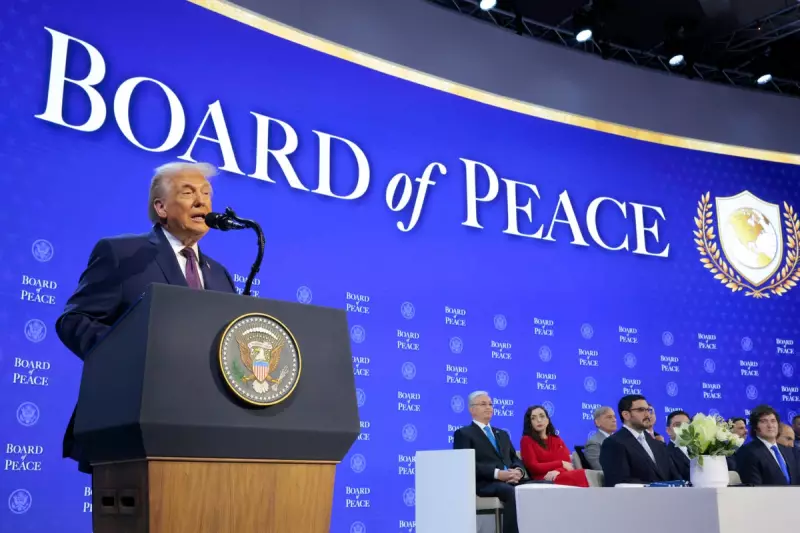
Former President Donald Trump has declared that "things are calming down" following the announcement of a preliminary framework for a future arrangement concerning Greenland, made during a Board of Peace signing event. This development comes after discussions with NATO Secretary General Mark Rutte, which have led Trump to retract previous threats directed at European allies.
The Proposed Framework: A Complex Security Arrangement
The proposed deal, characterised by officials as "complex," is designed to enhance NATO allies' participation in Arctic security operations. Secretary General Rutte has expressed optimism that a final agreement could be reached by the early part of 2026. This framework is not intended to involve the sale of Greenland, a point that has been explicitly clarified.
Potential US Access and Mineral Resources
Insiders indicate that the arrangement might afford the United States increased latitude to undertake construction projects on Greenlandic territory. This could potentially be structured similarly to Britain's sovereign base areas in Cyprus, which are military installations on foreign soil. A central component of the agreement revolves around security cooperation and securing access to Greenland's abundant mineral deposits.

Notably, Greenland possesses significant reserves, including 25 out of the 34 "critical raw materials" that have been officially identified by the European Commission as vital for economic and strategic purposes.
Political Reactions and Sovereignty Concerns
While the Danish government, which holds sovereignty over Greenland, has stated its openness to dialogue that respects its territorial borders, significant concerns have been raised by Greenland's semi-autonomous government and local political figures. These parties feel they have been largely excluded from the negotiation process and are apprehensive about the potential implications for Greenland's self-governance and environmental integrity.
The framework, therefore, represents a delicate balance between international security interests, resource access, and the rights of the local population, with many details yet to be finalised.