Trump's Board of Peace Plan: A $7bn Fund and International Troops for Gaza Reconstruction
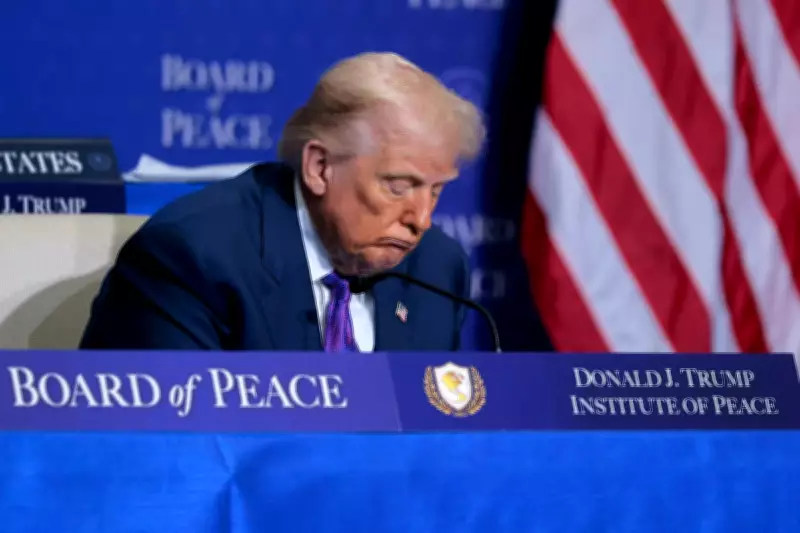
In a detailed address delivered in Washington, DC, on Thursday, US President Donald Trump revealed further specifics of his long-anticipated Board of Peace plan aimed at rebuilding the war-torn Gaza Strip. The initiative, which follows the second phase of a peace agreement signed by Hamas and Israel in October last year, centres on a substantial $7 billion reconstruction fund and the deployment of thousands of troops from five nations to form an International Stabilisation Force.
Key Components of the Gaza Reconstruction Strategy
The plan hinges on two critical elements: financial investment and security measures. The $7 billion fund, financed by contributions from countries including Kazakhstan, Azerbaijan, the United Arab Emirates, Morocco, Bahrain, Qatar, Saudi Arabia, Uzbekistan, and Kuwait, is designated for massive reconstruction efforts. Additionally, Trump announced that the United States would contribute $10 billion, though the source of these funds remains unspecified. Other pledges include $75 million from FIFA for football-related projects and $2 billion from the United Nations for humanitarian aid, yet this falls significantly short of the estimated $70 billion required for full reconstruction.
International Stabilisation Force and Security Initiatives
A pivotal aspect of the plan is the establishment of an International Stabilisation Force, with commitments from Indonesia to send 8,000 personnel, alongside troops from Morocco, Kazakhstan, Kosovo, and Albania. Led by a US general with an Indonesian deputy, this force has commenced operations to train a new police force in Israeli-controlled areas, starting with Rafah, a major population centre largely demolished during the conflict. The objective is to prepare 12,000 police officers and deploy 20,000 troops, with Egypt and Jordan assisting in training efforts. Major General Jasper Jeffers, leading the force, emphasised that these measures aim to provide the security necessary for Gaza's future prosperity and peace.

Disarmament of Hamas and Political Challenges
The disarmament of Hamas, a condition integral to Trump's plan, remains a contentious issue. Trump expressed hope that force would not be necessary, stating that Hamas had committed to disarming and appeared likely to comply. However, Israeli Prime Minister Benjamin Netanyahu issued a stark warning, indicating that Hamas must disarm peacefully or face forceful disarmament. This underscores the ongoing tensions and complexities in implementing the peace agreement.
Board of Peace Membership and Western Scepticism
The Board of Peace, which oversees the reconstruction and temporary governance of Gaza, includes members such as Saudi Arabia, Egypt, Qatar, Bahrain, Jordan, Kuwait, Turkey, the United Arab Emirates, Israel, and nations from outside the region like Albania, Argentina, Armenia, Azerbaijan, Belarus, Bulgaria, Cambodia, El Salvador, Hungary, Indonesia, Kazakhstan, Kosovo, Mongolia, Morocco, Pakistan, Paraguay, Uzbekistan, and Vietnam. Notably, there are no Palestinian representatives on the board, drawing criticism from rights experts who argue it resembles a colonial structure.
Western allies, including the UK, Germany, Italy, Norway, Switzerland, the European Union, France, Sweden, and major Global South powers like Brazil, India, Mexico, and South Africa, have not joined the board. Concerns have been raised about its effectiveness and potential to replace the United Nations, with leaders from these countries declining participation. Trump even rescinded an invitation to Canada after taking issue with Prime Minister Mark Carney's speech in Davos.
Support and Criticism from Key Figures
Former British Prime Minister Tony Blair has endorsed the plan, predicting a "tech-enabled society" in Gaza as a result. However, his inclusion on the board has sparked criticism due to his role in the Iraq war and the history of British imperialism in the Middle East. The unveiling was attended by delegations from 50 countries, highlighting international interest but also the divisive nature of the initiative.

As Trump's Board of Peace moves forward, the success of its $7 billion fund and troop deployments will depend on navigating political hurdles, ensuring security, and addressing the substantial financial shortfall for Gaza's complete rebuild.