Trump's Davos Performance Leaves Allies Wary Despite Greenland Retreat
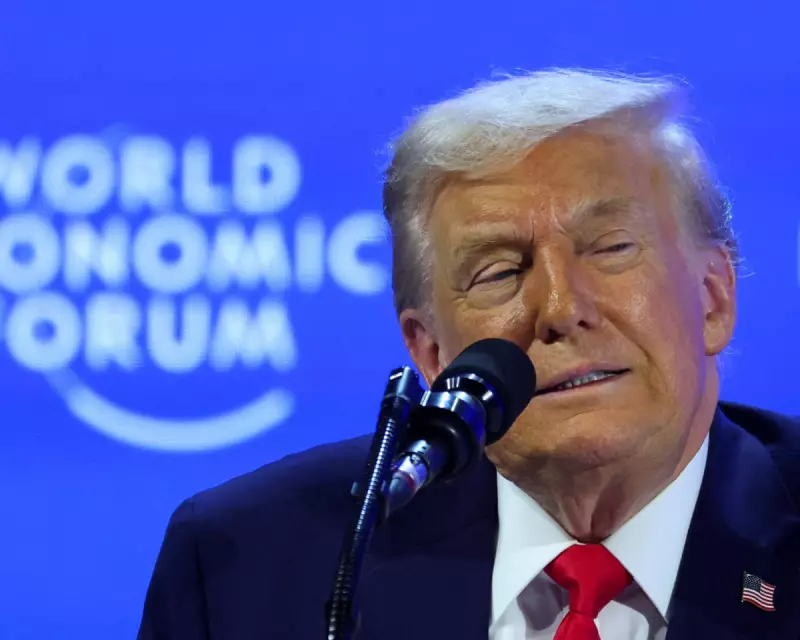
The annual World Economic Forum in Davos this week witnessed another characteristically turbulent appearance from US President Donald Trump, whose reality television approach to diplomacy continues to redefine international relations. While the immediate crisis over Greenland was averted, European allies remain deeply apprehensive about what the future holds under this unpredictable administration.
A High-Stakes Alpine Confrontation
Even before Air Force One touched down in Switzerland, President Trump had transformed the normally sedate Alpine gathering into a geopolitical pressure cooker. The focus was his extraordinary demand to annex Greenland, which threatened military action against Denmark—a founding NATO member that hasn't experienced foreign attack since Nazi occupation in 1940. The collective relief was palpable when Trump announced he was foregoing this option, though he pointedly maintained it remained available.
This episode underscores how thoroughly Trump's second presidency has upended global affairs. That avoiding a military strike that could have destroyed history's most successful military alliance now counts as progress speaks volumes about the current state of transatlantic relations.

Questionable Gains and Vague Agreements
True to his zero-sum worldview, Trump portrayed the outcome as a personal triumph. He announced he would drop planned tariffs against eight European countries—punishment for their opposition to his Greenland ambitions—following what he described as a deal allowing increased US presence on the territory without infringing Danish sovereignty.
Yet details of this agreement, supposedly negotiated with NATO Secretary General Mark Rutte, remain conspicuously vague. Many observers note it sounds remarkably similar to rights the United States has held in Greenland for decades, which Danish officials had been attempting to highlight publicly. After Treasury Secretary Scott Bessent's inflammatory rhetoric insulting Denmark, France's Emmanuel Macron, and European Commission President Ursula von der Leyen, the president's actual achievements appear modest.
European Pushback and Domestic Distractions
Davos may have marked a turning point where European leaders began mounting more robust resistance. Macron, Von der Leyen, and Canadian Prime Minister Mark Carney delivered combative speeches challenging Trump's approach. Carney notably warned that current changes in US-allied relations represent not mere transition but fundamental rupture.
Meanwhile, questions persist about whether the Greenland demand was ever genuine. Some analysts suggest it may have been a tactical maneuver to keep allies off-balance, while domestic critics speculate it served to divert attention from the damaging Epstein files controversy.
Rhetorical Missteps and Growing Concerns
Trump's Davos address revealed familiar patterns that increasingly worry observers. He repeatedly referred to Greenland as Iceland—a sovereign UN member state—with White House attempts to deny the error despite clear video evidence. His speech contained multiple false statements alongside claims that without US military protection, all Europeans would be speaking German, delivered in a predominantly German-speaking Swiss region.
Most concerning for allies was his assertion that while the US would always support NATO, he doubted partners would reciprocate in crisis—conveniently overlooking that the alliance's only Article 5 invocation followed the September 11 attacks against America.
A Temporary Respite Before Future Storms
The fundamental challenge remains Trump's mercurial nature. Any perceived diplomatic gain could prove illusory, as allies discovered with the Greenland episode. While disaster was avoided this time, NATO partners understand this represents merely a pause before the next potential crisis.

As the world navigates this unconventional presidency, Davos demonstrated that traditional diplomatic metrics struggle to capture the reality television dynamics now governing international affairs. The relief over Greenland's resolution is tempered by profound uncertainty about what unpredictable demand might emerge next from a president who thrives on keeping allies—and the world—perpetually off-balance.