

Trump's Davos Dominance Exposes European Leadership Crisis
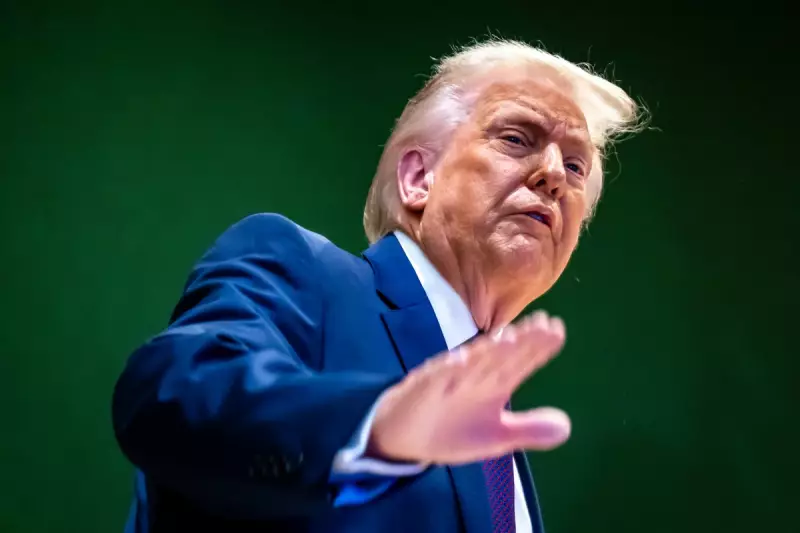
World leaders continue to grapple with the formidable challenge of navigating what critics have termed the "Rule of Don" as Donald Trump's combative return to the World Economic Forum in Davos laid bare fundamental divisions in transatlantic relations. Despite the US president's insistence that everyone was "happy" with his presence at the Swiss gathering, European leaders faced mounting criticism for their perceived failure to effectively push back against his aggressive rhetoric and policy demands.
A Characteristically Combative Performance
Trump's whirlwind visit to the global gathering of political and business elites saw the president deliver a characteristically provocative speech that targeted multiple allies. He threatened France with tariffs over pharmaceutical pricing, made controversial historical claims about Denmark's wartime experience, and repeatedly confused Iceland with Greenland while vowing to acquire the latter territory for "security reasons." The president's remarks included his now-familiar assertion that without American protection, European nations would be "speaking German... and a little Japanese perhaps."
Perhaps most telling was Trump's unveiled threat regarding his Greenland ambitions: "You can say yes and we will be very appreciative. Or you can say no and we will remember." This binary approach to diplomacy has become a hallmark of his administration's foreign policy, leaving European counterparts uncertain about how best to respond.

The 'Trump Whisperer' Strategy Under Scrutiny
Some world leaders, including British Prime Minister Sir Keir Starmer - notably absent from this year's event - have attempted to cultivate reputations as so-called 'Trump whisperers' in efforts to maintain constructive dialogue. However, this approach has drawn increasing scepticism from seasoned diplomats and political observers.
Anders Fogh Rasmussen, former NATO secretary general and current president of Denmark, argued that the Greenland crisis demonstrates the futility of pandering to Trump. "The time for flattering is over," Rasmussen told reporters in Davos. "It doesn't work. The fact is Trump only respects force and strength. And unity. That's exactly what Europe should demonstrate right now."
Public Criticism Versus Private Flattery
The dichotomy between public positions and private communications became starkly apparent during the forum. While French President Emmanuel Macron offered a rousing defence of European values in his keynote address - declaring "we prefer respect to bullies, we prefer science to conspiracies, and we prefer the rule of law to brutality" - his private communications with Trump told a different story.
Trump publicly shared personal text messages from Macron on his Truth Social platform, revealing the French president's attempts to maintain working relations. "My friend," one message began, "We are totally in line on Syria. We can do great things on Iran." Macron proceeded to propose a post-Davos G7 meeting in Paris and suggested a private dinner, demonstrating the careful balancing act European leaders feel compelled to perform.
NATO's Delicate Diplomacy
NATO Secretary General Mark Rutte's approach has similarly involved careful navigation between public support and private diplomacy. Trump shared a message from Rutte that lavished praise on the president's foreign policy achievements and included the infamous "Daddy" nickname Rutte has previously used. The text read: "Mr. President, dear Donald - what you accomplished in Syria today is incredible. I will use my media engagements in Davos to highlight your work there, in Gaza, and in Ukraine."
Initially, Rutte's approach appeared successful when Trump reversed course on threatened tariffs following what the president described as a "very productive" meeting. However, tensions resurfaced when Rutte publicly contradicted Trump's questioning of NATO's commitment to mutual defence, reminding the president that European nations had sacrificed soldiers alongside American troops in Afghanistan.

Growing Calls for European Assertiveness
California Governor Gavin Newsom, a potential presidential candidate who attended Davos, delivered a blistering critique of what he perceived as European capitulation. "People are rolling over. I should have brought a bunch of kneepads for all the world leaders," the Democrat told reporters. "It's just pathetic. The Europeans should decide for themselves what to do, but one thing they can't do is what they've been doing. They've been played."
This sentiment found academic support from Georg Riekeles, associate director of the European Policy Centre, who argued that Europe has "for too long... clung to a comforting belief" that avoiding confrontation with Washington serves its security interests. "This argument is wrong," Riekeles wrote. "Moreover, it is strategically corrosive. In a world of open coercion, appeasement and restraint do not buy stability. They invite further pressure."
Ukrainian Frustration with European Indecision
The most stinging criticism came from Ukrainian President Volodymyr Zelensky, who delivered a frustrated address shortly after meeting with Trump. "Instead of taking the lead in defending freedom worldwide - especially when America's focus shifts elsewhere - Europe looks lost trying to convince the US president to change," Zelensky declared. "But he will not change. President Trump loves who he is. And he says he loves Europe, but he will not listen to this kind of Europe."
As world leaders departed Davos, the fundamental question remained unanswered: how should democratic nations respond to a US president who operates according to his own unique diplomatic playbook? With Trump showing no signs of moderating his approach, and European unity appearing increasingly fragile, the transatlantic relationship faces one of its most challenging periods in modern history.





