Trump's Turbulent Second Year: Europe Confronts an Unpredictable America
As Donald Trump marks the first anniversary of his second presidential inauguration, his administration has entered a phase of heightened aggression that is testing international alliances to their limits. The 45th president's recent behaviour has prompted growing concern among traditional allies, with European leaders increasingly vocal in their criticism of Washington's unpredictable foreign policy.
A Peculiar Anniversary Performance
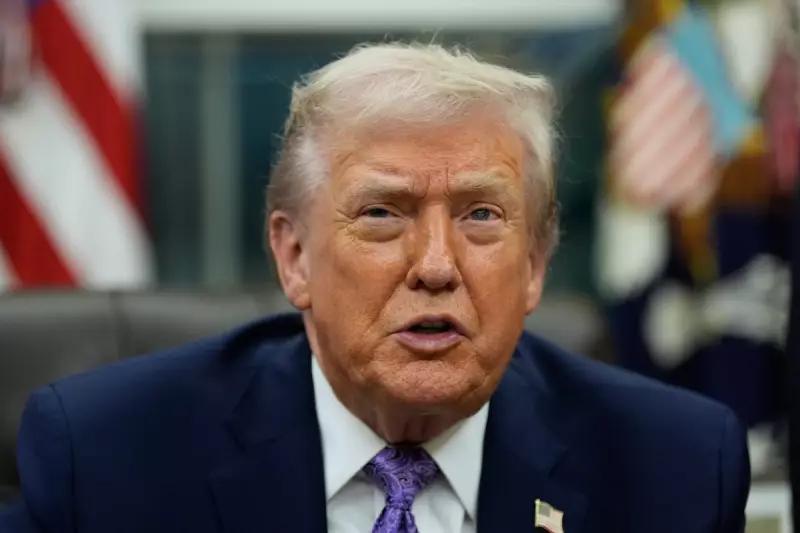
To commemorate his return to office, President Trump held a news conference that many observers described as particularly concerning. Armed with documents and photographs from immigration enforcement operations, the 79-year-old leader delivered what critics called a rambling, low-energy performance that raised questions about his capacity to govern effectively through his remaining term.
His administration's self-proclaimed "365 achievements for 365 days" ring hollow for many Americans grappling with persistent economic challenges. More significantly, Trump has systematically undermined the rules-based international order that has underpinned Western security and prosperity for decades.

Breaking International Norms
The president's approach has involved unprecedented actions against traditional allies. For the first time in American history, a sitting president has refused to rule out military action against a NATO partner, specifically targeting Greenland in what appears to be retaliation against the Nobel committee's decision not to award him its peace prize.
This alarming development follows a pattern of behaviour that has seen Trump insult allies, leak confidential diplomatic conversations, and publicly ridicule friendly nations. His administration has betrayed Ukraine while simultaneously expressing admiration for Vladimir Putin, who has openly endorsed Trump's Arctic policies.
Economic Warfare Against Allies
The White House has threatened imposing retaliatory 10 percent trade tariffs on several European nations, including Britain, unless the United States gains control over Greenland. This economic pressure represents just one aspect of Trump's broader pattern of undermining international agreements and institutions.
Trust between America and its traditional partners has deteriorated dramatically, with trade wars launched and treaties abandoned on presidential whim. The president's recent condemnation of the Chagos Islands agreement with Britain – previously hailed as a "monumental achievement" – demonstrates his administration's unpredictable and contradictory stance toward even close allies.
European Leaders Push Back
European responses have grown increasingly firm as Trump's behaviour becomes more concerning. French President Emmanuel Macron delivered a powerful rebuke in Davos, stating clearly that Europe "prefers respect to bullies" and values "the rule of law to brutality." His remarks emphasised a preference for "science to conspiracies" in what many interpreted as direct criticism of Trump's governing style.
British Prime Minister Keir Starmer, despite previously enjoying cordial relations with Trump, has labelled the latest trade threats as "completely wrong." His minister Darren Jones went further, describing presidential behaviour as "not normal," while Danish officials have reportedly used stronger language in private discussions.
The Coalition of Resistance Forms
European nations are beginning to coordinate their response, though divisions remain. While some leaders advocate strategic patience to avoid retaliation, others recognise the need for firmer collective action. The embryonic "coalition of the willing" originally formed to support Ukraine may evolve into a broader alliance of democratic nations seeking to counterbalance American unpredictability.
Domestic Constraints on Presidential Power
Within the United States, institutional checks may limit Trump's most extreme ambitions. The Supreme Court could potentially strike down some trade tariffs as unconstitutional, while Republican senators have indicated they would not support military action in Greenland. The upcoming midterm elections might further constrain presidential power if Democrats regain congressional control.

Financial markets also represent a potential restraining influence, having previously forced policy reversals during trade disputes – giving rise to the acronym "Taco" meaning "Trump Always Chickens Out."
An Uncertain Future for Transatlantic Relations
As Trump's second term progresses, the damage to America's international reputation and global stability may prove lasting. European nations and other democratic allies face difficult choices about how to navigate an increasingly unpredictable partnership with their traditional protector.
The coming year will test whether democratic nations can unite to create alternative structures for economic cooperation and security coordination, potentially developing into a significant counterweight to not just Russia and China, but possibly also to the United States under its current leadership.