Trump's Cuba Strategy Emerges After Venezuela, Fuel Crisis Tightens Noise
Following the dramatic regime decapitation in Caracas, the White House has shifted its focus to a new target in the Western Hemisphere: Cuba. Without deploying gunboats or launching direct military raids, the United States has found an effective method to destabilise what President Donald Trump calls a "failing nation." The strategy relies on economic pressure, particularly through disrupting vital fuel shipments, which has pushed Cuba toward a severe crisis.
Fuel Shortages Cripple Cuban Economy
The past month's relative quiet has been deceptive, masking a brewing emergency that could lead to one of the most radical changes in the region since Fidel Castro's 1959 revolution. Although no actual regime change occurred in Venezuela despite President Nicolas Maduro's arrest, the US successfully forced an end to Venezuela's crucial fuel shipments to Cuba. This move has triggered a domino effect, with Cuba now facing a more acute crisis than ever before.
In recent weeks, the Cuban government has warned foreign airlines that it cannot guarantee refuelling for their planes. Consequently, Canada has cancelled all flights to Cuba, and even Russia—a longstanding ally since the Soviet Union's collapse—has halted most flights, except for empty planes sent to evacuate Russian tourists. This collapse in foreign tourism has severed one of Cuba's few sources of foreign currency, exacerbating the island's economic woes.

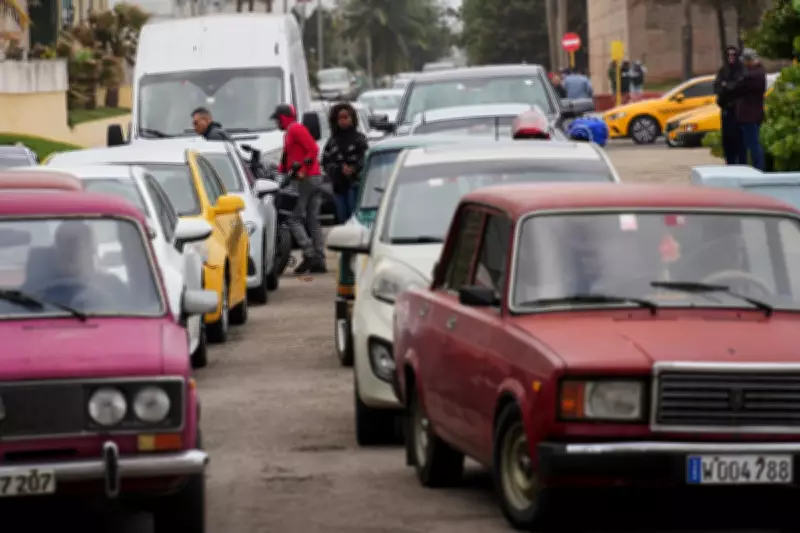
Domestic fuel rationing systems, long unreliable, are at breaking point, and periodic power cuts are affecting many areas, including the capital, Havana. The US noose appears to be tightening without any overt military action, suggesting that an end to the current situation may be imminent.
Mixed Signals from the White House
US intentions remain unclear, with Trump sending conflicting messages. At the end of last month, he issued a fierce Executive Order accusing Cuba of supporting "hostile state actors" like Russia, China, and Iran, and threatening tariffs on any country supplying Cuba. However, just days later, Trump told reporters at Mar-a-Lago that Cuba is a "failing nation" but added, "We're talking to the people from Cuba, the highest people in Cuba, to see what happens." He concluded in his classic style, "I think we're going to make a deal with Cuba."
Cuban President Miguel Díaz-Canel responded with a formal statement, broadcast on TV, radio, and YouTube, expressing willingness to engage in dialogue with the US "without pressure or preconditions." Unconfirmed reports suggest talks might be underway in Mexico, indicating that communication between the two sides has opened, though it raises questions about what sort of deal might be possible and whether US-engineered regime change is still on the table.
Potential Outcomes and Strategic Considerations
Several options are being considered for Cuba's future. The most benign would be a return to the opening initiated by Barack Obama in his second term, which allowed travel and investment but was reversed by Trump. For this to happen, Cuba would likely need to reorient its policies away from Russia, depending on what the US offers in return.
Russia's response has been telling; while it could ship emergency fuel supplies, its decision to evacuate tourists and state that incoming planes are empty suggests it may be distancing itself from Cuba. This could be due to priorities in the Ukraine war or sympathy with Trump's views on spheres of influence.
Regime change remains a clear US option, but implementing it is complex. Cubans have a strong sense of history and identity, and imposing a leader from Florida exiles could backfire. Fomenting internal change might be more realistic but would take time, with little sign of a robust opposition to build upon. Trump has previously decried regime-change efforts, insisting he does not impose other ways of life on countries, as seen in Iran.

However, an exception for Cuba is possible, given the enthusiasm of Cuban emigres in the US, including Secretary of State Marco Rubio. Successful regime change could benefit Trump in the upcoming November mid-term Congressional elections, though a failed intervention could become a liability for both Trump and Rubio, who has presidential aspirations for 2028.
Economic and Security Implications
The downside for Trump in pursuing a revamped Obama option is Cuba's lack of resources; unlike Venezuela with its oil or Ukraine with rare earths, Cuba has little to offer in return for massive investment. Returns would be slow, even in the best-case scenario.
On the other hand, bringing Cuba in from the cold could enhance security in the Western Hemisphere by eliminating an impoverished irritant just 90 miles off the Florida Keys. Parts of the former Soviet bloc have shown how economies can flourish once freed from dogma, but whether such an undramatic choice appeals to Trump, the disruptor-in-chief, remains uncertain.
As the fuel crisis deepens and diplomatic channels open, the world watches to see if Trump's next move will be a deal or a decapitation, with Cuba's fate hanging in the balance.