Trump's Board of Peace Expands Global Ambitions Beyond Gaza
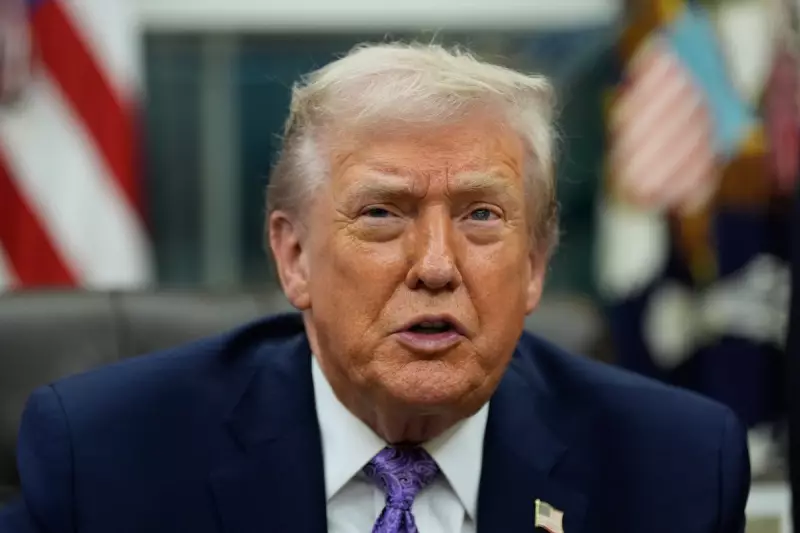
Donald Trump's ambitious "Board of Peace" initiative, originally conceived as a small group overseeing the Gaza ceasefire, has dramatically expanded its scope and vision. The Trump administration now envisions the board with a far broader international role, extending invitations to dozens of nations and suggesting it could soon mediate various global conflicts, potentially acting as a pseudo-UN Security Council.
Expanding Scope and Charter Details
The Trump administration's vision for the Board of Peace appears to go significantly beyond Gaza. In invitation letters sent to various world leaders, Trump stated the board would "embark on a bold new approach to resolving global conflict," suggesting it could serve as a rival to the UN Security Council. A draft charter obtained by The Associated Press, confirmed as accurate by a US official, uses expansive language to describe its ambitions.
The draft emphasises "the need for a more nimble and effective international peace-building body" and states that "durable peace" requires "the courage to depart from approaches and institutions that have too often failed." It adds an aim to "secure peace in places where it has for too long proven elusive."

Under the proposed charter, substantial power would be concentrated in the chairman's hands—a position Trump says he will occupy. The chairman would have authority to:
- Invite member states
- Break any ties in votes
- Decide meeting frequency
- Create or dissolve subsidiary entities
The board's expenses would be funded by contributions from member states serving three-year terms. Notably, the draft specifies that members who pay "more than one billion United States dollars in cash" during their first year can secure a permanent place on the board.
Global Responses and Invitations
Several nations have already agreed to participate in the Board of Peace, including:
- Israel
- United Arab Emirates
- Morocco
- Vietnam
- Kazakhstan
- Hungary
- Argentina
- Belarus
Israeli Prime Minister Benjamin Netanyahu confirmed his agreement to join on Wednesday, marking a significant shift from his previous criticisms of the board's Gaza executive committee composition. Additional invitation letters have been sent to leaders including Paraguay's Santiago Peña, Canadian Prime Minister Mark Carney, Egyptian President Abdel-Fattah el-Sissi, and Turkish President Recep Tayyip Erdogan.
Russia, India, Slovenia, Thailand, and the European Union's executive arm have also confirmed receiving invitations. Trump confirmed on Monday night that Russian President Vladimir Putin had been invited, with the Kremlin stating it is "studying the details" and will seek clarity on "all the nuances" through contacts with the United States.
Notable Declinations and Trump's Response
Some US allies have already declined participation. France, which is at odds with the Trump administration over Greenland, appears unlikely to join. French Foreign Minister Jean-Noel Barrot stated on Tuesday: "Yes to implementing the peace plan presented by the president of the United States, which we wholeheartedly support, but no to creating an organization as it has been presented, which would replace the United Nations."
Upon hearing that French President Emmanuel Macron was unlikely to join, Trump responded sharply: "Well, nobody wants him because he's going to be out of office very soon." He added a significant economic threat: "I'll put a 200% tariff on his wines and Champagnes and he'll join. But he doesn't have to join."
Supporting Committees and Implementation Structure
The White House has announced two key committees that will work alongside the Board of Peace. An executive board will work to carry out the board's vision, with members including:

- US Secretary of State Marco Rubio
- Trump envoy Steve Witkoff
- Trump's son-in-law Jared Kushner
- Former British Prime Minister Tony Blair
- Apollo Global Management CEO Marc Rowan
- World Bank President Ajay Banga
- Trump's deputy national security adviser Robert Gabriel
Additionally, a Gaza Executive Board will be responsible for implementing the challenging second phase of the ceasefire agreement. This includes deploying an international security force, disarming Hamas, and rebuilding the war-devastated territory. Nickolay Mladenov, former Bulgarian politician and UN Mideast envoy, will serve as the board's representative overseeing day-to-day matters.
Further details about the Board of Peace's structure and operations are anticipated to be revealed at the upcoming World Economic Forum in Davos, Switzerland, where Trump is scheduled to attend. The draft charter remains under constant revision and may undergo significant changes before finalisation, according to US officials speaking on condition of anonymity.