Trump's $1bn 'Board of Peace' Emerges as Global Governance Alternative
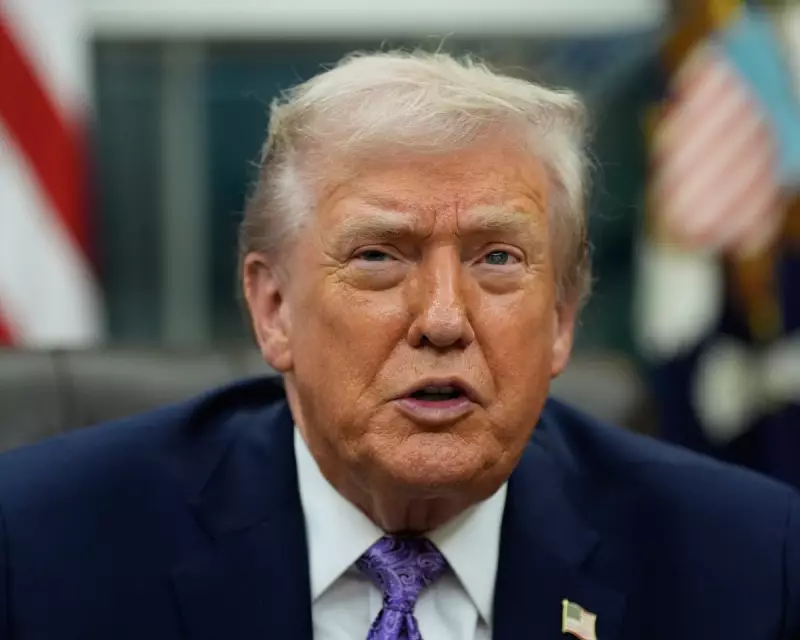
Former US President Donald Trump has positioned himself as the chairman of a controversial new international body dubbed the 'Board of Peace', which mandates participating countries to contribute a staggering $1bn in cash funds to secure membership. This development has ignited widespread diplomatic concern and drawn sharp criticism from established global institutions.
UN Security Council Endorsement Based on Misleading Premise
When the United Nations Security Council voted unanimously to endorse the Board of Peace in November, member states believed they were supporting a mechanism to advance peace efforts in Gaza. Resolution 2803 passed with thirteen votes in favour and two abstentions from Russia and China, framed as providing UN backing for a Trump-brokered ceasefire in the conflict-ridden territory.
However, the emerging details of the board's structure and purpose reveal a significant departure from what was initially presented to the international community. The resolution's text focused exclusively on the Gaza situation, yet the board's charter circulated to national capitals makes no mention of the Palestinian territory whatsoever.

Imperial Structure with Absolute Chairman Authority
The board's governing document establishes Trump as the all-powerful chairman, mentioned thirty-five times throughout the text, with unilateral authority to:
- Select all other board members
- Terminate members at his discretion
- Determine meeting schedules and discussion topics
- Issue resolutions independently
This structure represents a dramatic shift from traditional international governance models. While the UN Security Council's permanent membership has long faced criticism for creating power imbalances, the board substitutes this with a system where influence appears directly purchasable through enormous financial contributions.
$1bn Cash Requirement Creates Exclusive Club
The membership rules establish a stark financial barrier to participation. Nations must pay $1bn in cash funds for what the charter terms 'life-membership', though even this substantial investment offers no guarantee against expulsion by the chairman. This requirement effectively creates a global forum accessible only to the wealthiest nations, fundamentally altering the principle of equal representation among sovereign states.
Gaza Mechanism Exists but Remains Dormant
Despite the charter's silence on Gaza, the board's structure includes mechanisms specifically designed for the territory:
- A Gaza executive board
- A national committee for Gaza administration
- An international stabilisation force overseen by a US major-general
These elements theoretically provide frameworks for ceasefire implementation, governance, and reconstruction. However, Israeli opposition to Palestinian authority returning to Gaza or international participation in the territory has effectively stalled progress. The current limbo between ceasefire phases allows Israel to maintain military flexibility while preventing meaningful reconstruction for Gaza's two million residents.
Displacing UN Agencies with Business-Driven Approach
Analysts suggest the board's underlying purpose involves supplanting traditional UN peacekeeping and reconstruction efforts with profit-driven ventures. While veteran UN diplomat Nickolay Mladenov serves as the board's proposed high representative in Gaza, he faces significant constraints from financial stakeholders including Steve Witkoff and Jared Kushner, who bring business-oriented perspectives to humanitarian operations.
Global Implications and Diplomatic Dilemmas
The board's emergence presents nations with difficult choices. France's attempted refusal resulted in retaliatory tariffs from the Trump administration, demonstrating the potential economic consequences of non-participation. Conversely, joining requires undermining the UN system, submitting to Trump's unilateral authority, and endorsing a vision of global governance resembling an imperial court where nations compete for influence through financial contributions.

With Russian President Vladimir Putin reportedly invited to join, the board appears unlikely to address ongoing conflicts like Ukraine meaningfully. Instead, it risks becoming a vanity project that complicates rather than enhances international peace efforts, leaving the global community grappling with what some diplomats have termed 'the invitation from hell'.