Former US President Donald Trump has issued a stark warning that an American "armada" is approaching the Middle East, as the reported death toll from Iran's violent suppression of nationwide anti-government protests reaches at least 5,000. This dramatic escalation in geopolitical tensions coincides with Iran's most comprehensive internet blackout now extending beyond two weeks, severely hampering information flow from the country.
Mounting Casualties Amid Information Blackout
The US-based Human Rights Activists News Agency has provided detailed figures indicating that among the 5,002 reported fatalities, 4,716 were demonstrators, 203 were government-affiliated personnel, 43 were children, and 40 were civilians not participating in the protests. The organisation, which maintains an extensive network of activists within Iran to verify deaths, has established credibility through accurate reporting during previous periods of unrest in the country.
These staggering numbers represent the highest death toll from any protest movement in Iran for decades, drawing comparisons to the chaotic period surrounding the 1979 Islamic Revolution. The agency further reports that more than 26,800 individuals have been detained in what appears to be a widening arrest campaign by Iranian authorities.
Conflicting Official Narratives
Iran's government offered its first official death toll on Wednesday, claiming 3,117 fatalities with 2,427 described as civilians and security forces, while labelling the remainder as "terrorists". Historical patterns suggest Iranian authorities have frequently undercounted or entirely omitted fatalities during periods of civil unrest, casting doubt on these official figures.
The Associated Press has confirmed its inability to independently verify casualty numbers due to the comprehensive internet shutdown implemented on January 8 and restrictions on international communications. Iranian authorities have further limited journalists' capacity to report on the aftermath of protests, with state television repeatedly characterising demonstrators as "rioters" allegedly motivated by American and Israeli interests without providing supporting evidence.
Escalating Military Posturing
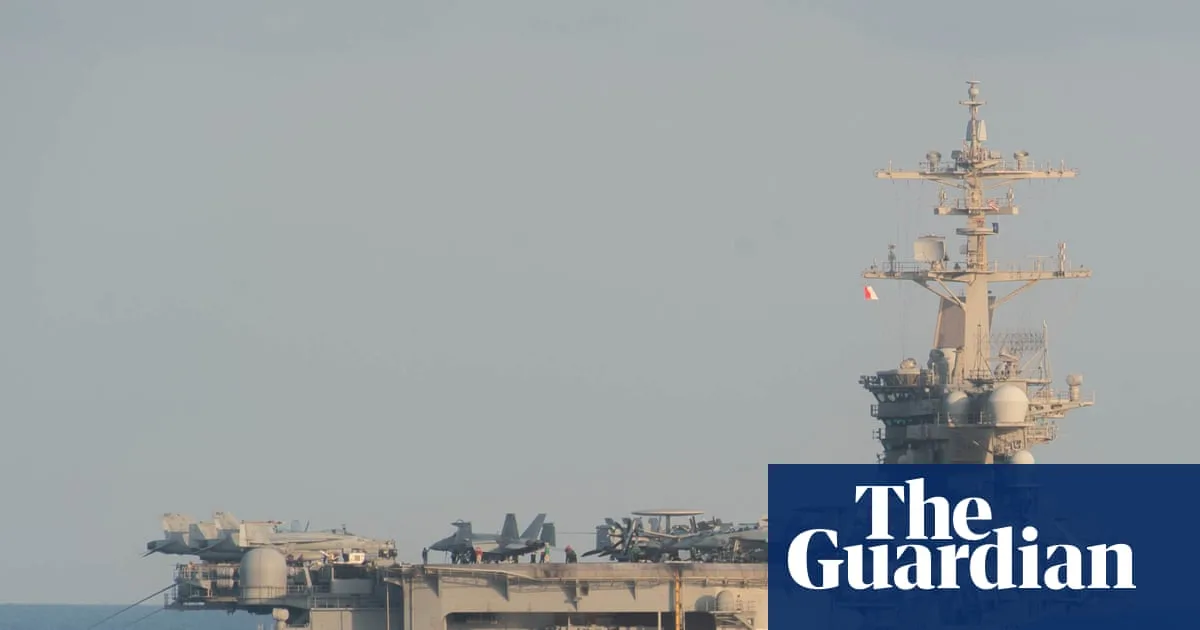
Amid this domestic turmoil, the United States has significantly increased its military presence in the region. The aircraft carrier USS Abraham Lincoln and its associated warship group have been redirected from the South China Sea toward the Middle East, with a US official confirming on Thursday that the strike group is currently positioned in the Indian Ocean.
Speaking aboard Air Force One, Mr Trump explicitly stated that American naval forces are moving toward Iran "just in case" he decides to take action. "We have a massive fleet heading in that direction and maybe we won't have to use it," the former president remarked, referencing his previous characterisation of such naval deployments as an "armada".
Nuclear Threats and Regional Responses
Mr Trump further referenced multiple rounds of negotiations between American officials and Iran regarding its nuclear programme prior to Israel's 12-day conflict with the Islamic Republic in June, which saw US warplanes bomb Iranian nuclear facilities. He issued a stark warning that any future military action would make previous strikes against uranium enrichment sites "look like peanuts".
"They should have made a deal before we hit them," Mr Trump added, underscoring the heightened stakes in the ongoing confrontation.
Separately, the UK's Ministry of Defence announced that its joint Eurofighter Typhoon fighter jet squadron with Qatar, designated 12 Squadron, has deployed to the Persian Gulf for defensive purposes in response to escalating regional tensions.
Legal and Humanitarian Concerns
The protest death toll emerges as tensions remain elevated over Mr Trump establishing two red lines regarding the Iranian government's response to demonstrations: the killing of peaceful protesters and the implementation of mass executions. Iranian judicial authorities have reportedly labelled some detainees as "mohareb" or "enemies of God", a charge carrying the death penalty that was previously employed during mass executions in 1988 that claimed at least 5,000 lives.
This combination of domestic repression, international military posturing, and historical parallels creates a volatile situation with potentially far-reaching consequences for regional stability and global security arrangements.






