Trump Issues Stern Warning to Netanyahu Over Gas Field Strikes
Former US President Donald Trump has revealed he explicitly warned Israeli Prime Minister Benjamin Netanyahu not to launch any further attacks on gas fields, following a controversial Israeli strike that triggered a dramatic surge in global energy prices. The incident has exposed potential fissures in the long-standing alliance between Washington and Jerusalem, as Trump insisted he was completely unaware of Israel's plans to target South Pars in Iran, the world's largest gas field.
Immediate Retaliation and Escalating Conflict
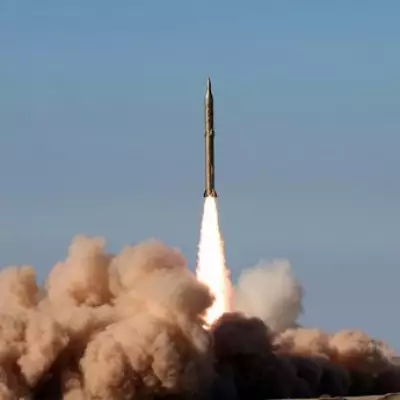
In a swift and furious response, Tehran ignored international calls for restraint and launched its own series of strikes on energy infrastructure in Israel, Kuwait, Qatar, and Saudi Arabia. As the conflict rapidly intensified, Trump attempted to downplay the severity of the situation, referring to the exchange as a 'little excursion' that would be 'over pretty soon'. However, he confirmed he had engaged in direct discussions with Netanyahu regarding the targeting of oil and gas facilities.
'I told him, don't do that, and he won't do that,' Trump declared to reporters during a meeting with Japan's prime minister. He elaborated on the complex nature of the US-Israel relationship, stating, 'We're independent, but get along great,' while acknowledging that although military actions are generally 'co-ordinated', Netanyahu will occasionally 'do something' that meets with his disapproval.

Contradictory Narratives and Diplomatic Fallout
This public admonition came shortly after Trump appeared to harshly criticise Israel in the immediate aftermath of the South Pars attack. On his Truth Social platform, he accused Israel of having 'violently lashed out' and emphasised, 'The United States knew nothing about this particular attack.' He issued a stark warning that 'NO MORE ATTACKS WILL BE MADE BY ISRAEL' on the South Pars field unless directly provoked by Iran.
Yet, in a characteristically contradictory move, Trump also threatened Iran with overwhelming force, warning that if Tehran did not back down, Washington would 'massively blow up the entirety of the South Pars gas field at an amount of strength and power that Iran has never seen or witnessed before'.
Israeli Response and Regional Reactions
Netanyahu vehemently denied allegations that Israel was 'dragging' the United States into the conflict, dismissing such claims as 'fake news'. He rhetorically questioned, 'does anyone really think that someone can tell President Trump what to do?' The Israeli Prime Minister confirmed that Israel 'acted alone' in the attack on Iranian gas fields and acknowledged, 'President Trump asked us to hold off on future attacks and we are'. He further asserted that Iran is 'weaker than its ever been', while Israel's position has strengthened.
Despite these statements, three separate Israeli officials anonymously told Reuters that the attack had indeed been coordinated with the US in advance, though they indicated it was unlikely to be repeated. They expressed no surprise at Trump's public comments, suggesting a possible strategy of plausible deniability.
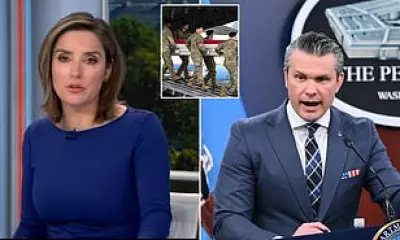
US Secretary of War Pete Hegseth sought to minimise perceptions of a rift, praising Israel as 'an incredible and capable partner'. Regarding the South Pars strike specifically, Hegseth stated that Israel had 'sent a warning' to Tehran. However, US Director of National Intelligence Tulsi Gabbard highlighted divergent war objectives, noting Israel was 'focused on disabling the Iranian leadership' while the US aims to 'destroy Iran's ballistic missiles launching capability, their ballistic missile production capability, and their navy'.
Broader Regional Escalation and Economic Impact
The conflict has drawn in other regional powers, with Saudi Arabia threatening military action against Iran after Riyadh was targeted by ballistic missiles. Saudi Foreign Minister Prince Faisal bin Farhan declared that any prior trust with Tehran had been 'shattered', accusing Iran of premeditated actions against its neighbours. 'This pressure from Iran will backfire politically and morally and certainly we reserve the right to take military actions if deemed necessary,' he stated following a meeting of Gulf and Arab foreign ministers.

The economic consequences have been severe and immediate. Qatari officials reported that Iran's missile attacks have reduced the country's liquefied natural gas export capacity by 17 per cent, resulting in an estimated annual revenue loss of $20 billion. In retaliation for Israel's strike, Iran targeted Qatar's Ras Laffan, the world's largest LNG facility, causing gas prices to skyrocket by 35 per cent.
French President Emmanuel Macron condemned the 'reckless escalation' and urged Iran, Israel, and the US to cease strikes on critical infrastructure. Meanwhile, Britain has pledged to assist in reopening the Strait of Hormuz, a vital shipping channel through which 20 per cent of global oil passes. In a joint statement with France, Germany, Italy, the Netherlands, and Japan, the UK strongly condemned recent attacks by Iran on commercial vessels and civilian infrastructure.
With no immediate signs of de-escalation, Secretary Hegseth indicated that military operations would continue to intensify, stating, 'Again, today will be the largest strike package yet, just like yesterday was.' He also noted that US forces could receive up to $200 billion from Congress to fund the war effort, bluntly adding, 'It takes money to kill bad guys.' The situation remains volatile, with the potential for further disruption to global energy markets and regional stability.