Trump Pledges to Secure Strait of Hormuz Amid Iranian Aggression
Former US President Donald Trump has vowed to protect the critical Strait of Hormuz after three cargo ships were struck by projectiles believed to have been fired by Iran. The incident has triggered panic on international markets and heightened fears of a broader conflict in the region.
Iranian Drone Attack Plans on California Revealed
According to an alert obtained by ABC News, Iran allegedly planned a drone attack on California in retaliation for US military actions. The FBI issued warnings to police in the state, though specific details about timing or targets remain undisclosed. This revelation underscores the escalating threats posed by the Islamic Republic.
Trump addressed the situation from the White House, stating, "The world is going to see great safety and it is going to be very, very quickly." He emphasized Iran's diminished military capabilities, noting, "They've lost their navy. They've lost their air force and they have no anti-aircraft apparatus at all. They have no radar. Their leaders are gone."

Attacks on Cargo Ships in the Strait of Hormuz
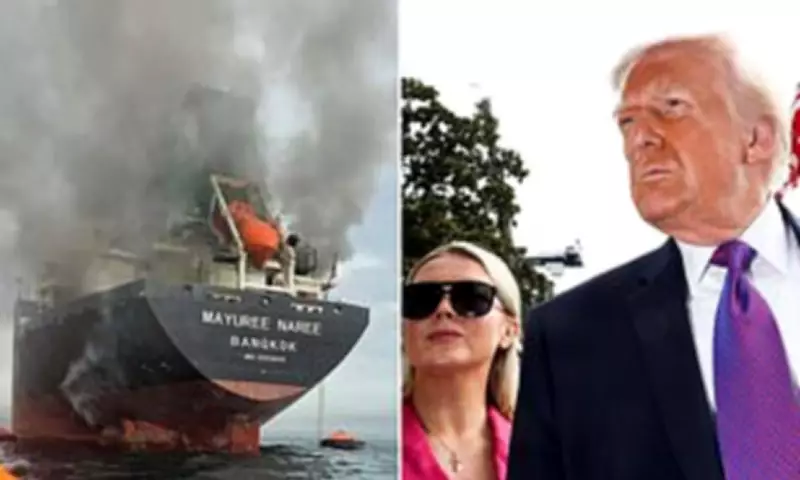
The attacks targeted a container ship and two bulk carriers in the Strait of Hormuz, a vital waterway for global oil shipments. A Thai bulk carrier, the Mayuree Naree, was hit by a projectile, causing a large fire and leading to the evacuation of most crew members, with three potentially trapped. Iran claimed responsibility, asserting the ship ignored warnings.
These incidents were recorded by the United Kingdom Maritime Trade Operations, which described the maritime threat environment as "critical." In response, the UK and 31 other countries initiated the largest-ever release of oil reserves, with the International Energy Agency making 400 million barrels available to stabilize markets.
US Military Response and Regional Tensions
The US has intensified efforts to secure the Strait of Hormuz, eliminating 16 Iranian mine-laying ships. Trump called on oil companies to resume using the waterway after tanker traffic plummeted from 100 to five vessels. He also claimed the US destroyed 58 Iranian naval ships overall.
However, US military spokesmen expressed concern over Iran's tactic of hiding naval vessels among commercial ships to avoid destruction. The US Central Command warned that civilian ports used for military purposes lose protected status under international law.
Contradictory Statements and Long-Term Conflict
Trump's remarks included contradictions, as he asserted the war would end "soon" while Iran declared readiness for a "long-term war of attrition that will destroy the entire American economy." At a rally in Kentucky, Trump declared the US victorious, stating, "It's only good if you win. And we've won."
Reports indicate that Iran's new supreme leader, Mojtaba Khamenei, was injured in a strike that killed his father, Ayatollah Ali Khamenei, and his mother, explaining his absence from public view. His father's funeral has been postponed indefinitely.
Broader Regional Attacks and International Reactions
Iran launched additional attacks across the Gulf, with most ballistic missiles intercepted. Oman reported Iranian drones hitting its oil plants, and Iran threatened to target banks and other businesses. Two Iraqi oil tankers were also attacked, resulting in one crew member death.
French President Emmanuel Macron urged G7 countries to enhance their efforts in protecting the Middle East, highlighting the international dimension of the crisis. The situation remains volatile, with ongoing military engagements and economic repercussions shaping the conflict's trajectory.