Trump Announces Devastating US Bombing Raid on Iran's Vital Oil Hub
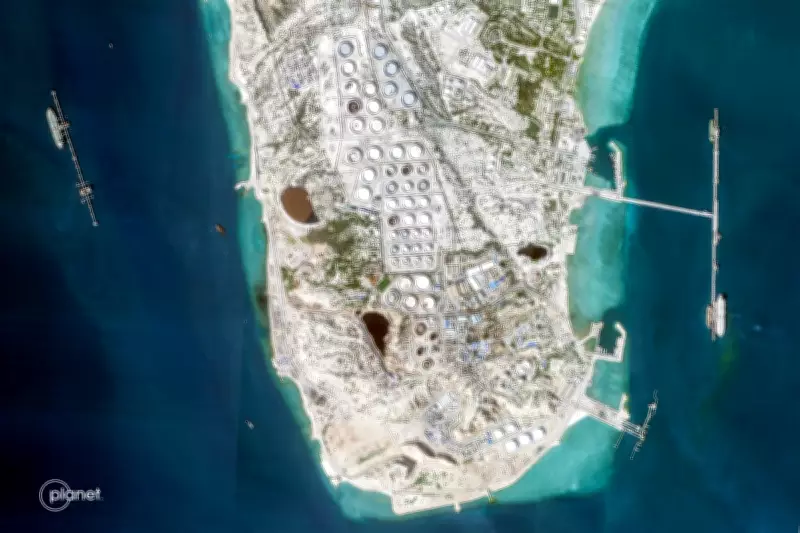
President Donald Trump has declared that the United States military has executed "one of the most powerful bombing raids in the History of the Middle East", targeting Iran's crucial Kharg Island. In a post on Truth Social, Trump stated that US forces have "totally obliterated every MILITARY target in Iran’s crown jewel, Kharg Island", describing the island as the linchpin of Tehran's oil industry.
Strategic Significance and Trump's Warning
Kharg Island serves as Iran's dominant export port, connected by pipeline to major oil fields in southwest Iran. Remarkably, Trump claimed he chose not to destroy the island's oil infrastructure "for reasons of decency", but issued a stark warning to Tehran. He indicated that he may target the oil facilities if Iran does not permit free passage for ships through the strategically vital Strait of Hormuz.
Military Escalation Across the Region
The announcement coincides with significant US military reinforcements being deployed to the Middle East. According to reports:

- The Pentagon is dispatching a Marine expeditionary unit to defend against Iranian threats
- Approximately 2,500 additional troops and one extra warship will be sent to the region
- Five US Air Force refueling planes were reportedly struck in Saudi Arabia by an Iranian missile in recent days
International Reactions and Diplomatic Fallout
European leaders have sharply criticised a separate US decision to temporarily ease sanctions on the purchase of Russian oil. European Council President Antonio Costa described the move as "very concerning", arguing it impacts European security and provides Russia with additional resources to continue its aggression against Ukraine.
Ukrainian President Volodymyr Zelensky estimated the decision could allow Russia to gain approximately $10 billion, stating it "certainly does not help peace". French President Emmanuel Macron emphasised that the reported shutdown of the Strait of Hormuz "in no way" justified lifting sanctions against Russia.
Internal US Debate and Calls for De-escalation
Within the Trump administration, White House AI czar David Sacks has proposed an exit strategy from the Iran conflict, suggesting the US should "declare victory and get out". Sacks argued that the US has sufficiently degraded Iran's military capabilities and should seek a negotiated settlement.
Former US Representative Marjorie Taylor Greene has publicly criticised the conflict, stating that Americans "didn't vote for the Iran war" in the 2024 election. She described the loss of 13 US service members as "absolutely heartbreaking" and asserted the conflict was unprovoked.
Regional Violence and Security Incidents
The conflict has sparked violence across the Middle East:
- A missile struck a helipad inside the US Embassy compound in Baghdad, with footage showing smoke rising over the diplomatic facility
- The Israeli military issued an evacuation warning for an industrial area in Iran's northwestern city of Tabriz
- US Vice President JD Vance shared prayers for six American service members killed in a plane crash over Iraq
Houthi Rebels' Ambiguous Position
While Iran's Shi'ite allies in Lebanon and Iraq have joined the regional conflict, Yemen's Houthi rebels have not yet formally entered the fray. Houthi leader Abdul Malik Al-Houthi stated his group was ready to strike "at any moment", but experts note the movement is primarily motivated by domestic agendas rather than direct allegiance to Iran's supreme leader.
As the conflict continues to escalate, with Trump asserting the war is "going very well", the international community watches anxiously for further developments in this volatile regional confrontation that has already claimed numerous military and civilian lives on all sides.